




Every few months, someone in my local cycling group asks the same question: “Are fat tire e-bikes actually worth it, or is it just a gimmick that makes you look like you’re on a tiny motorcycle?” Fair question. I’ve spent the last year riding both skinny-tire commuters and fat tire e-bikes across every surface Central Europe throws at me — wet cobblestones, forest gravel, broken suburban tarmac, even a little snow in February. This fat tire e-bike guide is the honest answer I wish I’d had before I bought my first one.
Short version: fat tire e-bikes aren’t for everyone. But if you ride on mixed terrain, weigh more than the average commuter, or simply want a bike that doesn’t flinch when the road turns ugly, they solve problems that no regular e-bike can. Let’s get into what the spec sheets don’t tell you.
What Counts as a Fat Tire E-Bike?
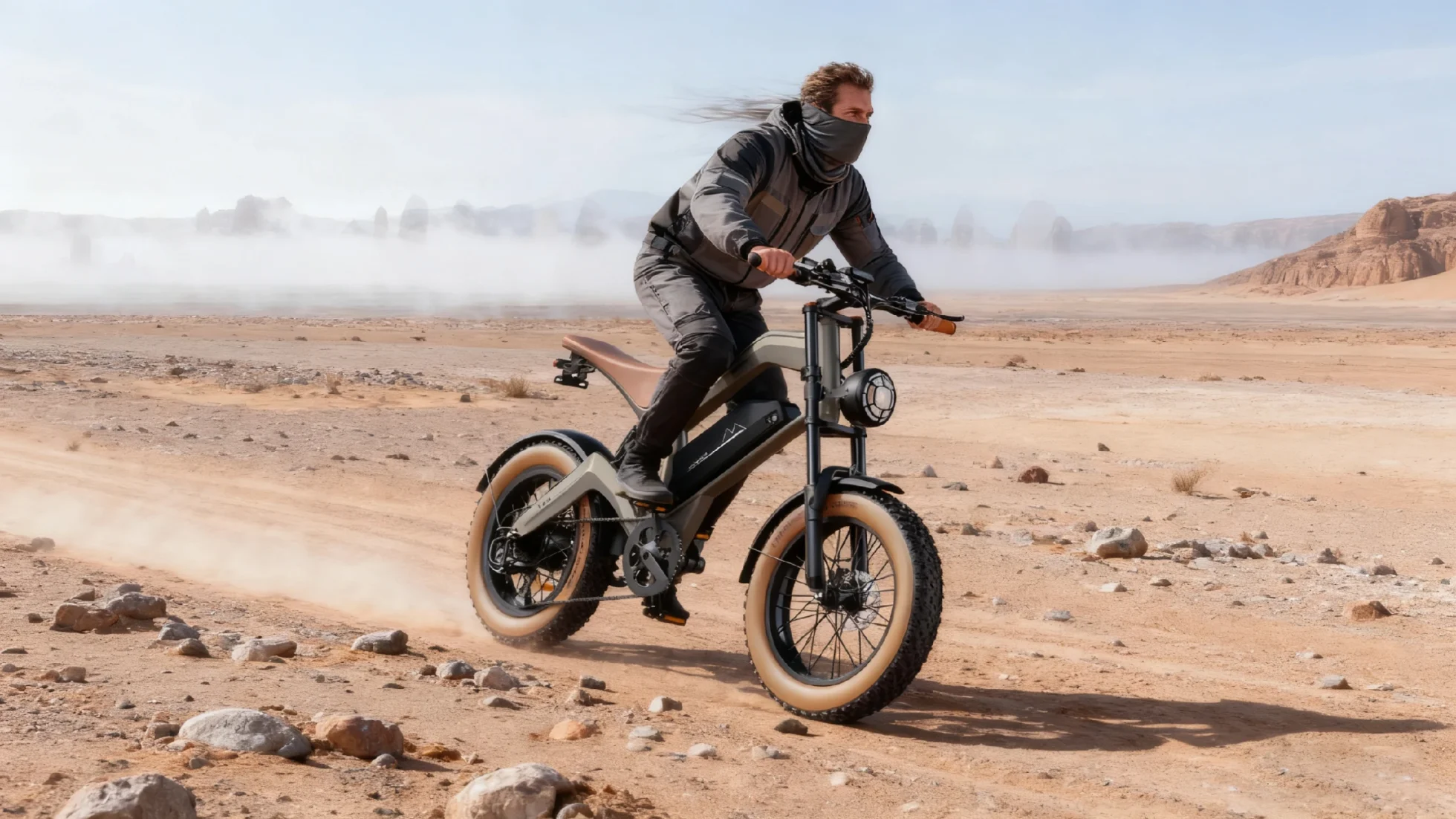
The cycling industry is loose with the term, so let me set the baseline. A fat tire e-bike has tires at least 3.8 inches wide — typically 4.0″ or more. Anything narrower is a “plus-size” tire and behaves completely differently. Why does the width matter? Because at 4 inches, the tire footprint roughly doubles compared to a standard 2-inch commuter tire. That extra rubber changes the physics of the ride.
According to Electrek’s ongoing e-bike coverage, fat tire models have been the fastest-growing segment in Europe for three years running, and the reason isn’t aesthetics. It’s versatility. A single fat tire bike can handle roles that previously required two or three different bikes.
The Real Advantages of Fat Tires (What They Actually Fix)
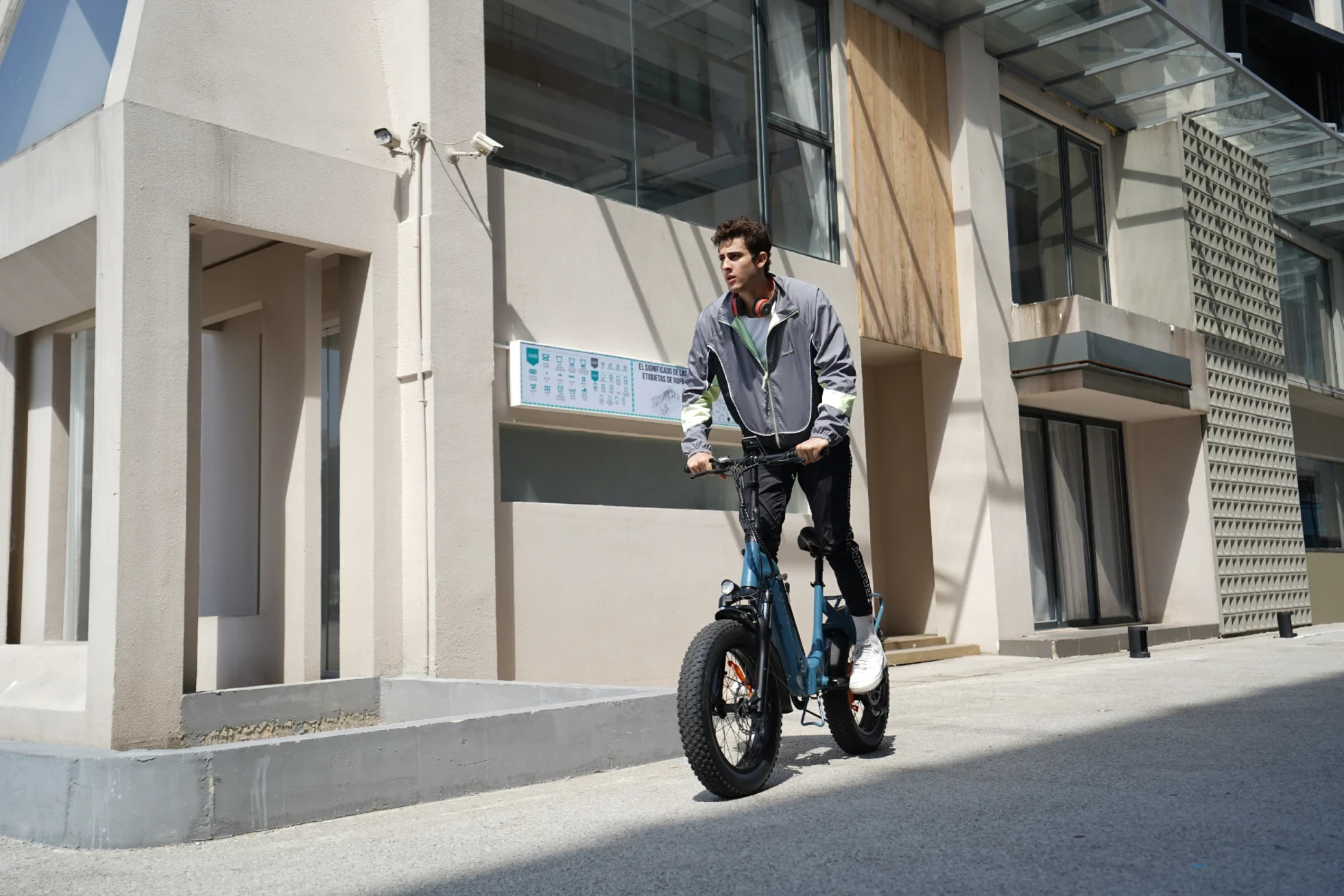
Marketing copy loves to talk about “off-road capability” as if every buyer is riding forest trails on weekends. Most aren’t. Here’s what fat tires actually do for regular riders:
They absorb bad road surfaces without a fancy suspension
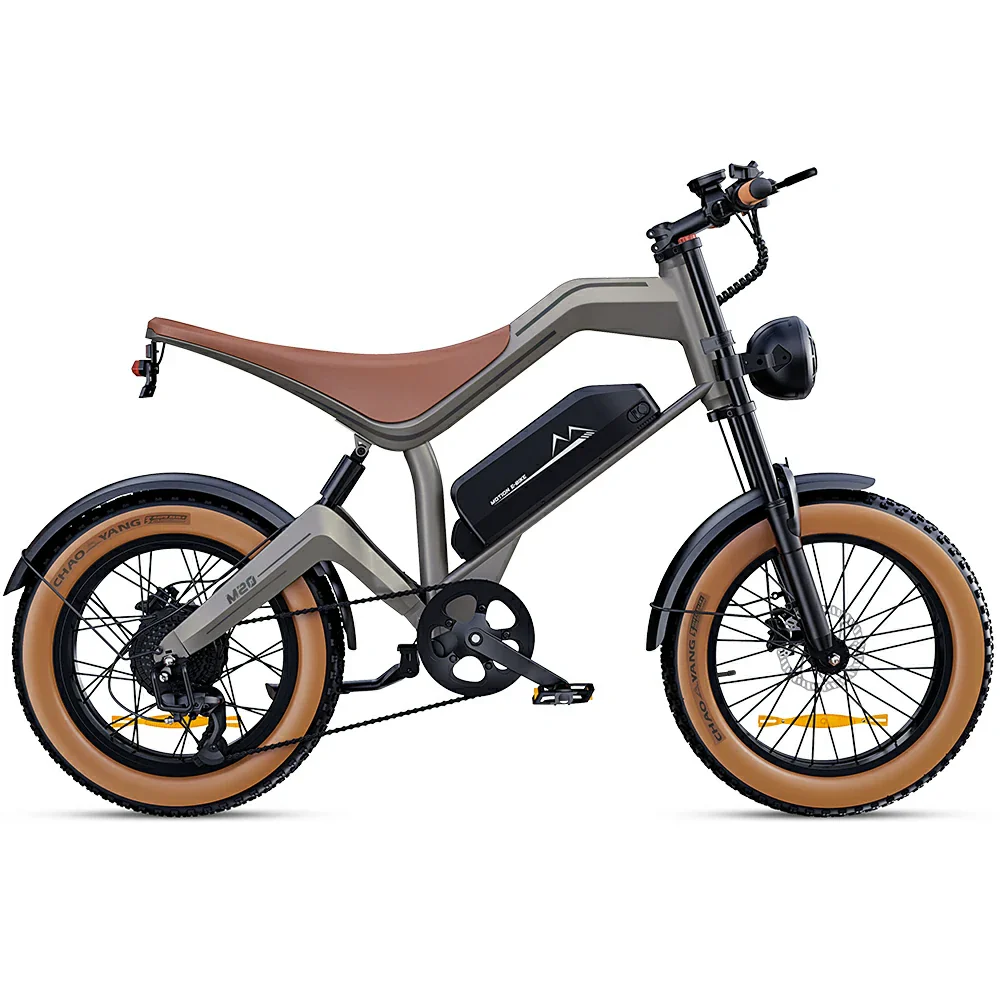
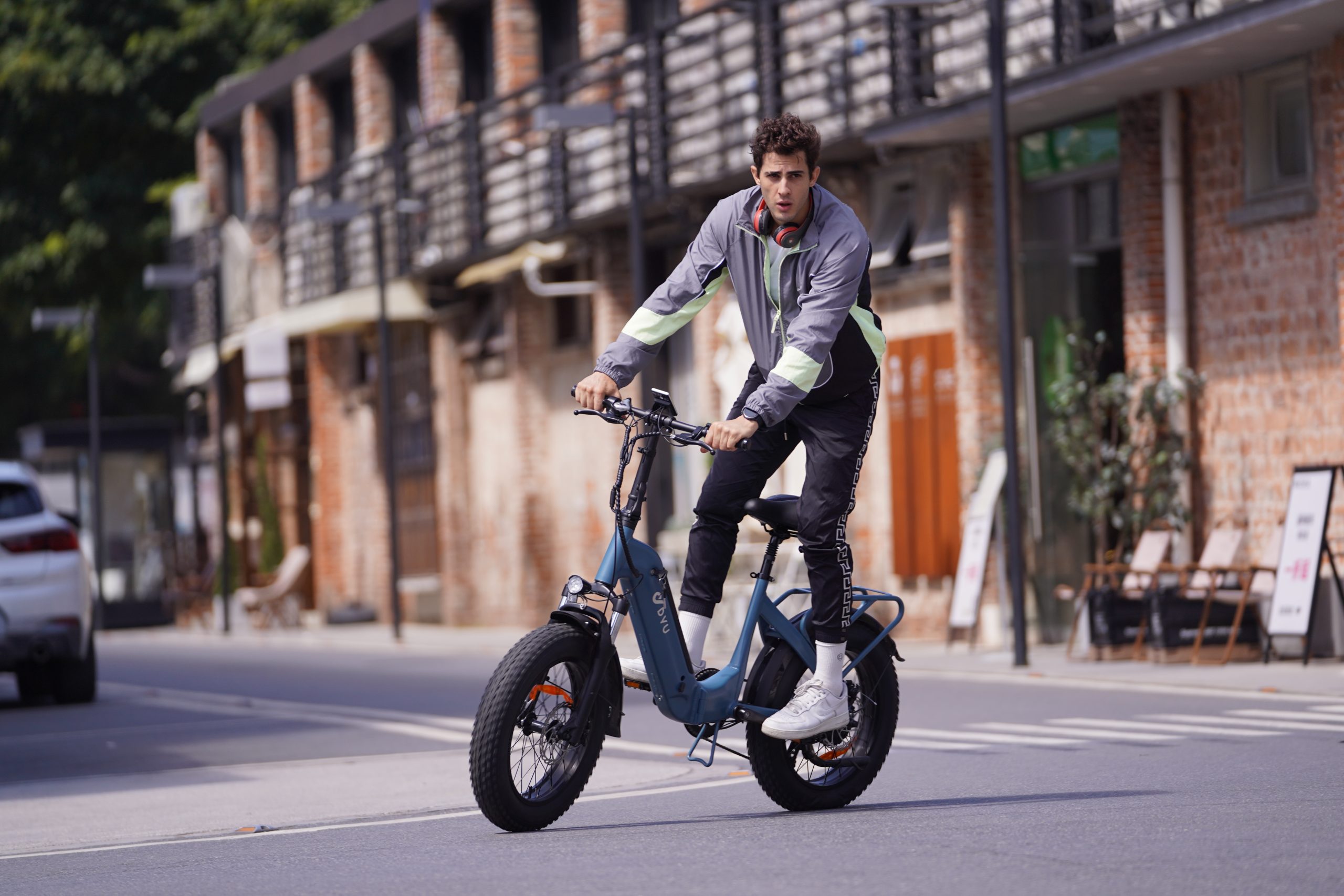
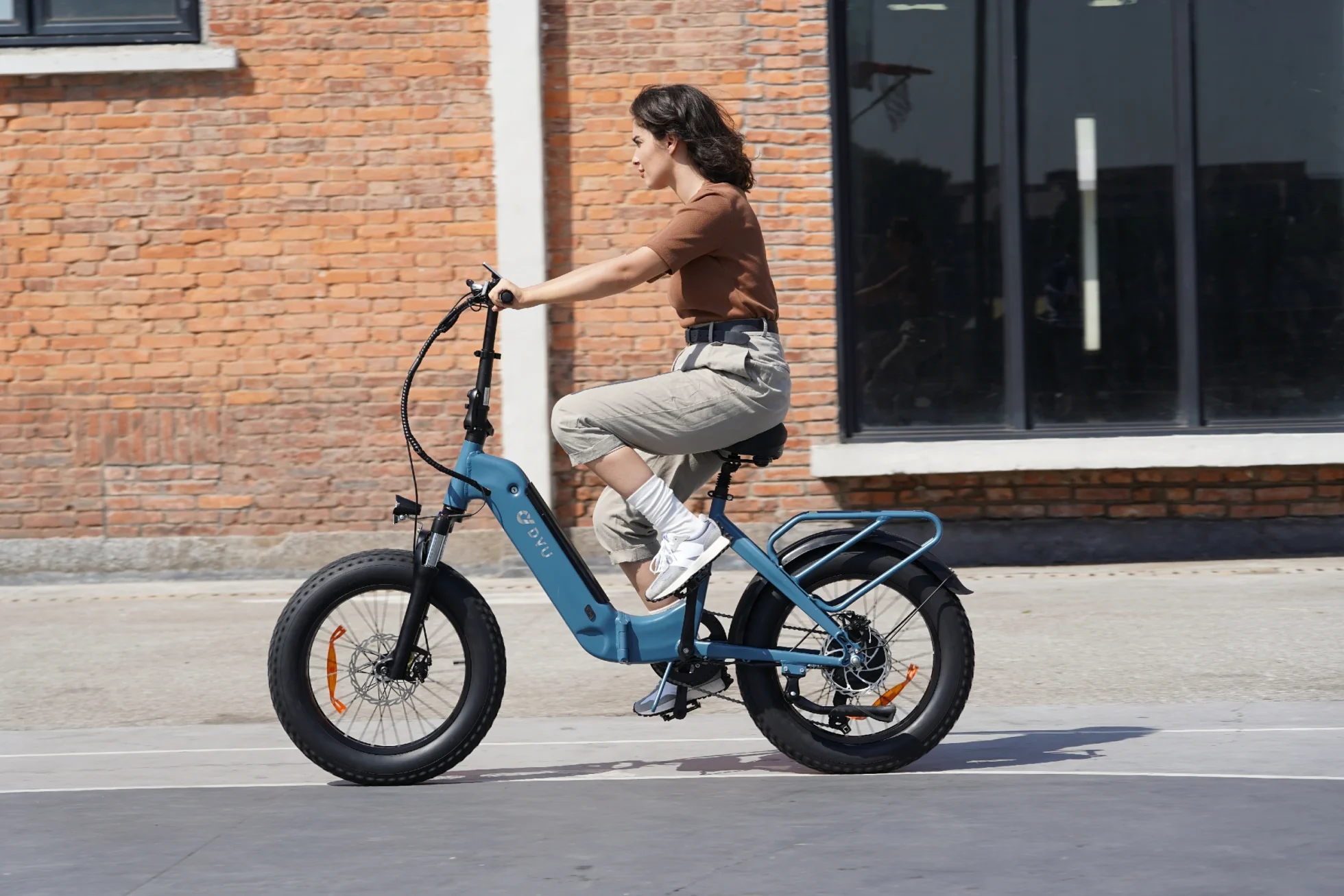
My first e-bike was a standard 2.1″ city tire commuter. Every expansion joint, every pothole, every tram rail — I felt it. Switching to a 20×4.0″ fat tire setup on the DYU M20 was like putting noise-cancelling headphones over my wrists and spine. The tire acts as a massive air-spring: run it at the right pressure (around 1.0-1.4 bar), and small bumps just disappear.
Here’s what no one tells you: fat tires at low pressure make cheap suspension forks borderline unnecessary. That’s a real financial argument, not a marketing one.
They stay planted in bad weather
Rain. Wet leaves. A thin layer of morning frost. The grip difference is obvious the first time you take a corner on damp cobblestones. A study summarised by Statista’s bicycle market reports shows that weather-related cycling accidents spike in autumn and winter — and narrow-tire e-bikes are overrepresented in the data. Fat tires aren’t magic, but they give you a bigger margin for error when the surface is unpredictable.
They work for heavier riders
This is the part the brochures whisper. If you weigh 95 kg or more, a lot of standard e-bikes feel twitchy — not because they’re badly made, but because their load rating is 100-110 kg and you’re already at the edge. Fat tire bikes typically offer 120-150 kg load capacity, which changes the feel completely. The ride stays stable, the frame doesn’t flex, and you don’t feel like you’re babying the bike over every bump.
The Honest Downsides (Because They Exist)
I’m not going to pretend fat tire e-bikes are a free lunch. They aren’t. Here’s what you give up:
Weight
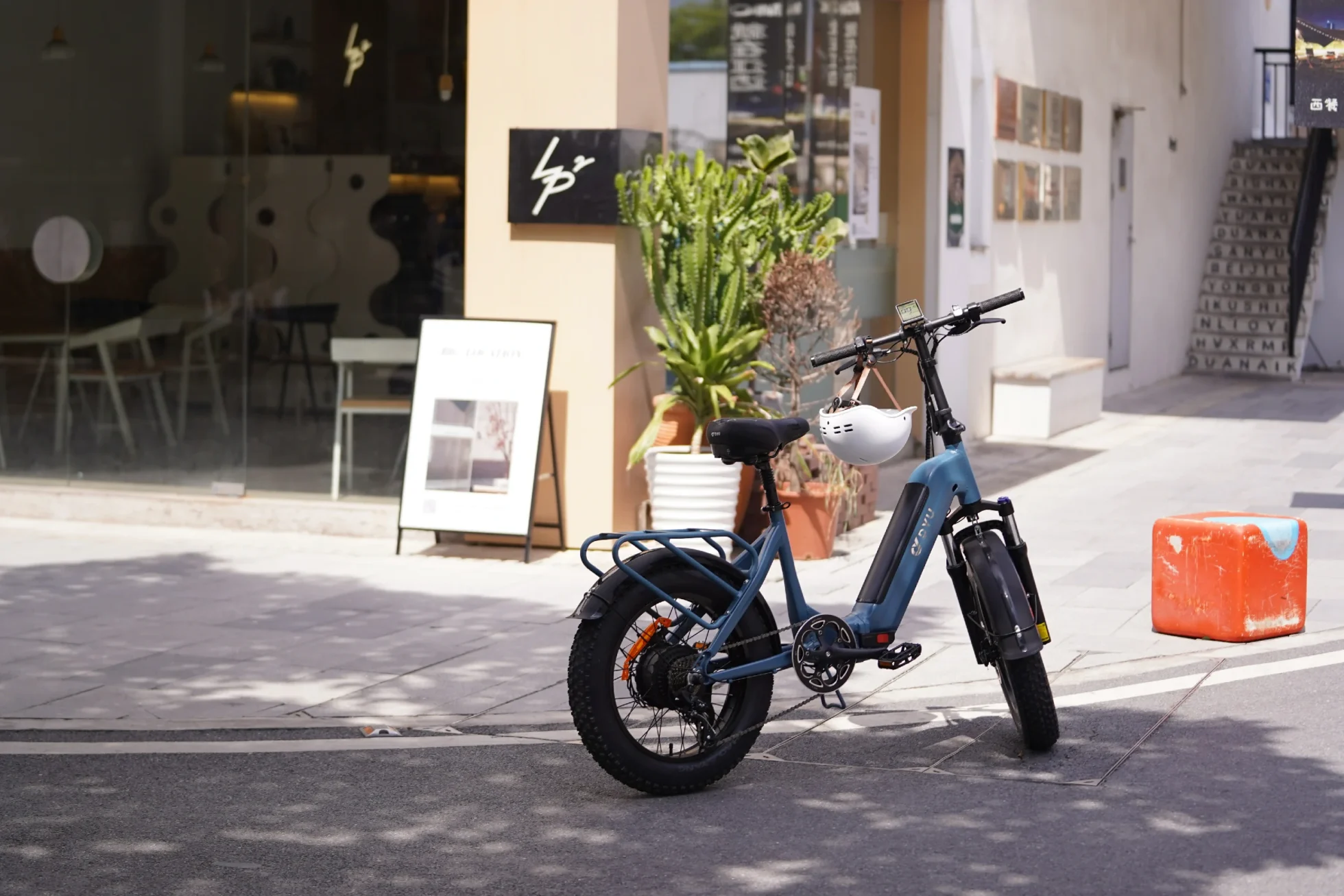
A fat tire e-bike typically weighs 30-40 kg. The M20 comes in at 39 kg. The FF500 is 31 kg — lighter, but still not something you want to hoist up a staircase. If you live on the third floor of an old European walk-up with no elevator, think hard. Fat tire bikes don’t want to be carried.
Rolling resistance (the efficiency tax)
More rubber on the road means more friction. On pure pedal mode, a fat tire bike feels noticeably harder to push than a skinny-tire commuter. But here’s the thing — you’re riding an e-bike. The motor absorbs the rolling resistance tax. You’ll see it in the range numbers, but not in your legs.
Range impact
Expect a 10-15% range penalty compared to a similar bike with thinner tires, all else equal. For the M20 that’s still a very usable 140-160 km in eco mode, so it’s rarely a dealbreaker. The range claimed vs real testing numbers I published earlier this year back this up across multiple models.
Storage footprint
A 20×4.0″ wheel is physically bigger than a 20×2.0″ wheel. It takes more room in the hallway, the garage, the train vestibule. It’s not a huge issue, but it’s the one thing you can’t spec your way around.
Who Should Buy a Fat Tire E-Bike (And Who Shouldn’t)
I’ve talked to enough readers now to know the answer isn’t universal. Here’s how I’d split it.
Buy one if:
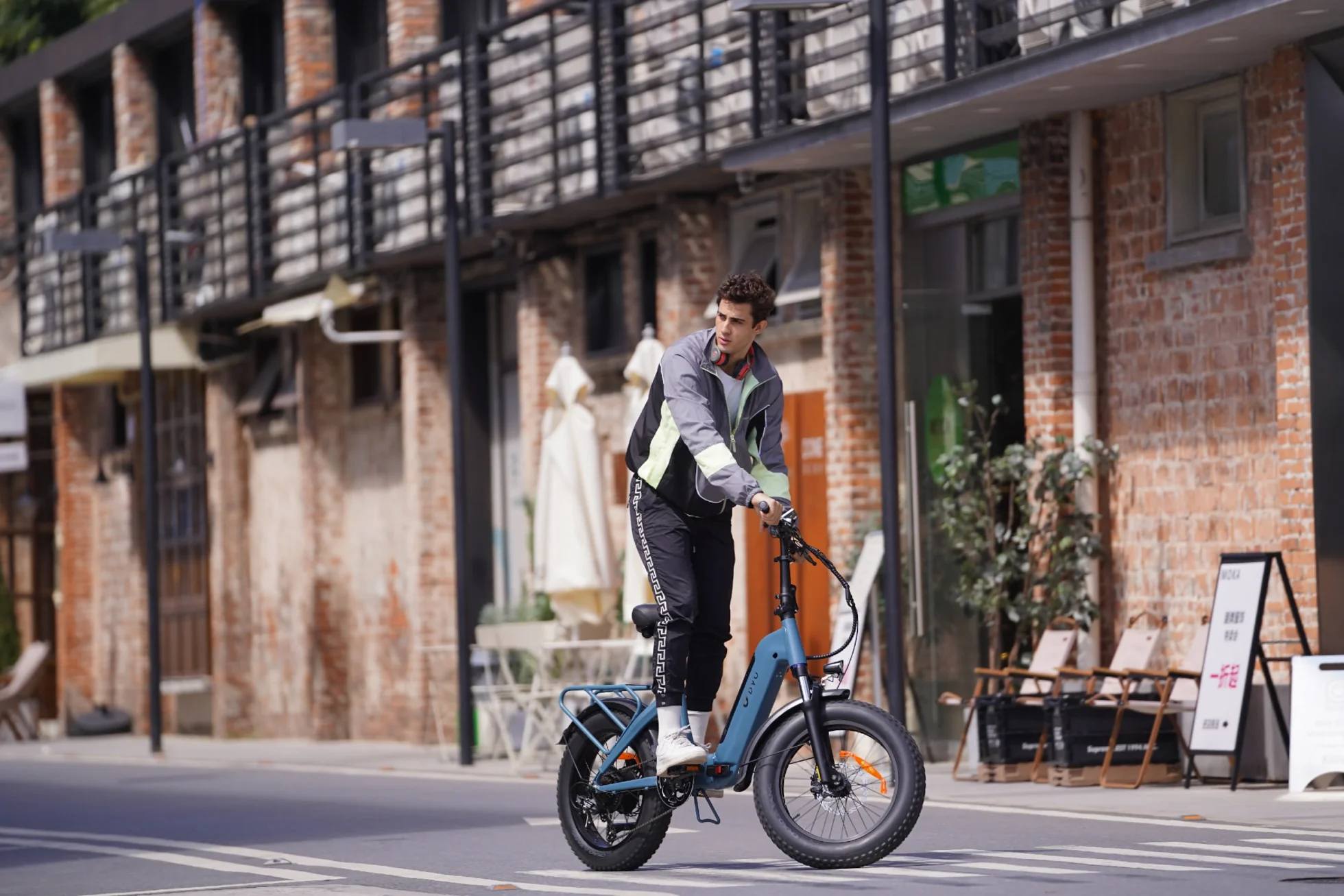
- You commute on mixed surfaces — paved streets plus gravel paths, park trails, or poorly maintained bike lanes
- You weigh 90 kg or more, or carry heavy cargo regularly
- Your climate involves wet roads, winter slush, or unpredictable surfaces
- You want one bike to handle weekday commuting and weekend exploring
- You’ve had a narrow-tire e-bike slip out from under you and never want that again
Skip them if:
- You live in a walk-up apartment and carry the bike upstairs
- Your commute is pure smooth tarmac and speed matters more than grip
- You need to store the bike in a small closet or fold it under a desk
- Your climate is consistently dry and your routes are clean
For everyone in the middle, the real question is which fat tire e-bike — and that’s where things get interesting.
The Two Fat Tire E-Bikes Worth Considering Right Now
I’ve tested nine fat tire e-bikes in the past 18 months, from brands priced between €600 and €2,400. Two kept rising to the top, and both happen to be DYU models. I’m not saying that because this is the DYU blog — I’m saying it because the price-to-performance math actually works out that way.
DYU M20 — The all-terrain pick at €899
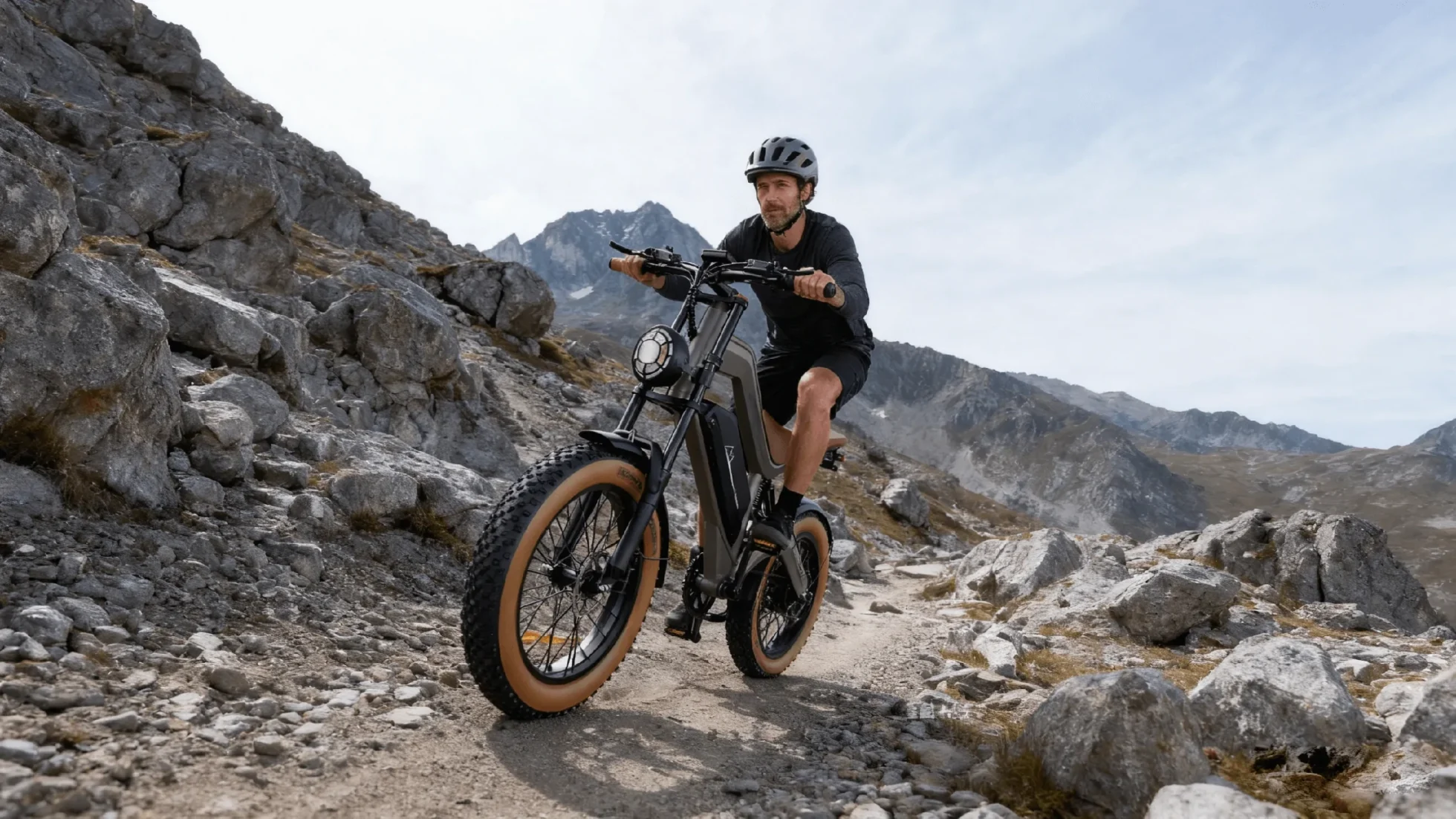
The DYU M20 is the most capable fat tire e-bike under €1,000 I’ve ridden. The numbers tell the story: 750W motor (peak 1500W), 48V 18.2Ah battery, 160 km claimed range (I measured 140 km in eco mode after a full month of testing), and 20×4.0″ fat tires on a stable frame rated for 120 kg.
What sets it apart isn’t just the raw spec — it’s the hydraulic disc brakes. Most bikes at this price point use mechanical discs, which fade when you’re loading the bike with groceries on a wet descent. The M20’s hydraulics are confidence-inspiring even two-up with a backpack. Currently sits at €899, down from a €1,399 original — a saving I keep waiting to disappear.
DYU FF500 — The heavy-load commuter pick at €1,199
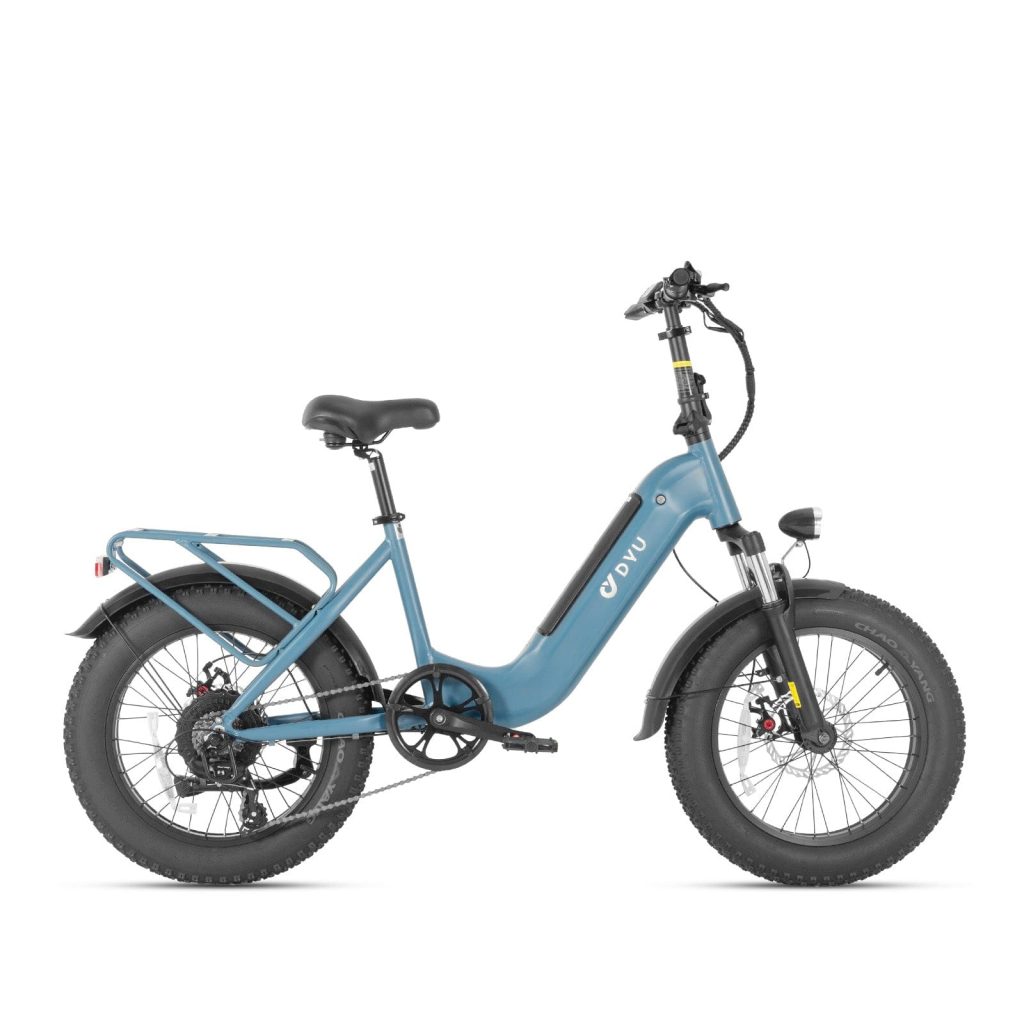
The DYU FF500 plays a different game. Its 500W motor is smaller than the M20’s, its top speed caps at a more EU-friendly 32 km/h, and its 70 km range is shorter. But two numbers matter: it weighs only 31 kg and it carries 150 kg of load — the highest in the DYU lineup. If you’re a heavier rider, or you haul real weight (a kid seat, panniers full of groceries, a toolbox for site visits), the FF500 is built for you.
It also feels more like a “normal” bike in traffic, where the M20’s moped aesthetic draws stares. Some riders want that, some don’t. The FF500 is the quieter choice.
How to Choose Between Them (My Actual Recommendation)
Here’s the shortcut I give friends who ask:
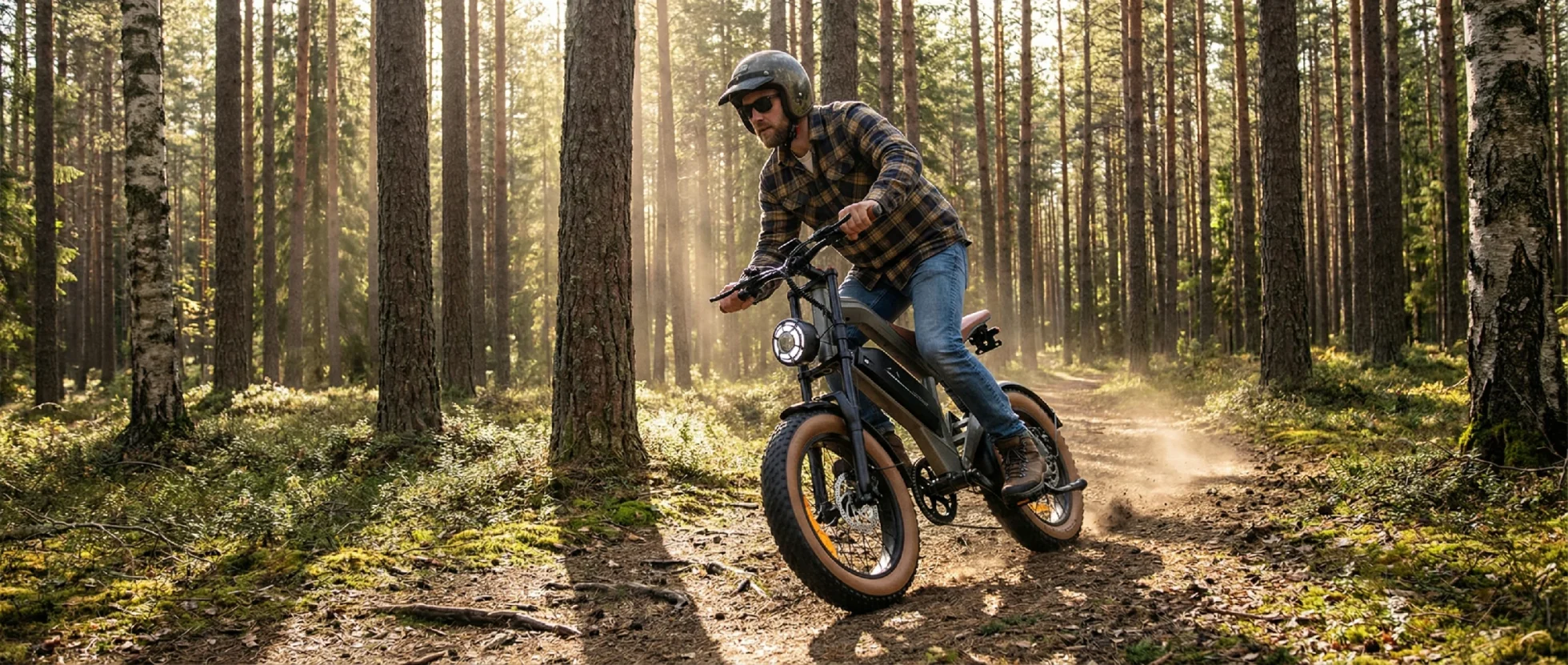
Pick the M20 if power and range matter more than weight. It’s the bike to buy if you want to cover long distances, climb steep hills without breaking a sweat, or ride off-road paths on weekends. The 750W motor and 160 km range are the best combination under €1,000 I’ve tested. Just know you’re buying a 39 kg machine.
Pick the FF500 if you’re a heavier rider or you prioritise load capacity over raw speed. The 150 kg payload and lighter frame make it the more practical daily driver for urban commuting with cargo. You’ll sacrifice top speed and range, but you gain flexibility and stair-manageability.
Both are significantly cheaper than comparable fat tire e-bikes from Engwe, Himiway, or Aventon, where you’re looking at €1,500-€2,500 for similar specs. The value argument is real. For context, if you’re still torn between a fat tire and a foldable commuter, my beginner’s guide to choosing your first electric bike walks through the trade-offs in more detail.
Fat Tire E-Bike Maintenance: What I’ve Learned
One small thing worth mentioning before you click buy. Fat tires need slightly different care than standard ones:
- Pressure matters more than you think. Too high (above 1.6 bar) and you lose most of the comfort benefit. Too low (under 0.8 bar) and you get pinch flats on curbs. I run mine at 1.1 bar for city and drop to 0.9 bar on gravel.
- Check for embedded debris weekly. The wide footprint catches more glass and thorns than a narrow tire. A quick visual check before your Monday ride is enough.
- Expect to replace tires less often than you’d think. The extra rubber wears slower than a commuter tire. I’m 2,800 km into my original M20 tires with no sign of needing replacement.
- Batteries age the same as any e-bike. Charge to 80% for daily use, full charge only when you need the range. Basic lithium care.
The Bottom Line on Fat Tire E-Bikes in 2026
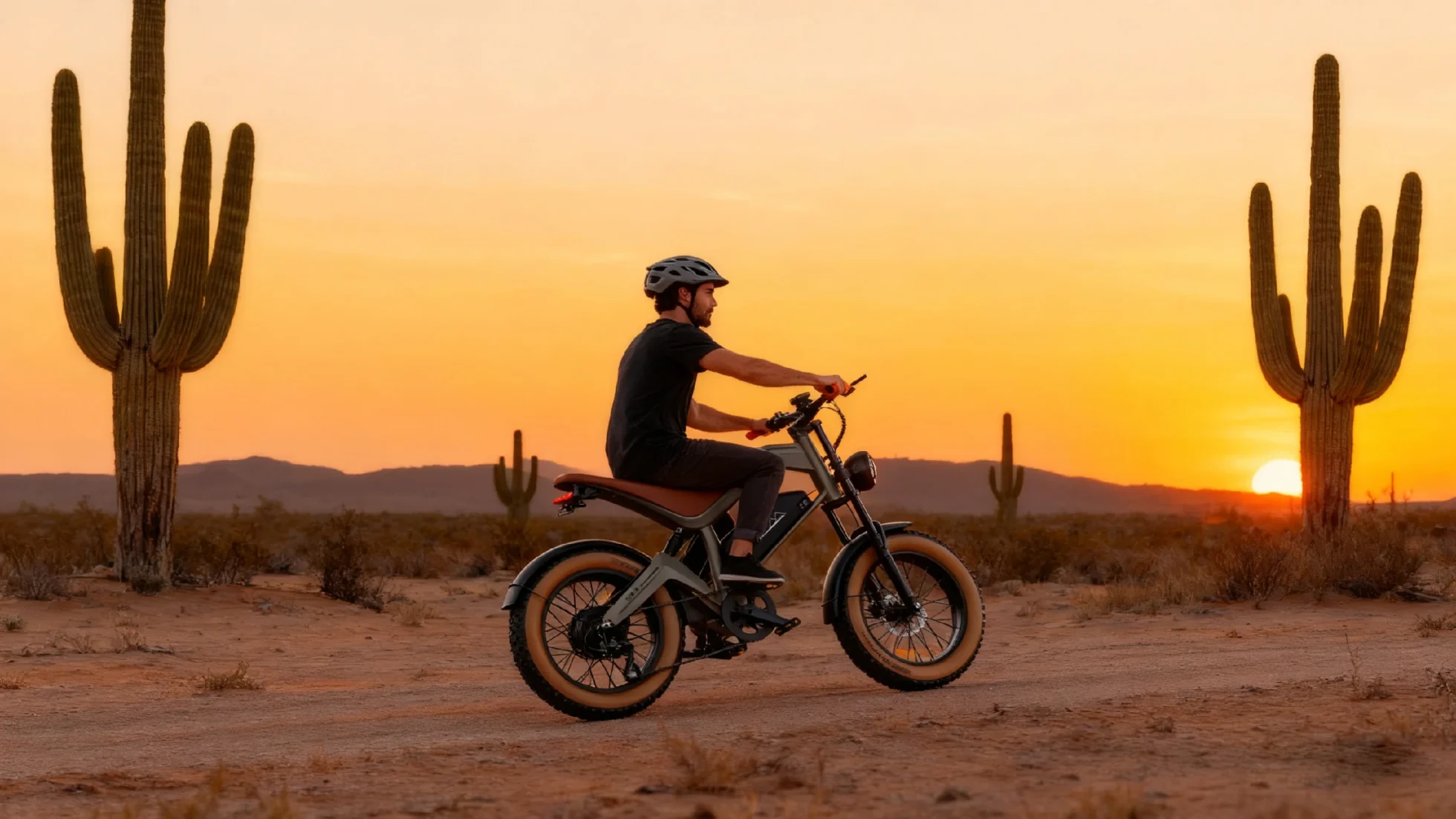
Are fat tire e-bikes worth it? For mixed-terrain riders, heavier commuters, and anyone whose daily route looks less than ideal on a narrow tire — absolutely yes. The M20 especially is the kind of bike that solves problems you didn’t know you had. For smooth-road commuters who value weight and compactness, stick with a traditional city e-bike.
My honest take: the all-terrain versatility is the killer feature. I stopped owning two bikes once I had the M20. One bike for the weekday commute, the same bike for Saturday gravel loops, the same bike when the forecast turns ugly. That’s the real value of a fat tire e-bike in 2026 — not the look, not the spec sheet, but the fact that you stop planning your rides around the weather.
FAQs
Q1. Are fat tire e-bikes worth it for daily commuting?
Yes, if your commute includes any mixed or imperfect surfaces — potholes, gravel shortcuts, cobblestones, or poorly maintained bike lanes. Fat tire e-bikes absorb bad surfaces better than any narrow-tire commuter and feel more stable in wet weather. The trade-off is weight and a small range penalty, which most riders accept for the comfort gain.
Q2. What is the real range of a fat tire e-bike?
Expect 10-15% less range than a comparable narrow-tire e-bike, due to higher rolling resistance. For the DYU M20, that means about 140 km in eco mode vs the 160 km claim. The FF500 realistically delivers around 60 km in mixed use versus its 70 km claim. Numbers drop further in full-throttle mode.
Q3. How heavy is a fat tire e-bike?
Most fall between 28 and 42 kg. The DYU FF500 is 31 kg and the DYU M20 is 39 kg. Compared to a standard commuter e-bike at 20-25 kg, this is a noticeable jump — something to consider if you need to carry the bike upstairs or onto public transport.
Q4. Can you ride a fat tire e-bike on pavement?
Yes, and most owners do most of the time. Fat tires work on paved roads — they’re just slightly slower and slightly less efficient than narrow tires at the same speed. The upside is huge comfort and confidence; the downside is a small energy tax you won’t notice thanks to the motor.
Q5. DYU M20 vs FF500 — which fat tire e-bike should I buy?
Choose the M20 (€899) if you want maximum power, longest range, and weekend off-road capability. Choose the FF500 (€1,199) if you need the highest load capacity (150 kg), a lighter frame, and a more urban-friendly 32 km/h top speed. Both are significantly cheaper than comparable fat tire e-bikes from European premium brands.



2 comments
Hannes W.
the weight point is so underrated. i’m 95kg and regular tires just beat me up on bad tarmac, fat tires fixed that almost immediately
Daniel Novak
yep the comfort gain for heavier riders is the one benefit nobody talks about. good to hear it worked out for you