

Car-free summer errands in Europe are not just a lifestyle idea in 2026. They are becoming part of normal city movement: low-emission planning, crowded bike lanes, more e-bikes, and riders using one bike for commuting, groceries, school runs, and parcel pickups.
That makes carrying technique more important than it sounds. A recent Netherlands bike-lane speed trial put the issue in plain view: when e-bikes, fat bikes, family bikes, and regular cyclists share tight space, predictable riding matters more than saving 30 seconds. Add groceries to the bike and the lesson gets even sharper.
This guide keeps the headline trend practical. If you want to use an e-bike for summer errands without turning every shop stop into a balancing act, load the bike like the streets are busy, the corners are tight, and everyone around you needs time to read what you are doing.
Car-Free Summer Errands in Europe: Start With Balance, Not Capacity
The first rule is simple: heavy items go low and stable. Light items can sit higher. Anything that can swing, rub, spill, or block the bars needs a better place before you leave the shop.
| Item type | Best place | What to avoid |
|---|---|---|
| Bread, jacket, light parcel | Front basket | Stacking so high that it blocks your view |
| Milk, bottles, cans | Rear rack bag or pannier | One heavy bag hanging from one handlebar |
| Laptop or documents | Padded bag fixed to the rack or worn close | Loose basket placement on rough streets |
| Wet groceries | Waterproof pannier or sealed inner bag | Letting water reach the battery area |
| Small lock and tools | Dedicated pouch | Letting metal tools bounce around with food |
Recent Dutch coverage of a 20 km/h bike-lane speed trial shows why this matters now: crowded cycle lanes are forcing cities to think about speed, mixed users, and safety. CyclingNews’ pannier guide is the practical equipment side of the same story, because stable cargo helps riders stay predictable in busy lanes.
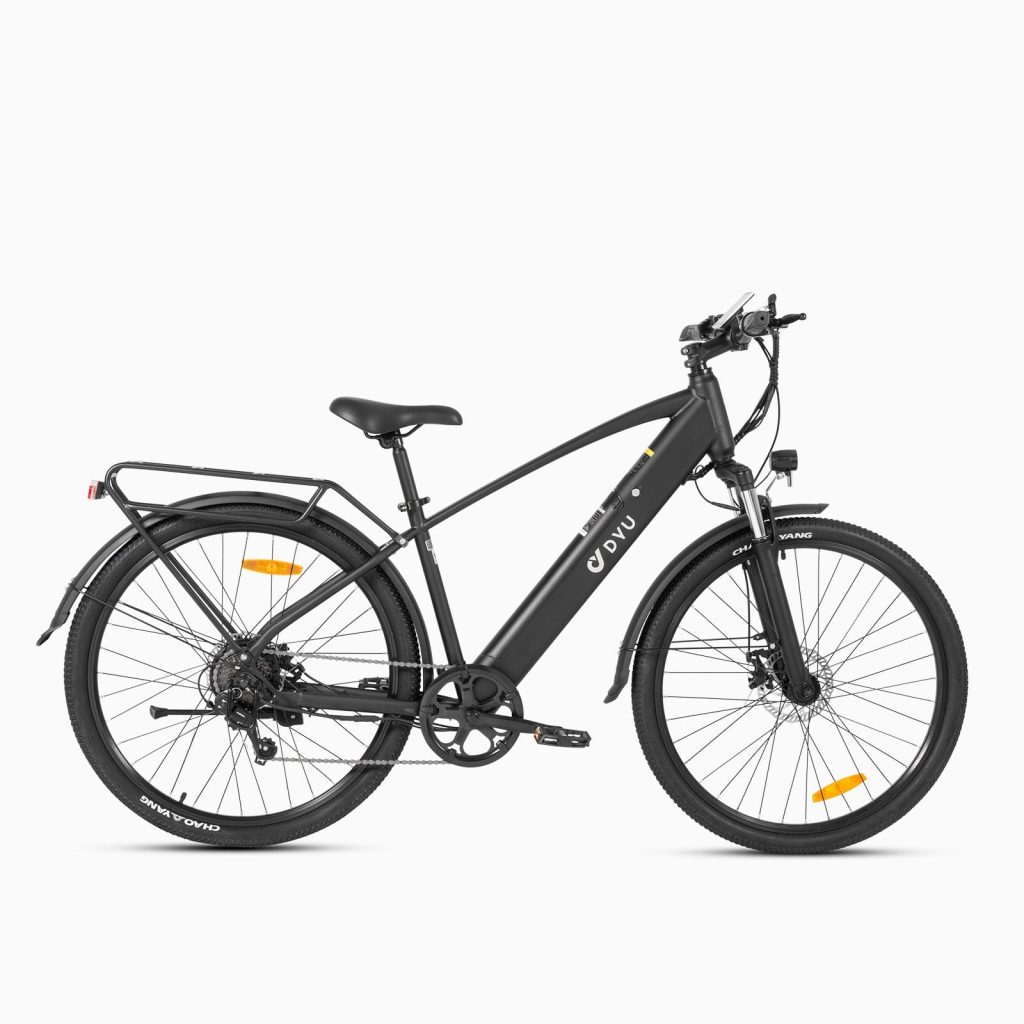
Where the DYU C6 Fits City Errands
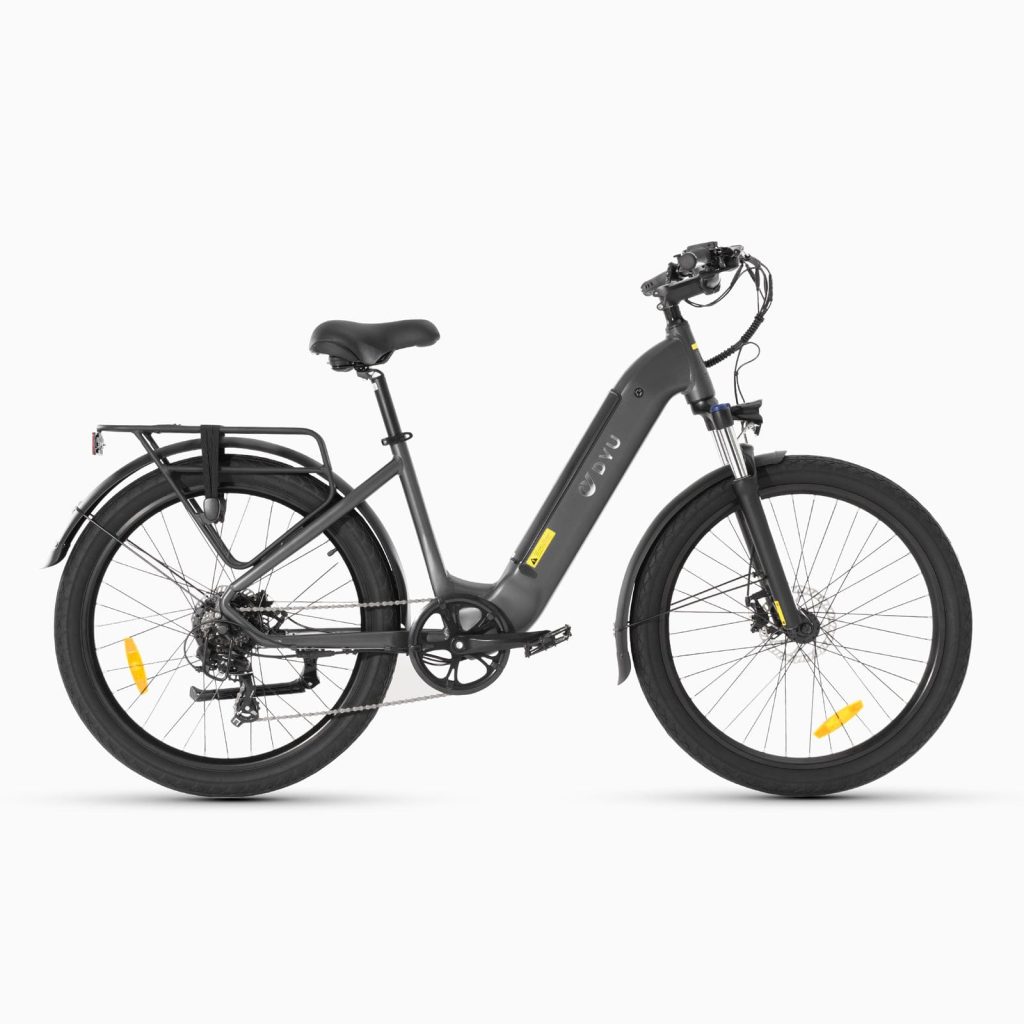
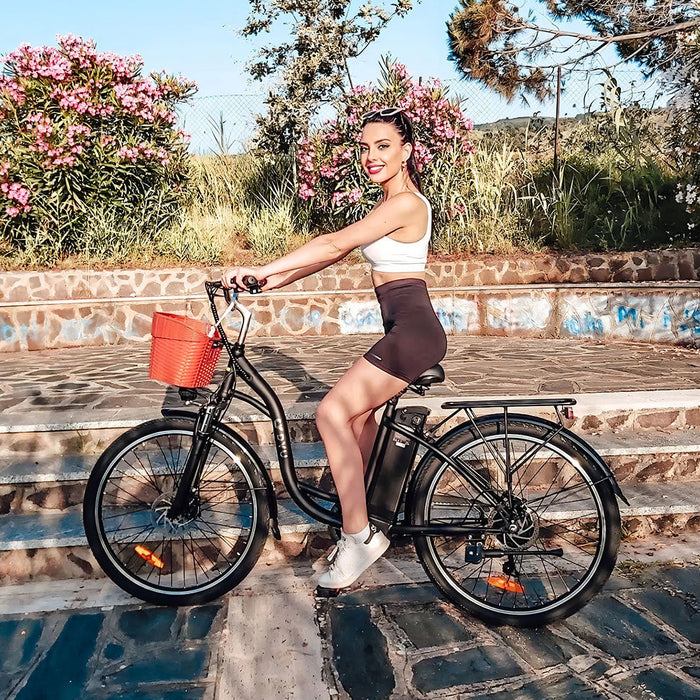
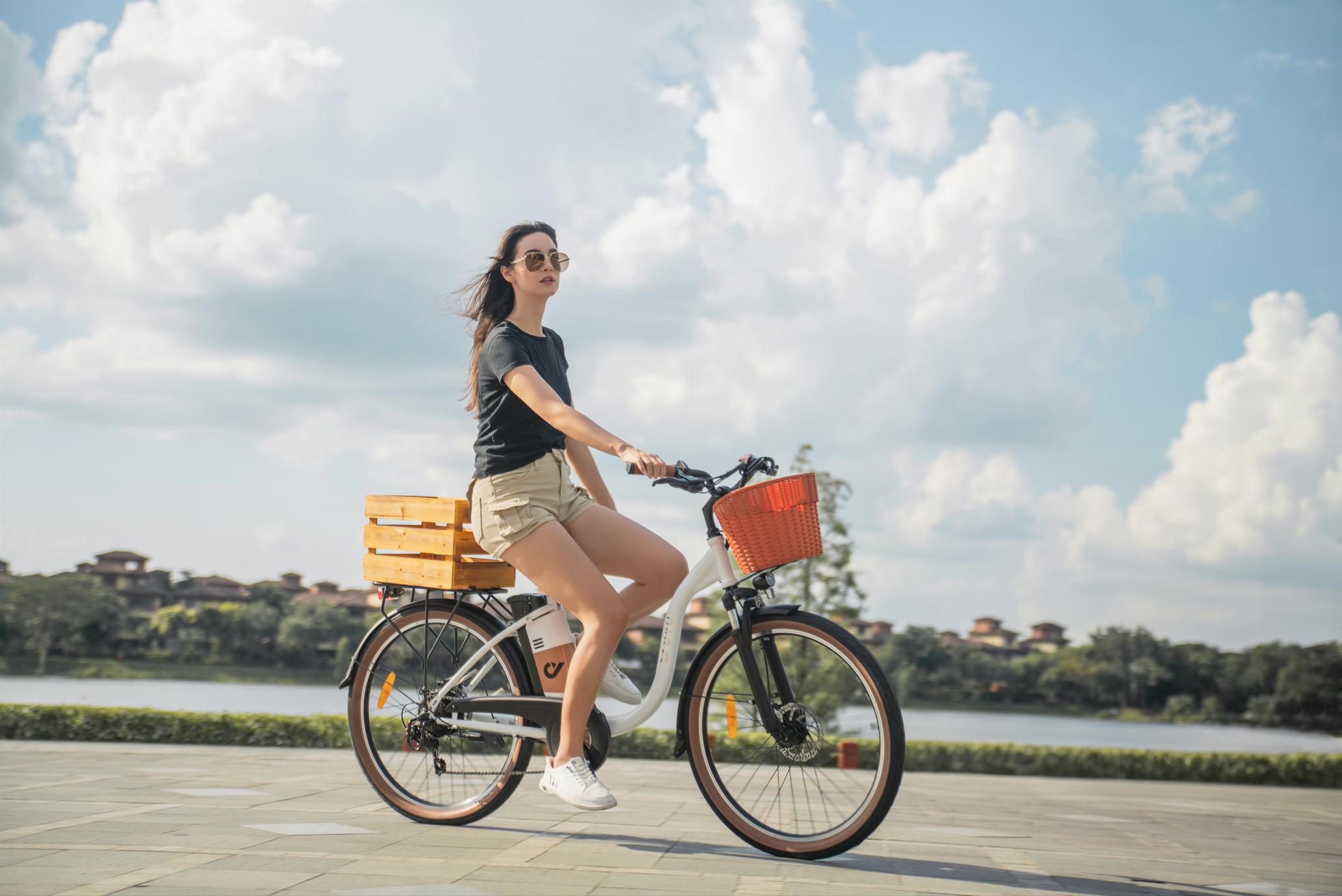
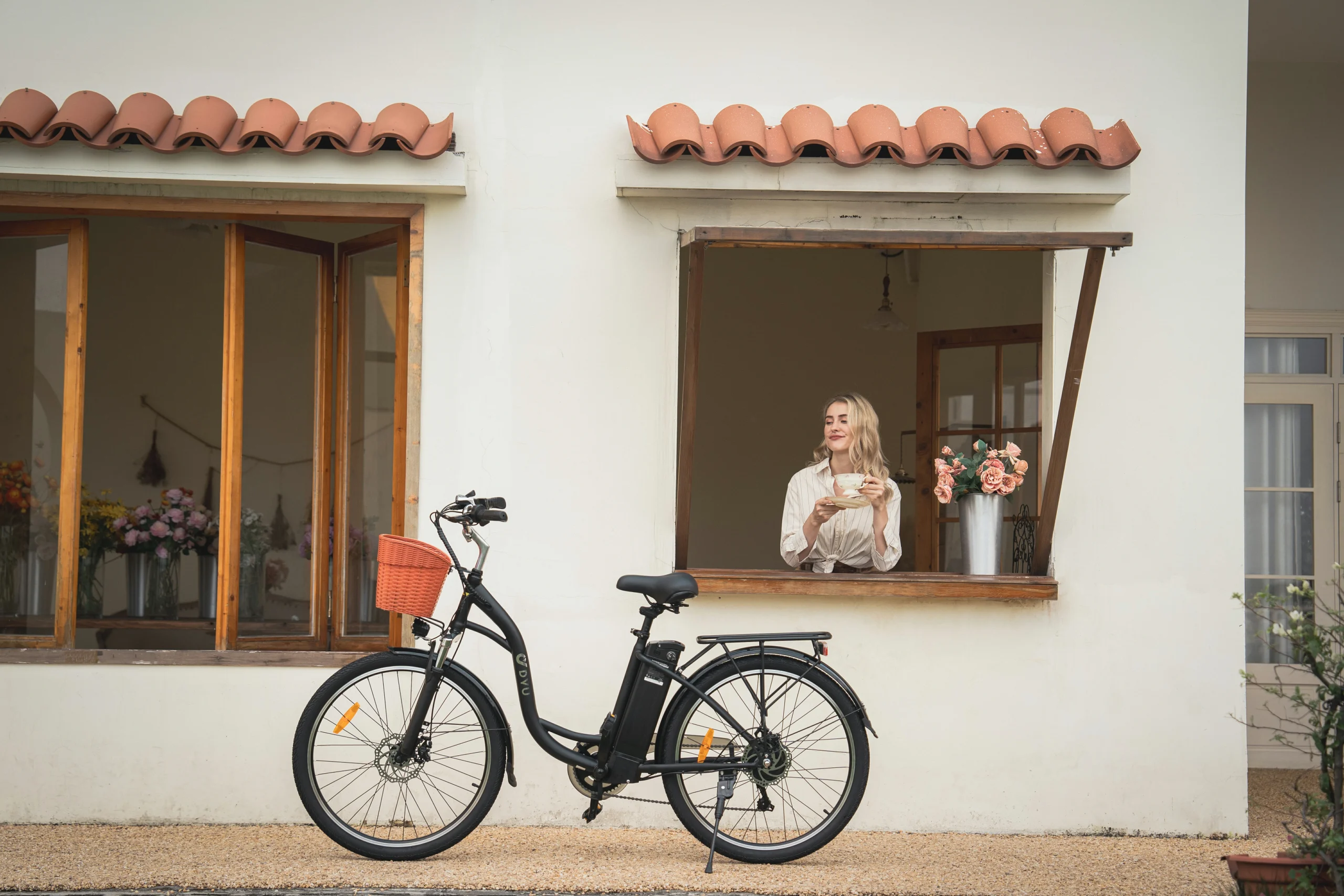
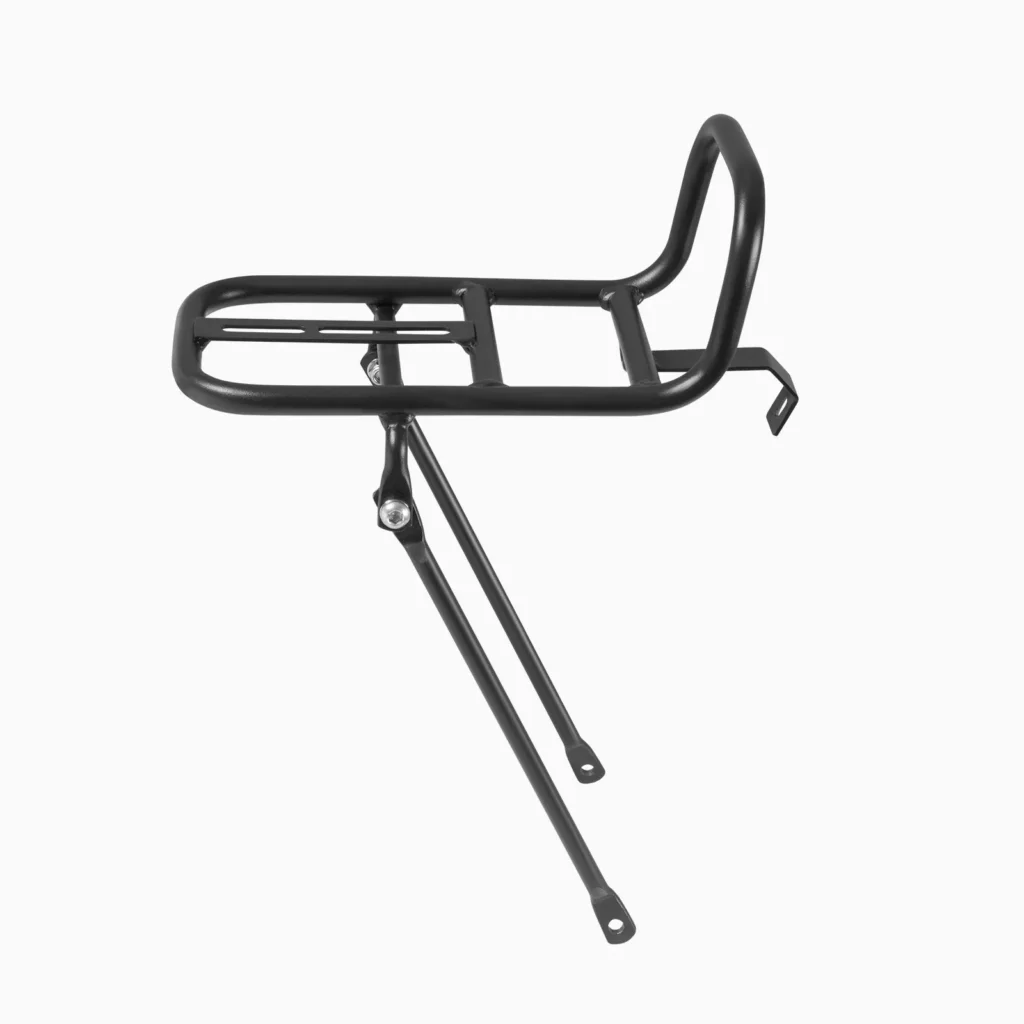
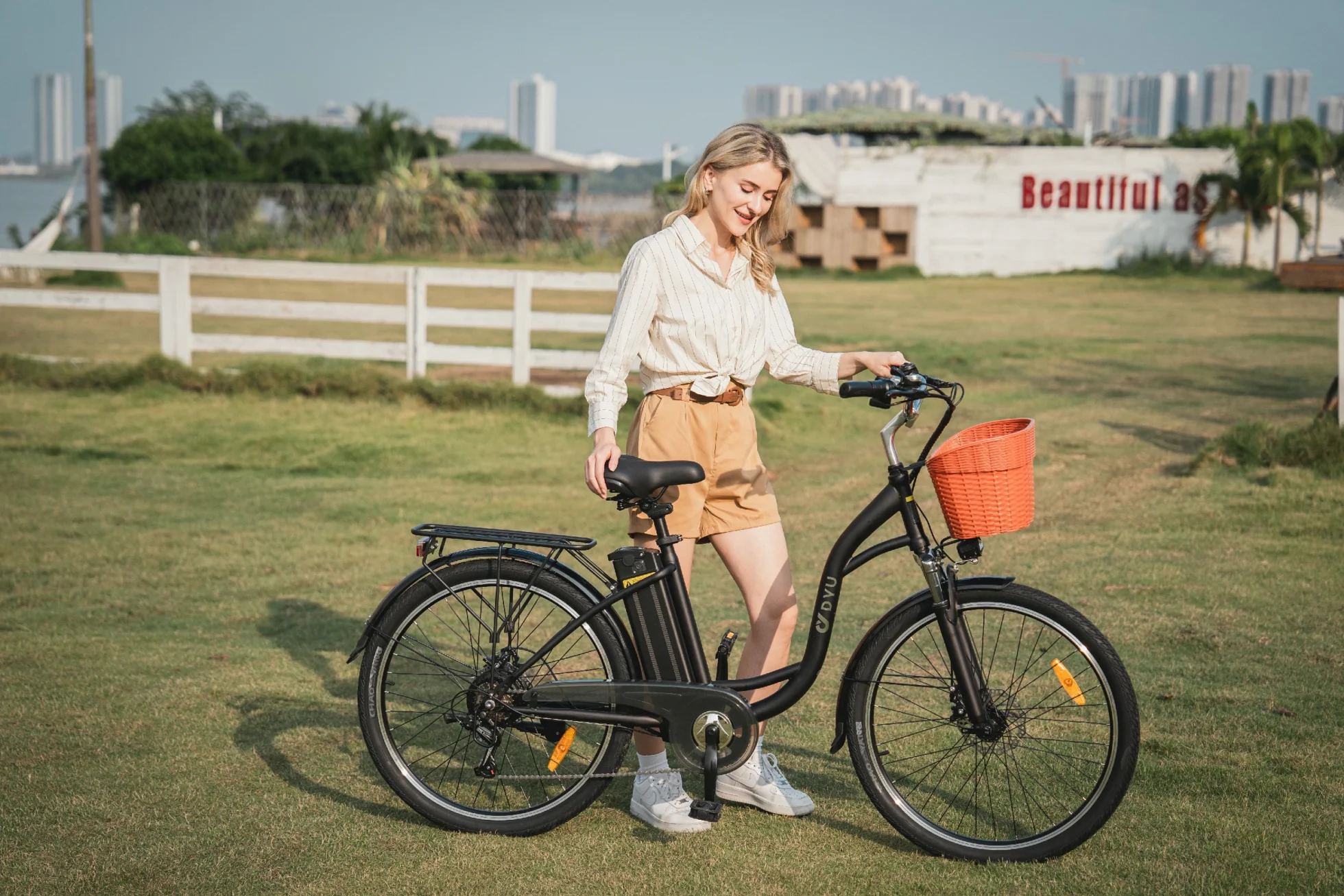
The DYU C6 26-inch city e-bike is a natural fit for this kind of practical guide because it already comes with a front basket and rear rack. The bike uses a 250W motor with 500W peak output, a 36V 12.5Ah removable battery, listed 60 km pedal-assist range, 25 km/h assist speed, 26 x 2.125-inch tires, front fork and seat suspension, Shimano 6-speed gearing, front and rear disc brakes, LED lighting, and a listed 120 kg load capacity.
At the time of writing, the C6 is listed at €819, down from the regular €899. That does not make it a cargo bike. It makes it a sensible city e-bike for normal errands: groceries for dinner, a work bag, a gym kit, or a small parcel.
The honest limit is weight. At 27 kg before cargo, the C6 feels stable on the road, but you still need to think before loading it. A full basket, a rear bag, and a rider in a hurry can make slow turns feel clumsy.
Use the Front Basket for Light, Quick Items
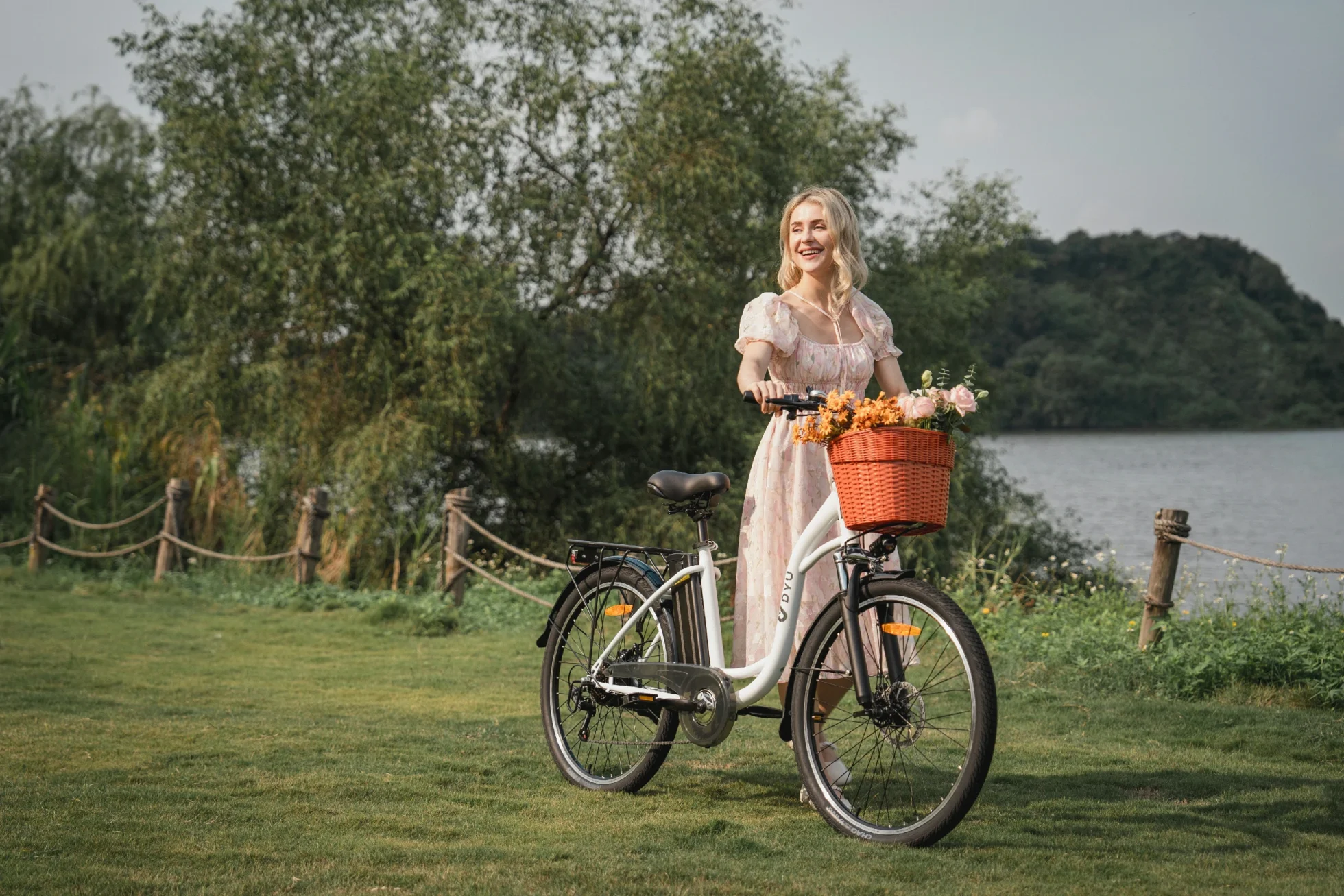
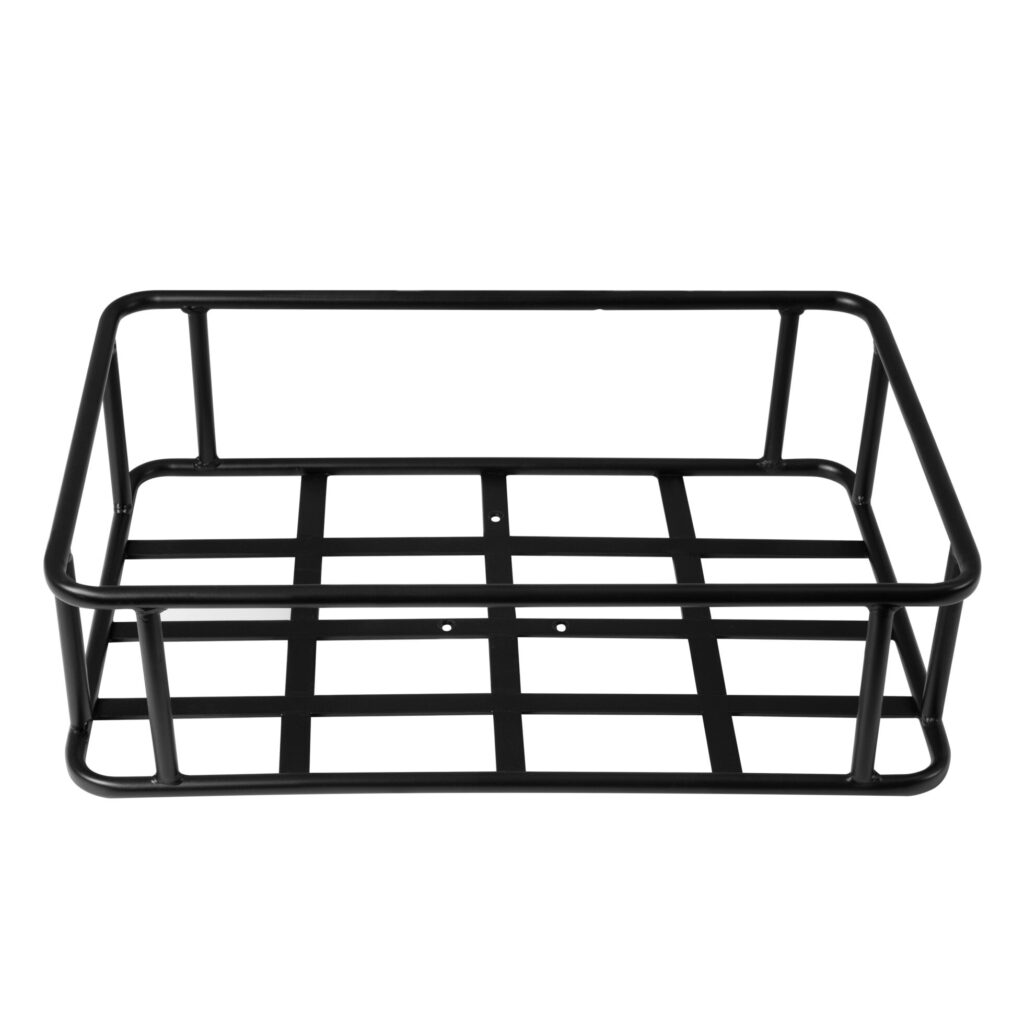
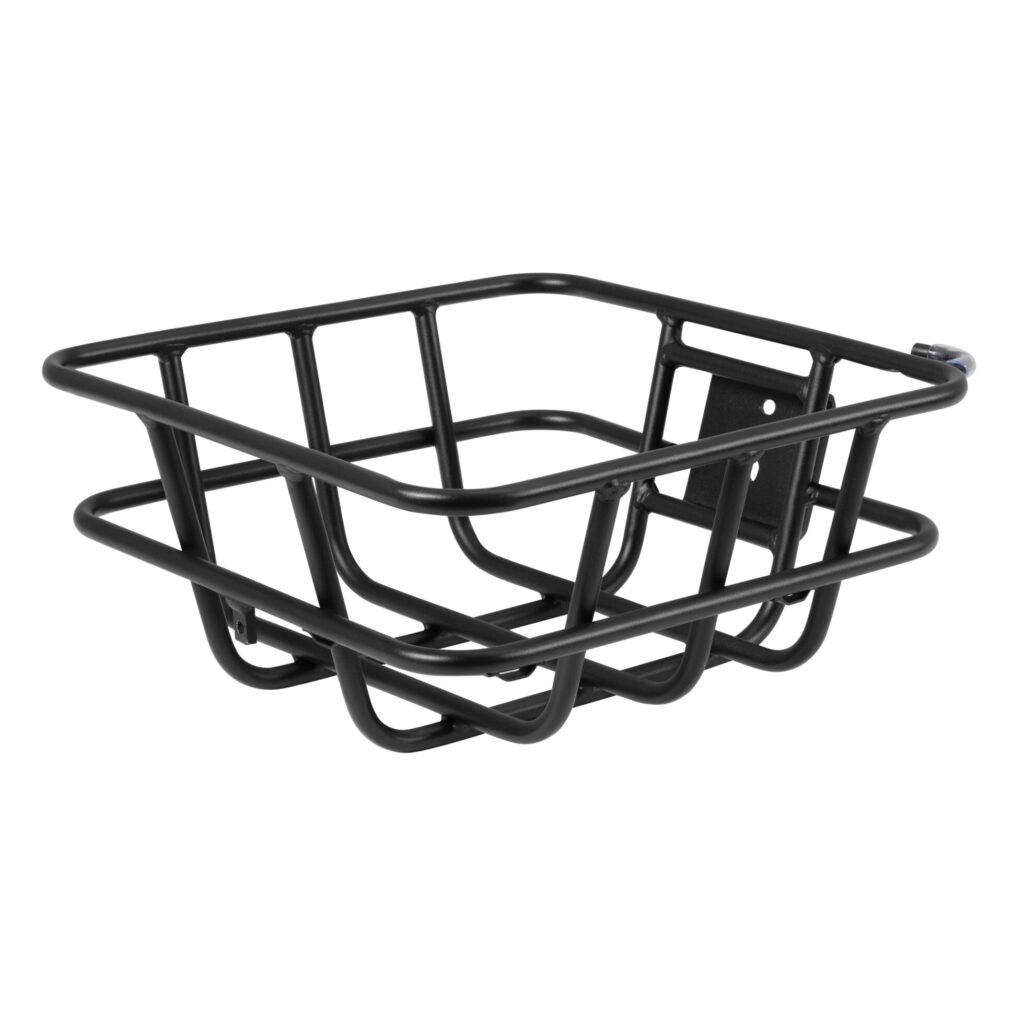
The front basket is best for light, simple things. I use it for bread, a jacket, gloves, a small parcel, or anything I want to reach quickly after parking. I do not use it as a deep grocery bin.
Too much weight at the front changes steering. The handlebar feels slower, the bike wants to flop at walking speed, and every small correction becomes more obvious. That is not dangerous if you expect it, but it feels messy if you do not.
Tom’s Guide’s first e-bike buying guide makes the same broader point about cargo needs: choose the bike and carrying setup around what you actually haul. If your real life is two small bags after work, the C6 setup makes sense. If your real life is a weekly family shop, plan for larger cargo equipment.
Put Dense Weight on the Rear Rack
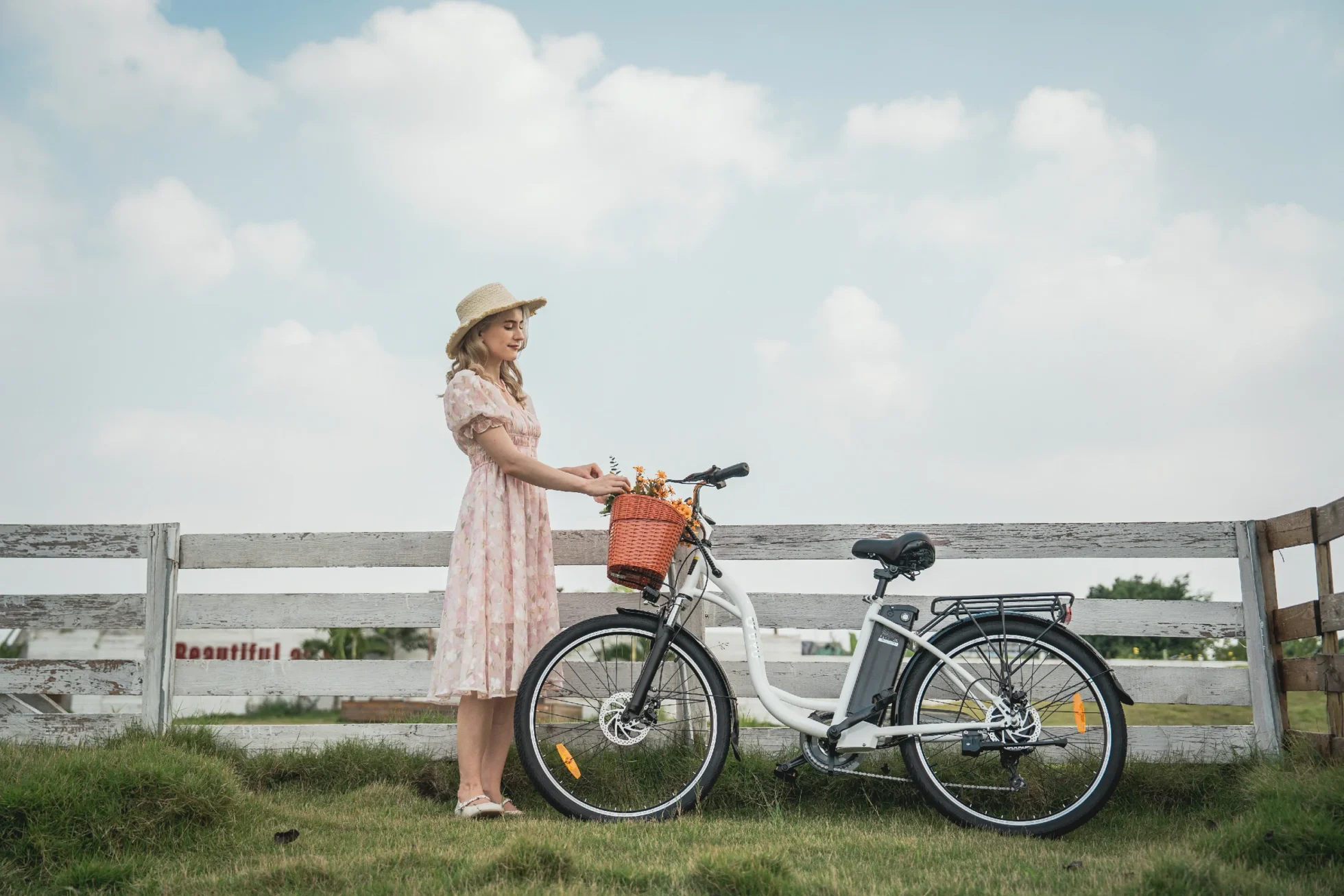
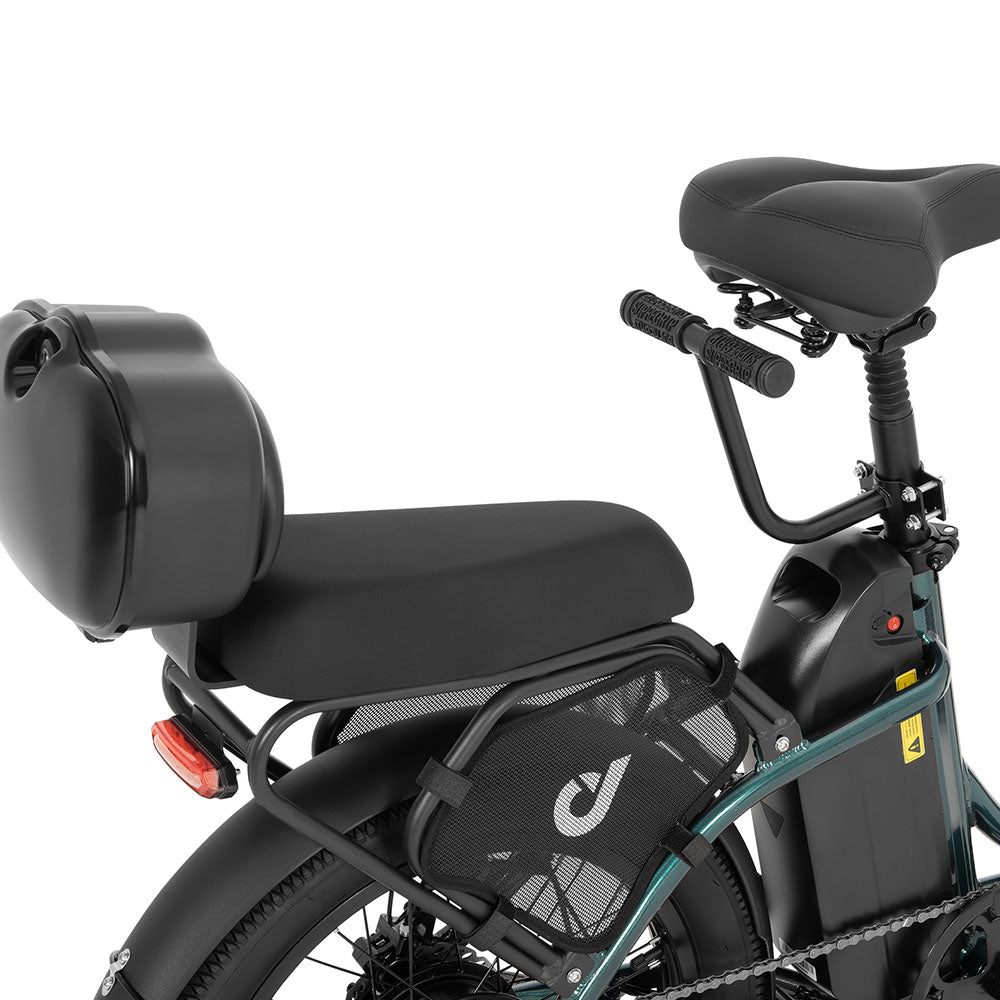
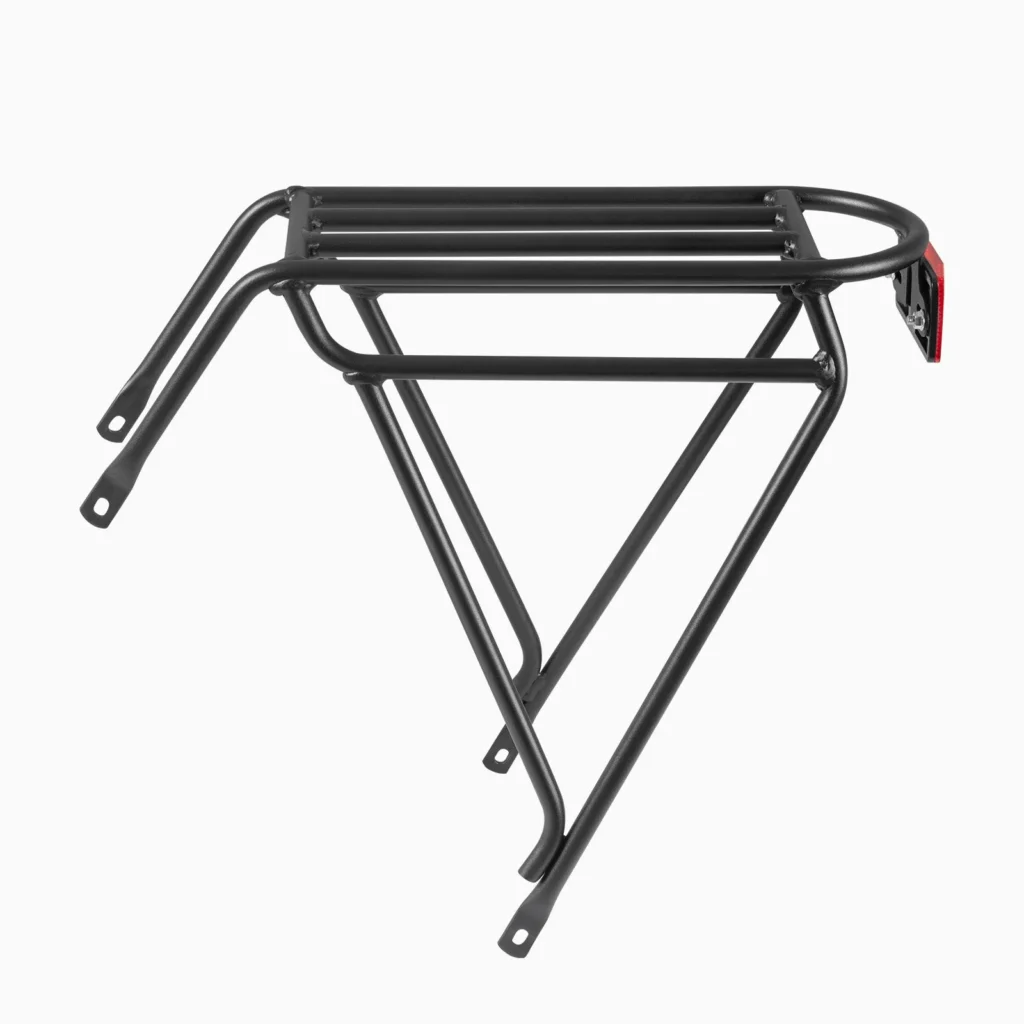
Dense items belong on the rear rack or in a rear pannier. Milk, drinks, jars, books, tools, and chargers should sit low and close to the bike’s centerline. If the left side is heavy and the right side is empty, the bike will remind you at every slow turn.
Cycling Weekly’s pannier rack guide explains why rack compatibility, weight limits, and load placement matter. My city version is less formal: if the bag can move, it will move at the worst moment.
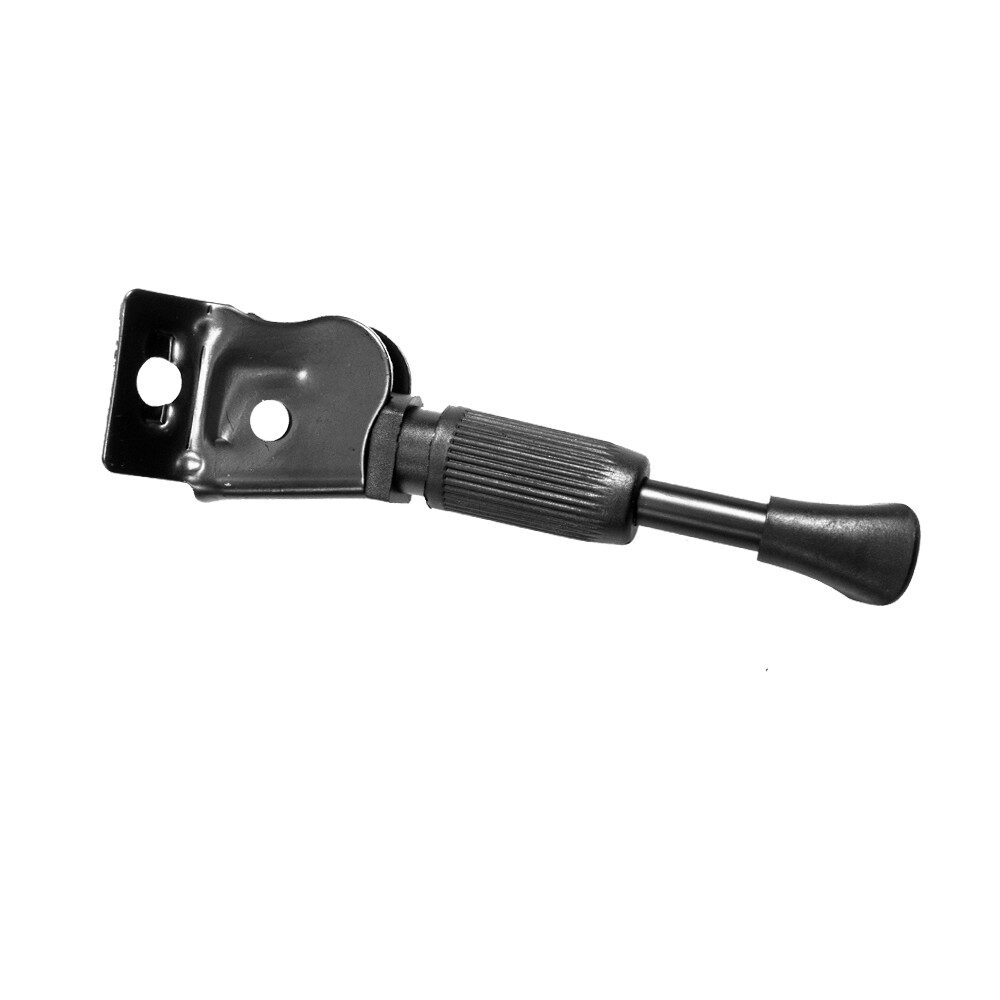
Straps are cheap insurance. A small bungee or purpose-made rack strap keeps soft bags from sliding, but it should never go near spokes, brakes, or the chain. After packing, I lift the rear of the bike slightly and shake it. If the bag shifts in the hallway, it will shift on the street.
Brake Earlier When the Bike Is Loaded
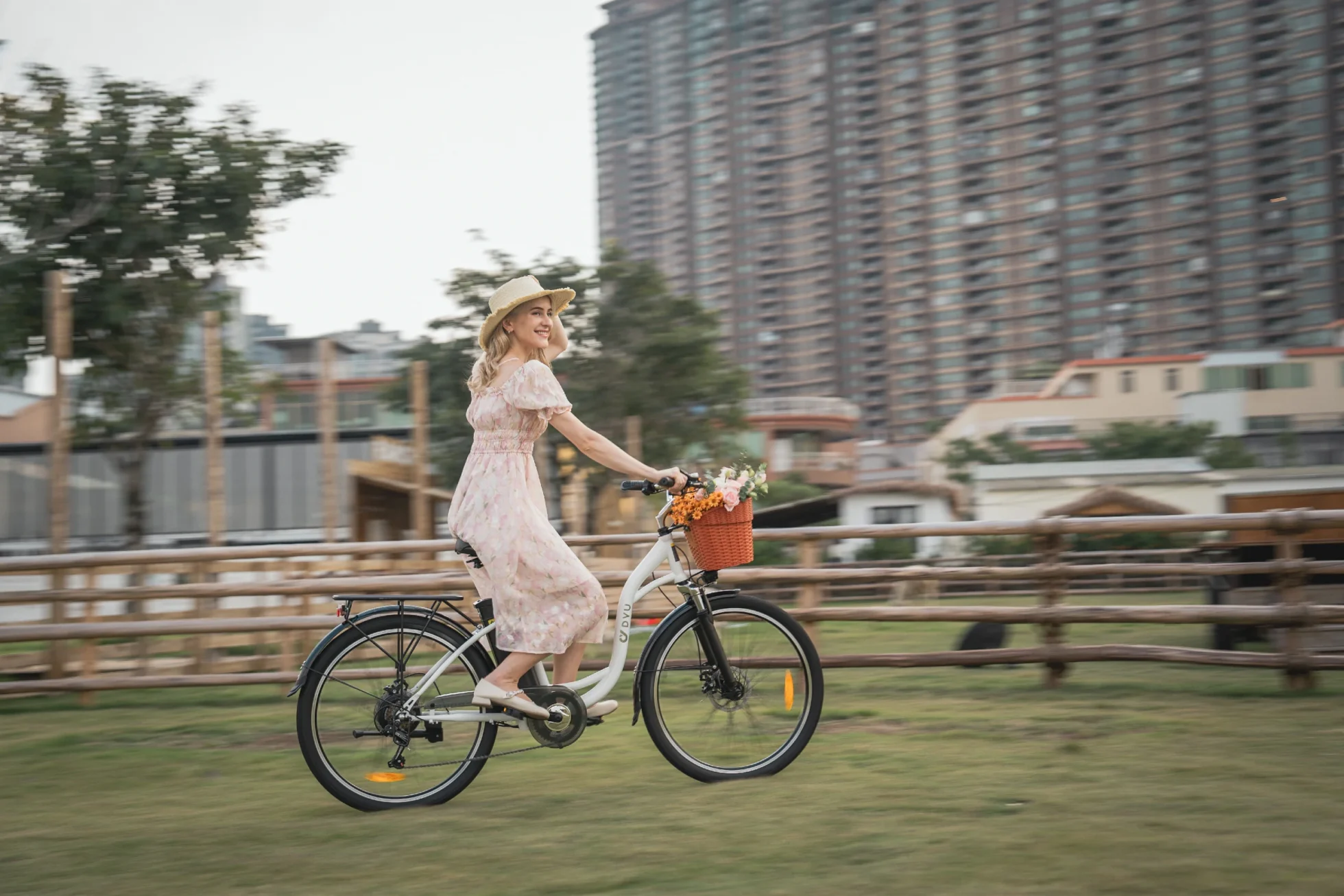
A loaded e-bike needs more patience. The C6 has front and rear disc brakes, which is the right foundation, but cargo still changes timing. In a summer city lane full of commuters, tourists, delivery riders, and faster e-bikes, I brake earlier, stay smoother, and avoid late swerves around parked cars.
This is especially true after rain. A basket with groceries, a rear bag, wet paint lines, and tram tracks are not a combination I try to outsmart. If the ride home is wet, DYU’s rain riding guide pairs well with this routine. For brake types, the disc brake guide is the useful DYU explainer.
There is one small habit that helps a lot. I ride the first 100 metres slowly after loading. That short test tells me whether the steering feels odd, whether a bag is rubbing, or whether I packed something noisy enough to become distracting.
Protect the Battery Area and Charging Routine
The C6’s removable 36V 12.5Ah battery is one of the reasons it works for apartment riders. You can charge indoors instead of looking for an outdoor socket. But errands add new risks: wet bags, leaky groceries, and metal objects packed without thought.
I keep liquids upright, separate tools from food, and avoid leaning heavy bags against the battery area. That is not because the bike is fragile. It is because small careless habits become expensive when repeated every week.
BikeRadar’s e-bike maintenance guide is worth saving for the broader routine. For carrying days, my short version is tires, brakes, battery area, lights, and rack fixings before the ride home.
Choose Routes That Match the Load
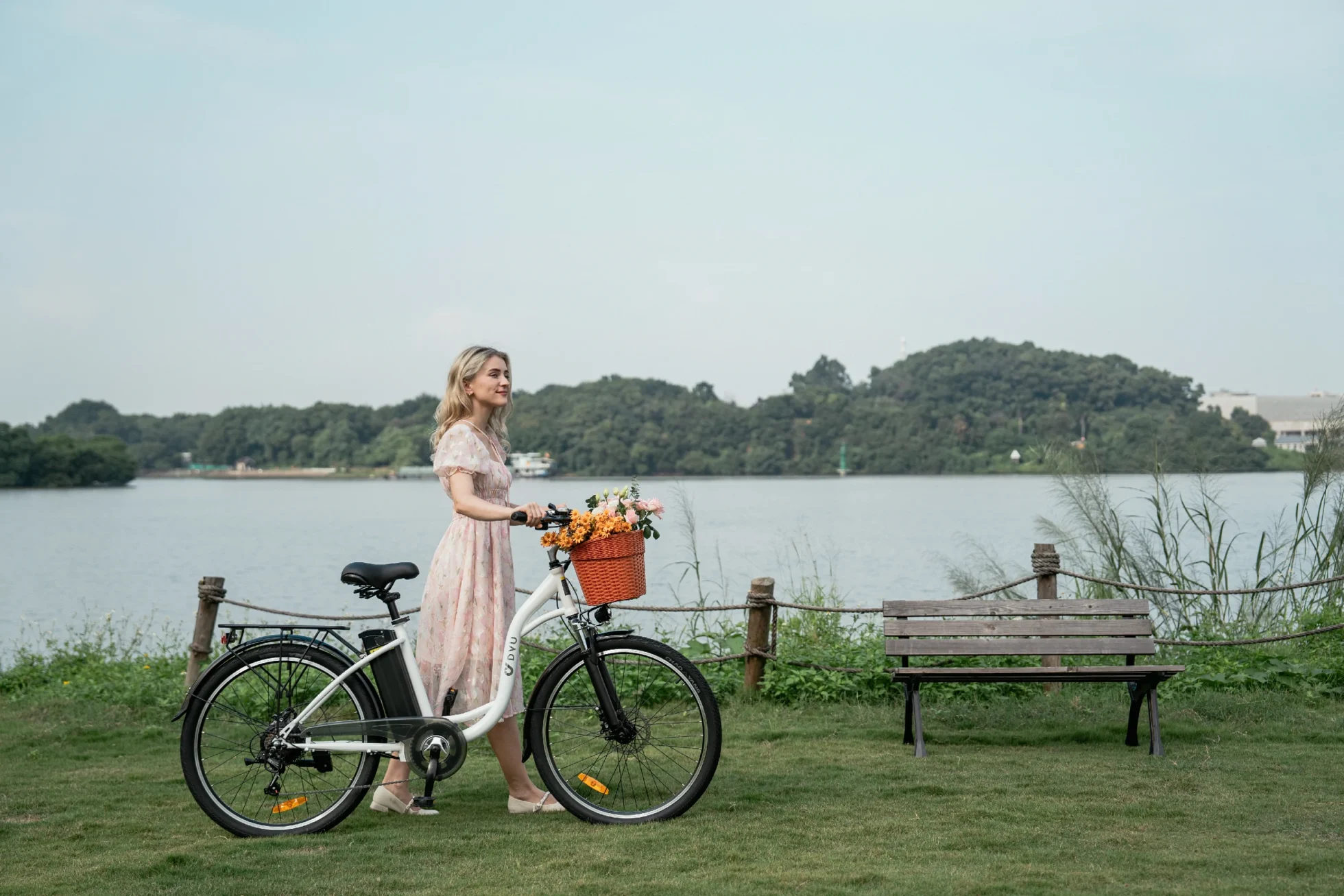
A good errand route is not always the shortest route. With cargo, I prefer wider turns, calmer crossings, and fewer surfaces that force sudden steering corrections. Cobblestones, steep kerbs, tight shop entrances, and busy shared paths all become more annoying with bags attached.
The C6’s 26-inch wheels and front fork plus seat suspension help smooth normal city surfaces. They do not remove the need to scan ahead. When the bike is loaded, I look further down the street and make decisions earlier.
If you are still deciding what kind of city e-bike fits your routine, start with DYU’s first e-bike guide or the broader city commuting guide. If you already like the upright, practical style, my DYU C6 review covers the ride feel in more detail.
Build a Repeatable Errand Setup
The setup that works is the setup you can repeat when tired. Mine is simple: light things in the basket, dense things low at the rear, liquids upright, straps checked, lights visible, and one short roll test before joining traffic.
| Errand ride | Carrying setup | C6 note |
|---|---|---|
| After-work groceries | Light basket load plus rear bag | Use the rack for dense items |
| Office and gym | Laptop protected, clothing separate | Keep electronics away from wet kit |
| Parcel pickup | Measure before riding there | Do not block steering or lights |
| Rainy errand | Waterproof bag or inner liner | Check brakes and battery area after |
| Weekend market | Plan several small bags instead of one huge bag | Balance matters more than capacity |
Conclusion: A Carrying Setup Should Feel Boring
A car-free summer errands e-bike carrying guide should make city riding calmer, not more complicated. Put light things up front, dense things low at the rear, secure anything that can move, brake earlier, and choose routes that give you time.
The DYU C6 fits this routine because it has a practical city frame, front basket, rear rack, 60 km listed pedal-assist range, disc brakes, and stable 26-inch wheels. Pack it sensibly and it turns small errands into easy rides instead of awkward balancing acts.
FAQs
Q1. What is the safest way to carry groceries on an e-bike?
Keep heavy groceries low and stable on a rear rack or pannier. Use the front basket for lighter items, and avoid hanging bags from the handlebars.
Q2. Is the DYU C6 good for city errands?
Yes, the DYU C6 is well suited to normal city errands because it has a front basket, rear rack, 26-inch wheels, disc brakes, and a removable battery.
Q3. How much range does the DYU C6 have?
The DYU C6 is listed with up to 60 km of pedal-assist range. Cargo weight, wind, hills, tire pressure, and assist level can reduce practical range.
Q4. Should heavy bags go in the front basket or on the rear rack?
Heavy bags usually belong on the rear rack or in rear panniers. A front basket is better for light items because too much weight near the handlebar affects steering.
Q5. How much does the DYU C6 cost?
At the time of writing, the C6 is listed at €819, down from the regular €899. Check the product page for current availability and pricing before ordering.