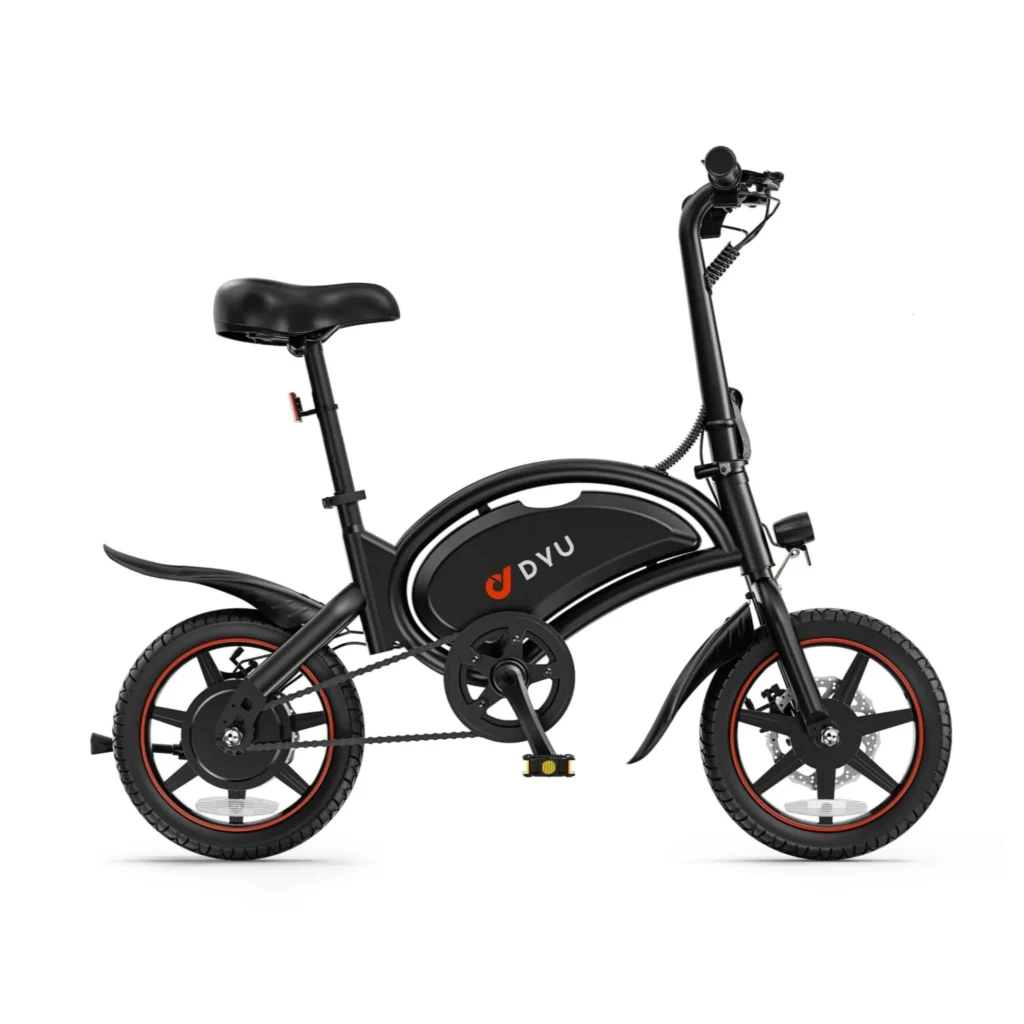
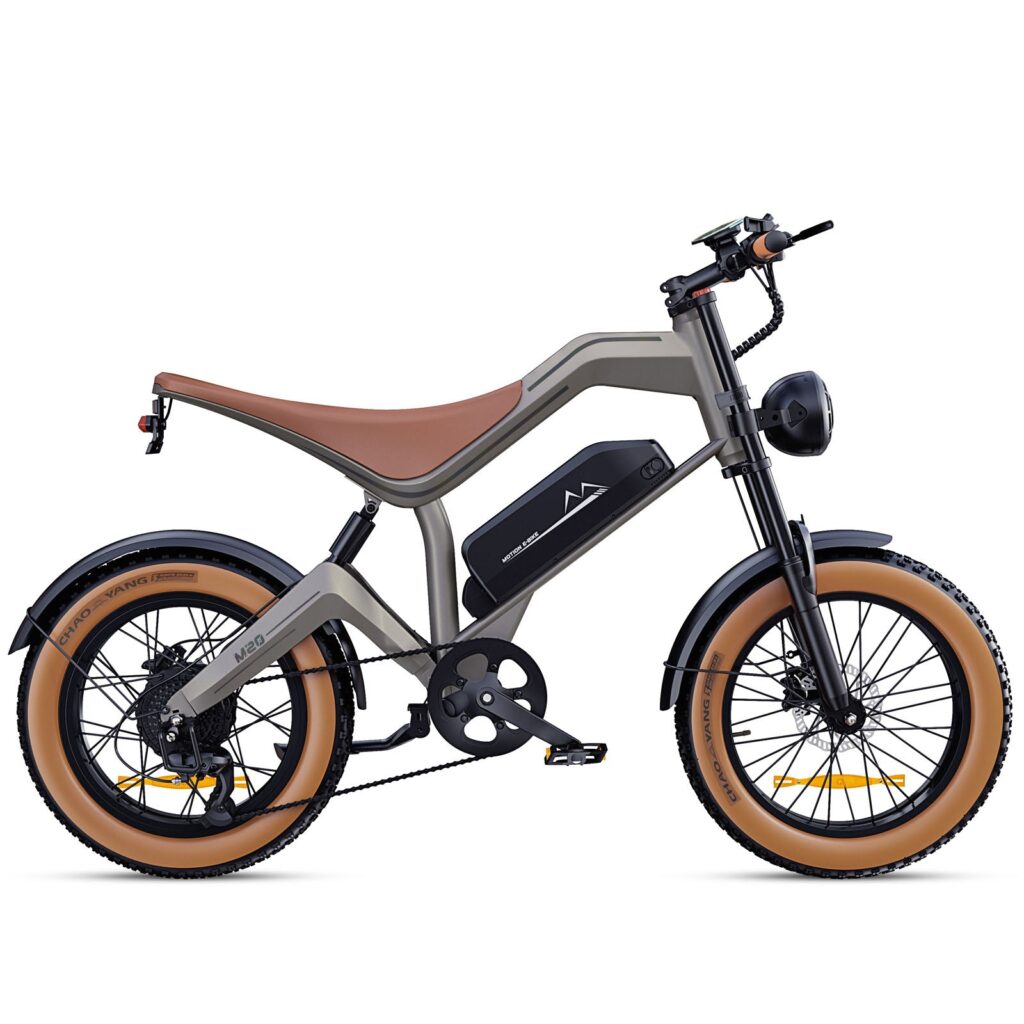
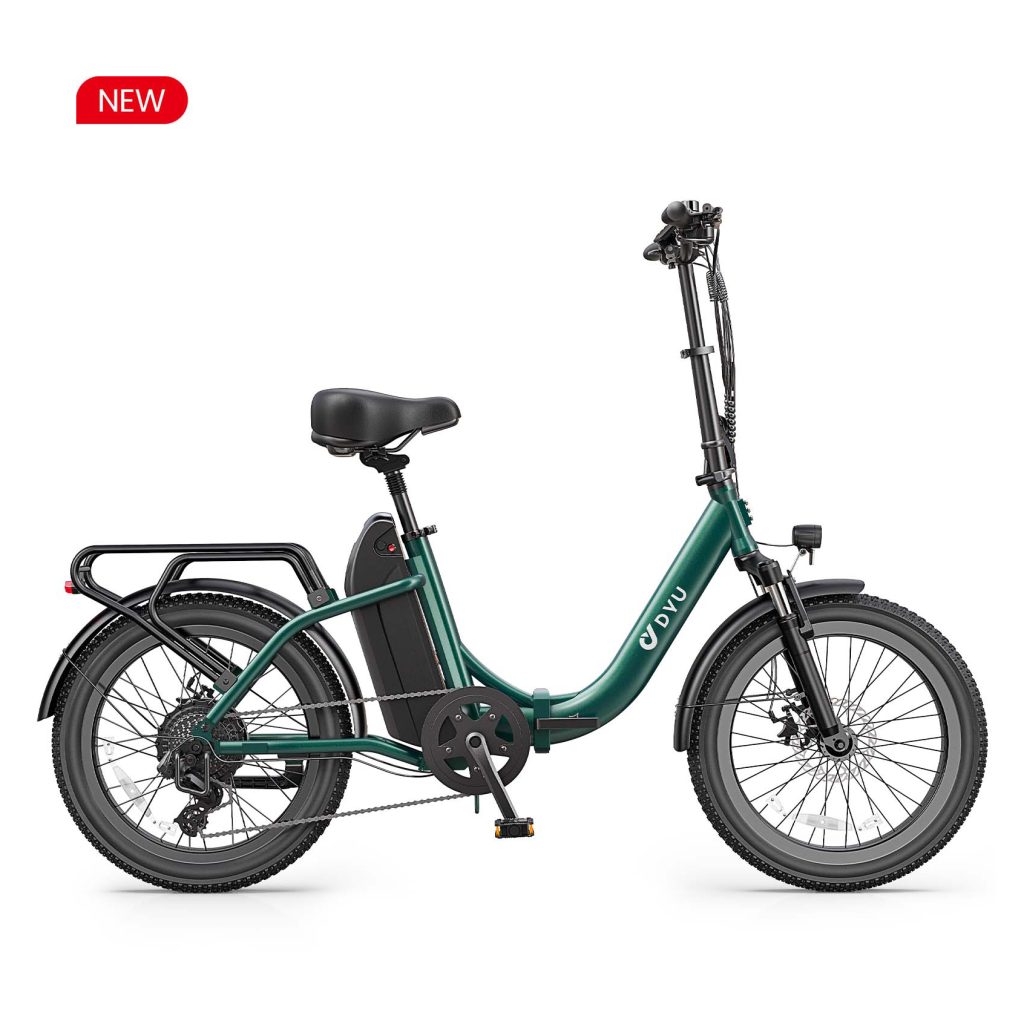
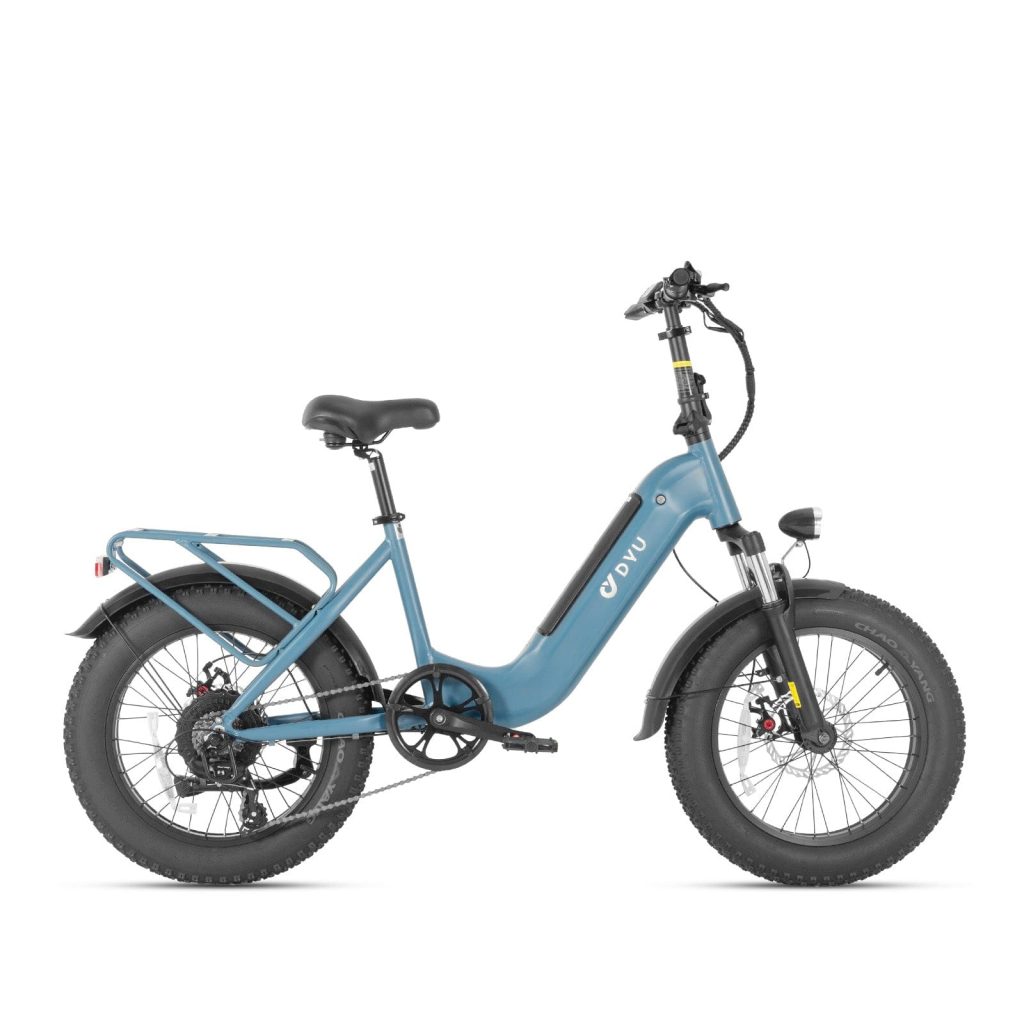
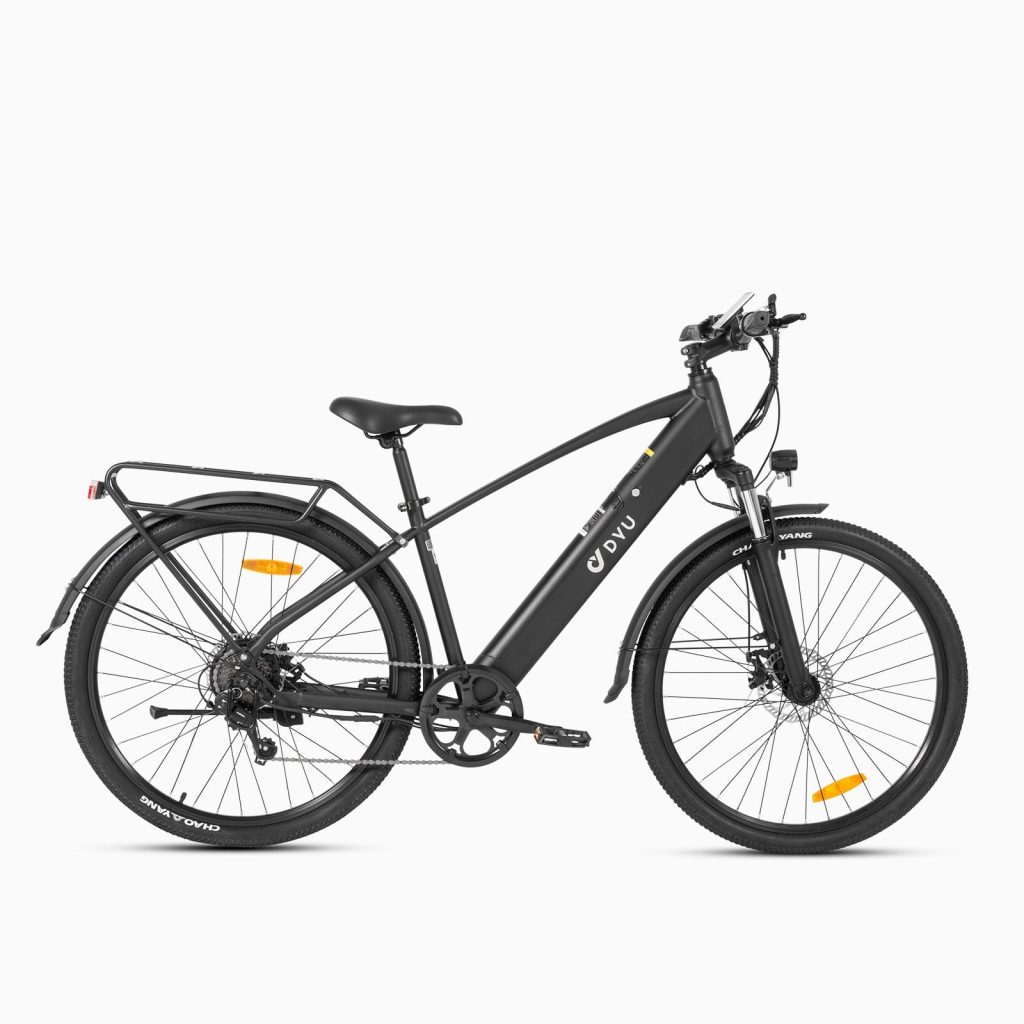
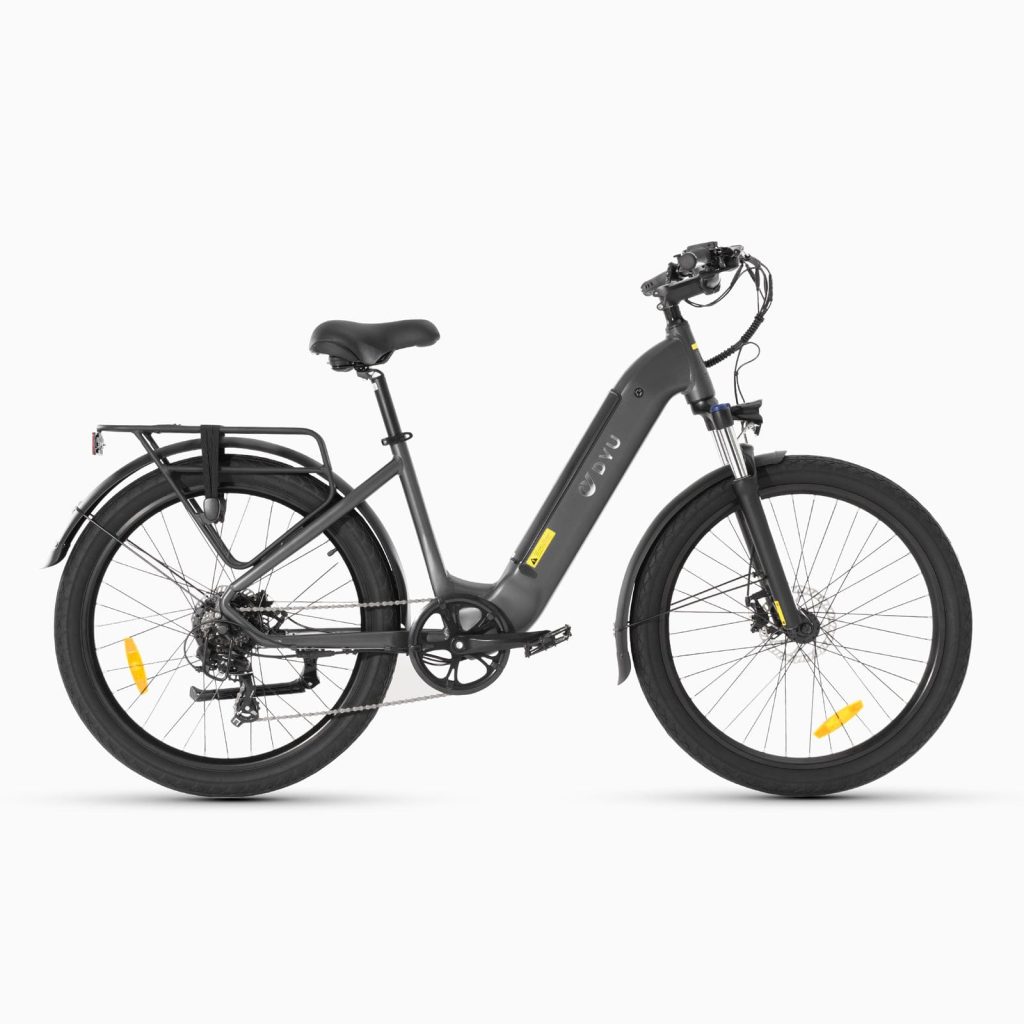
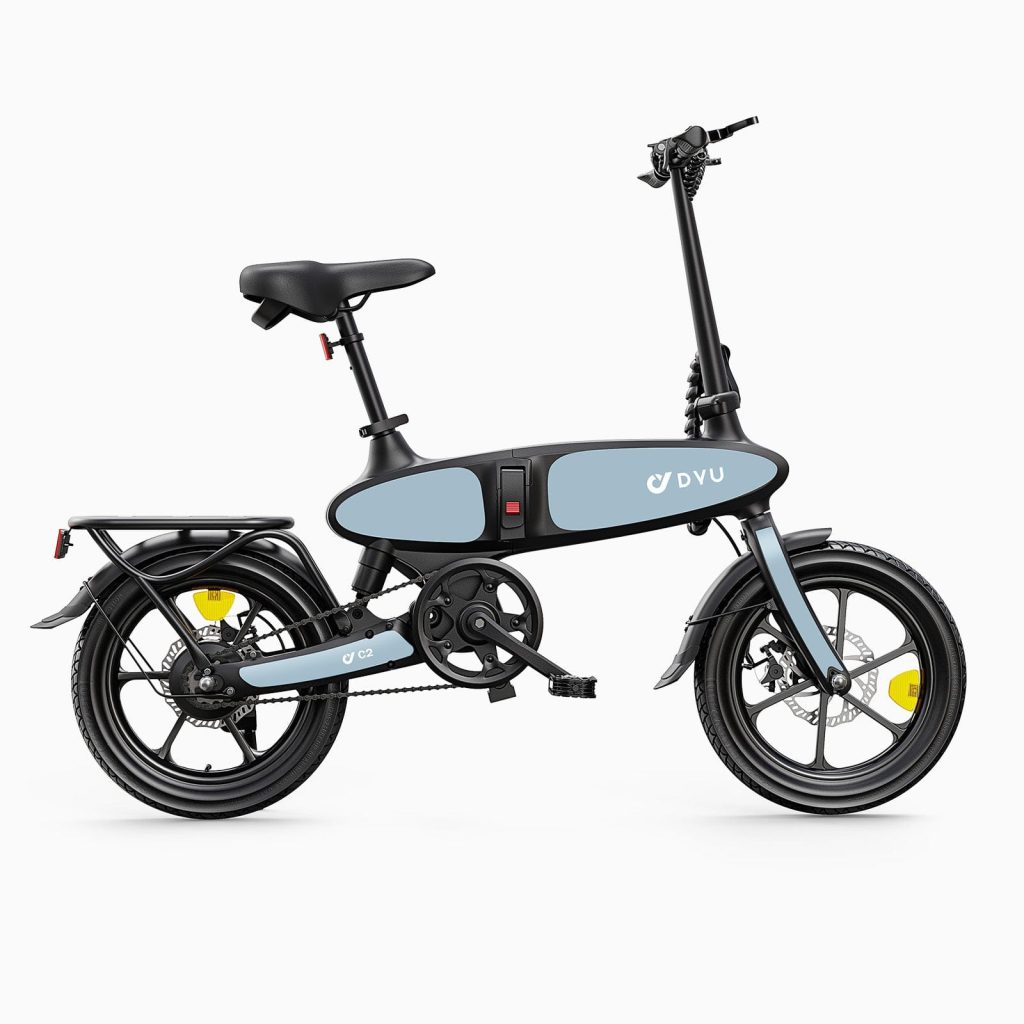
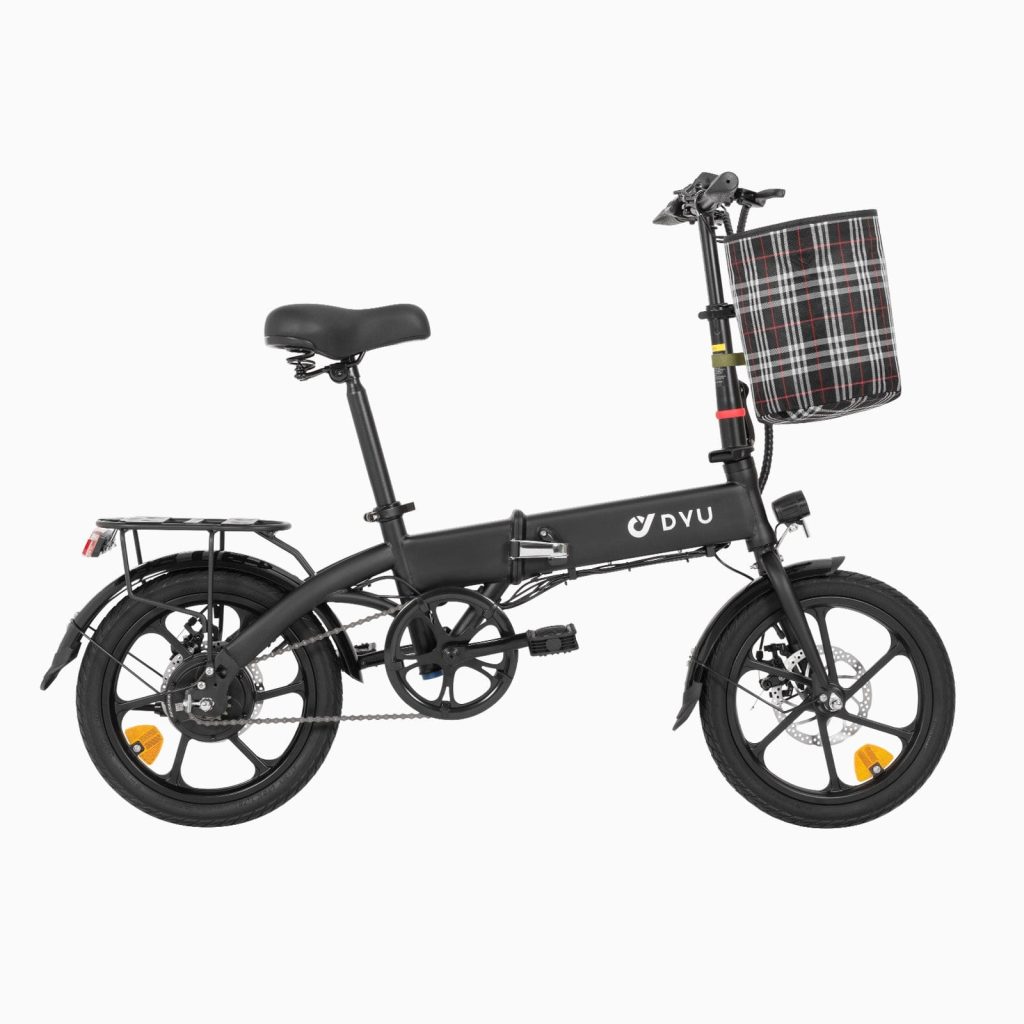
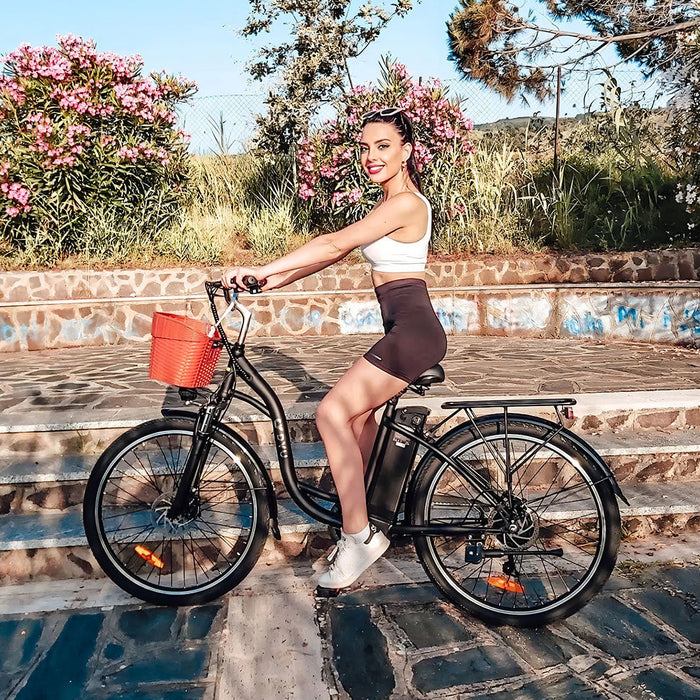
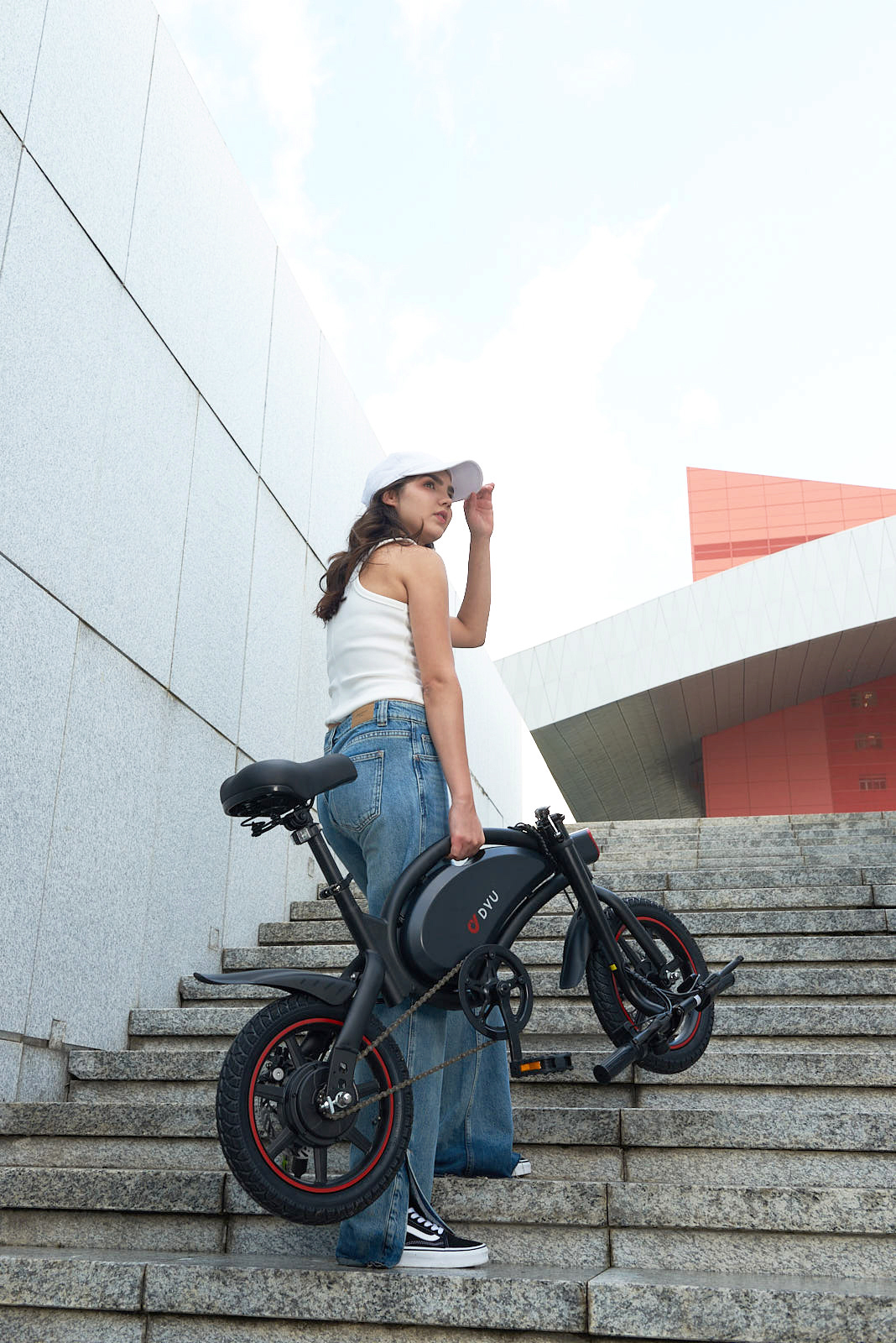
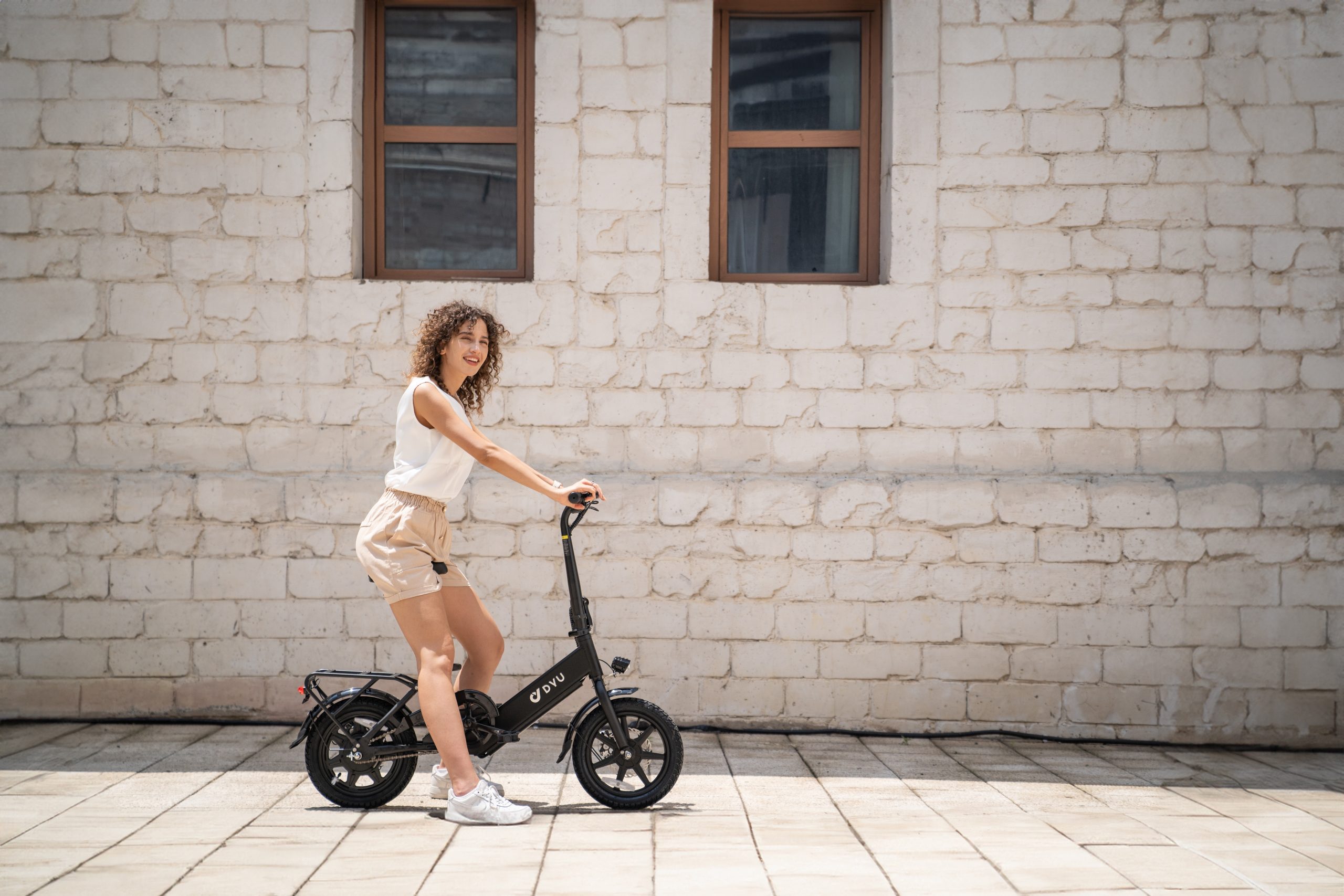
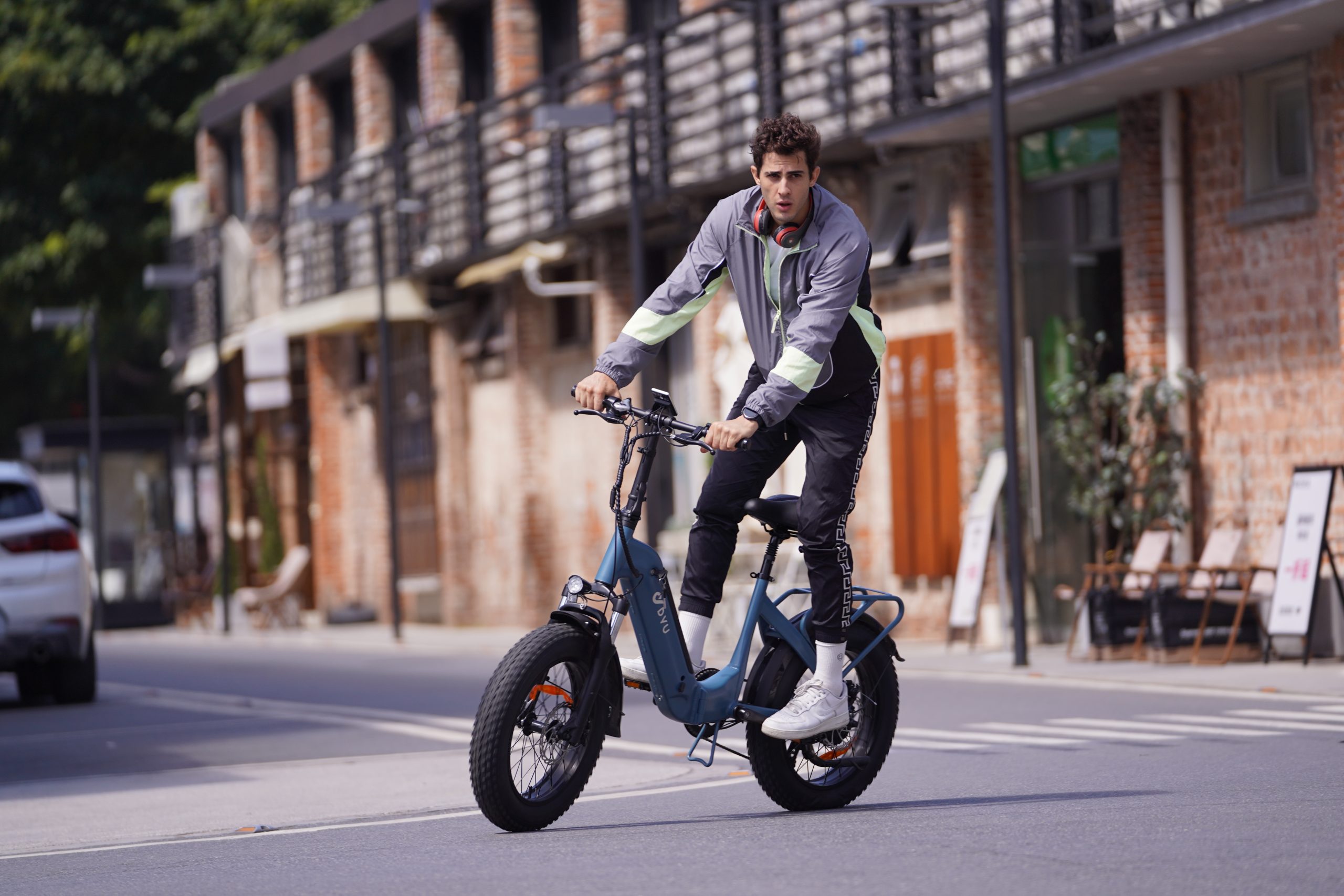
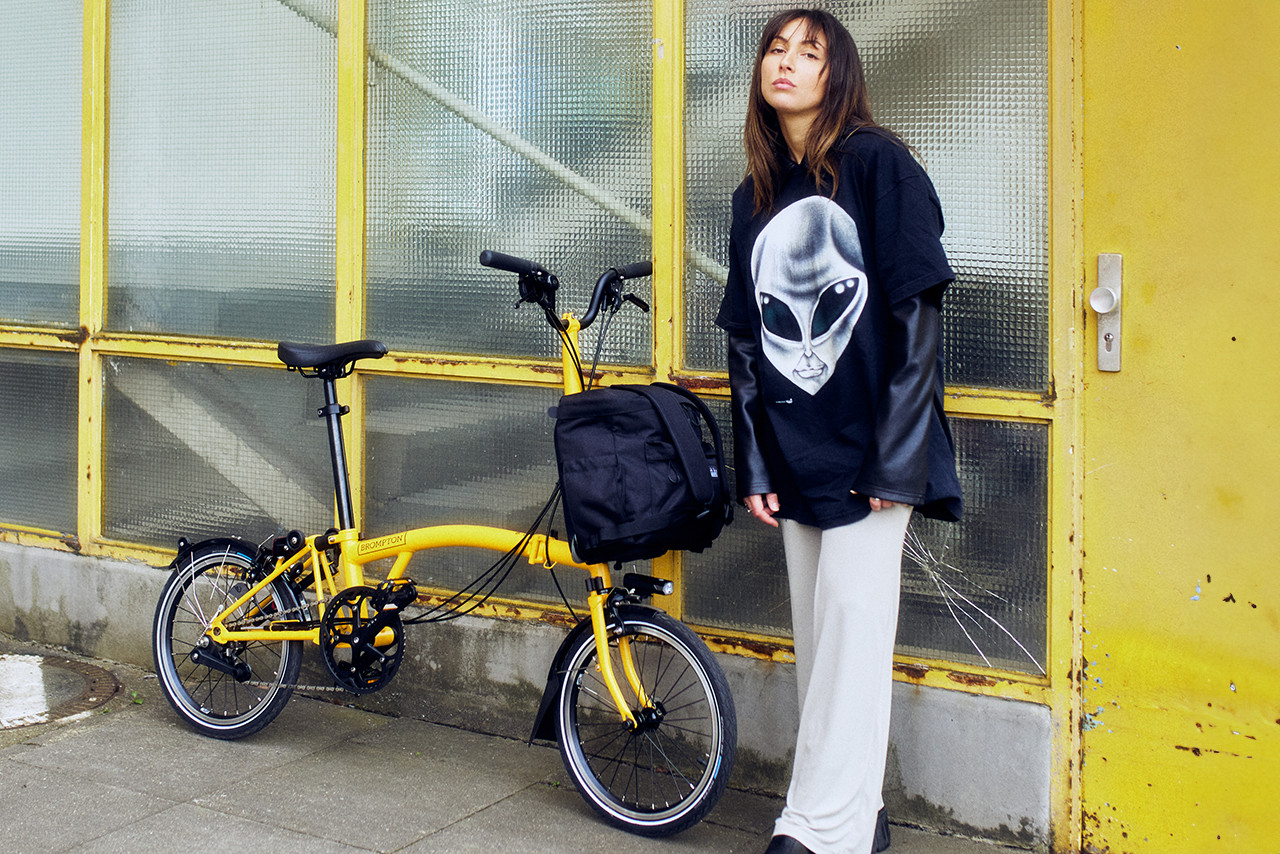
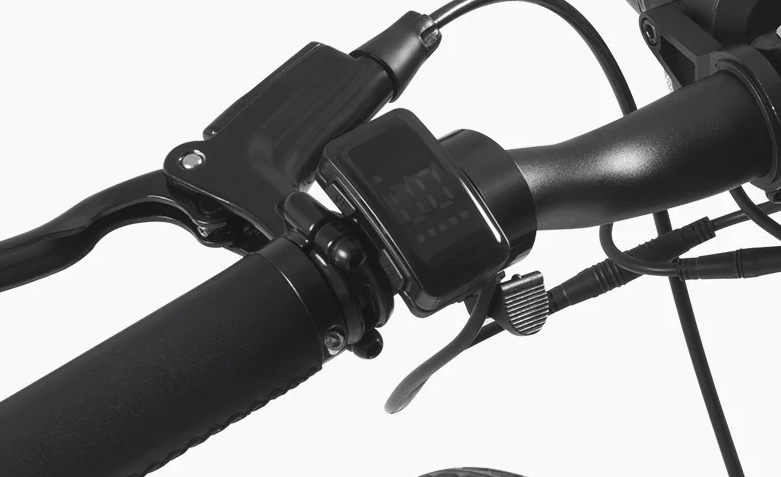
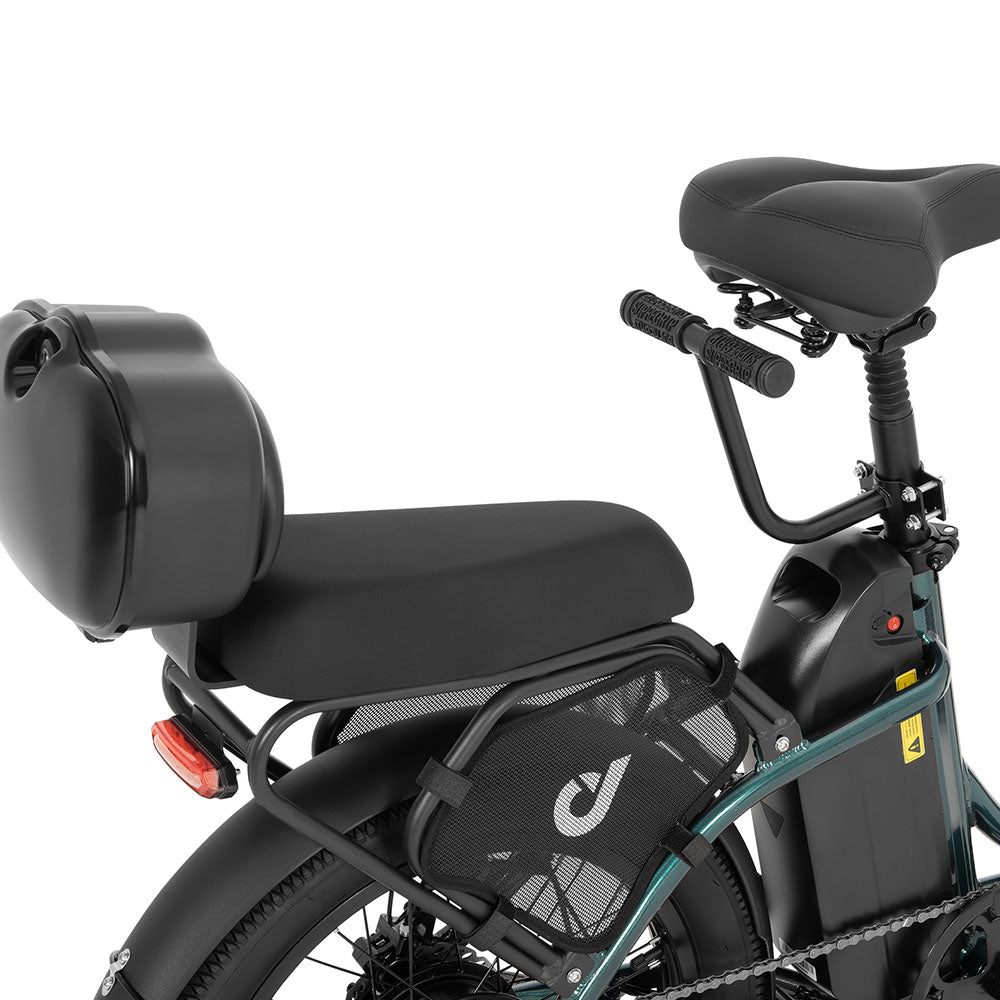
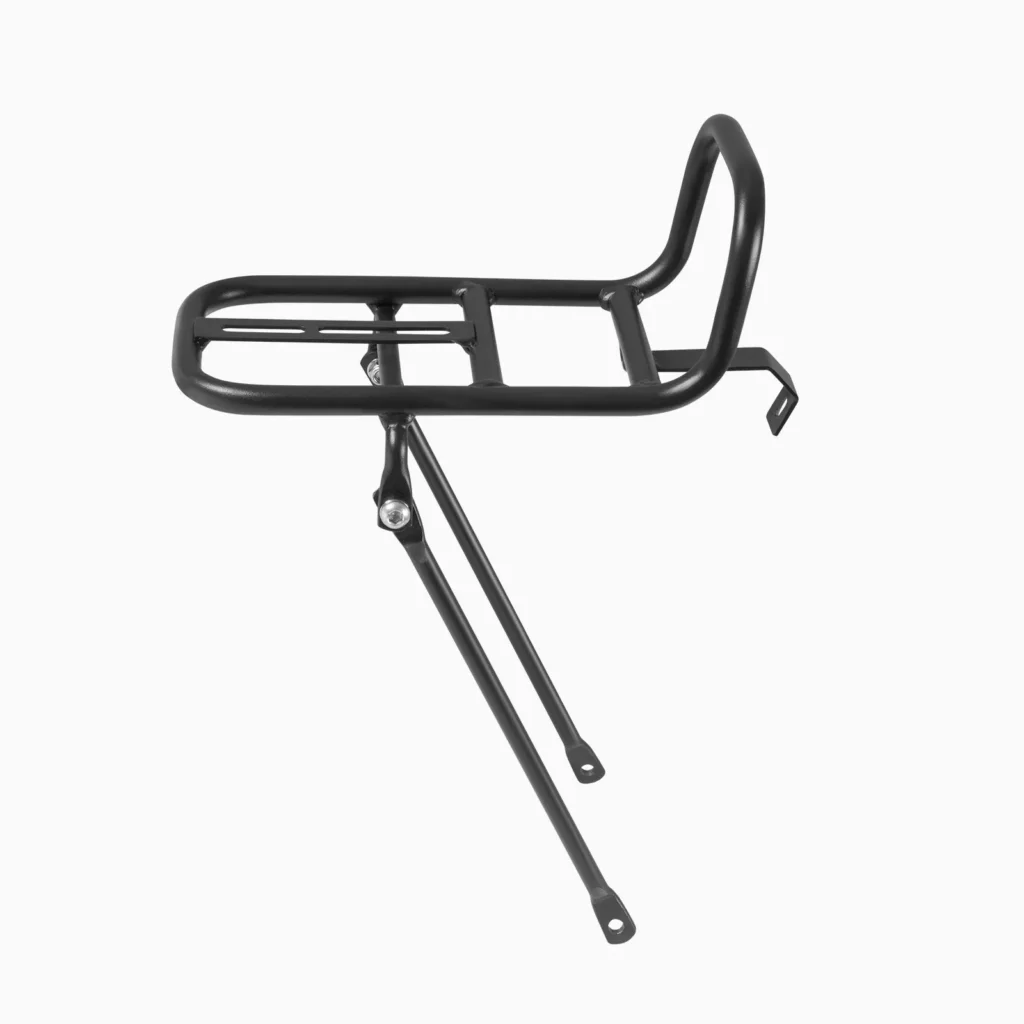
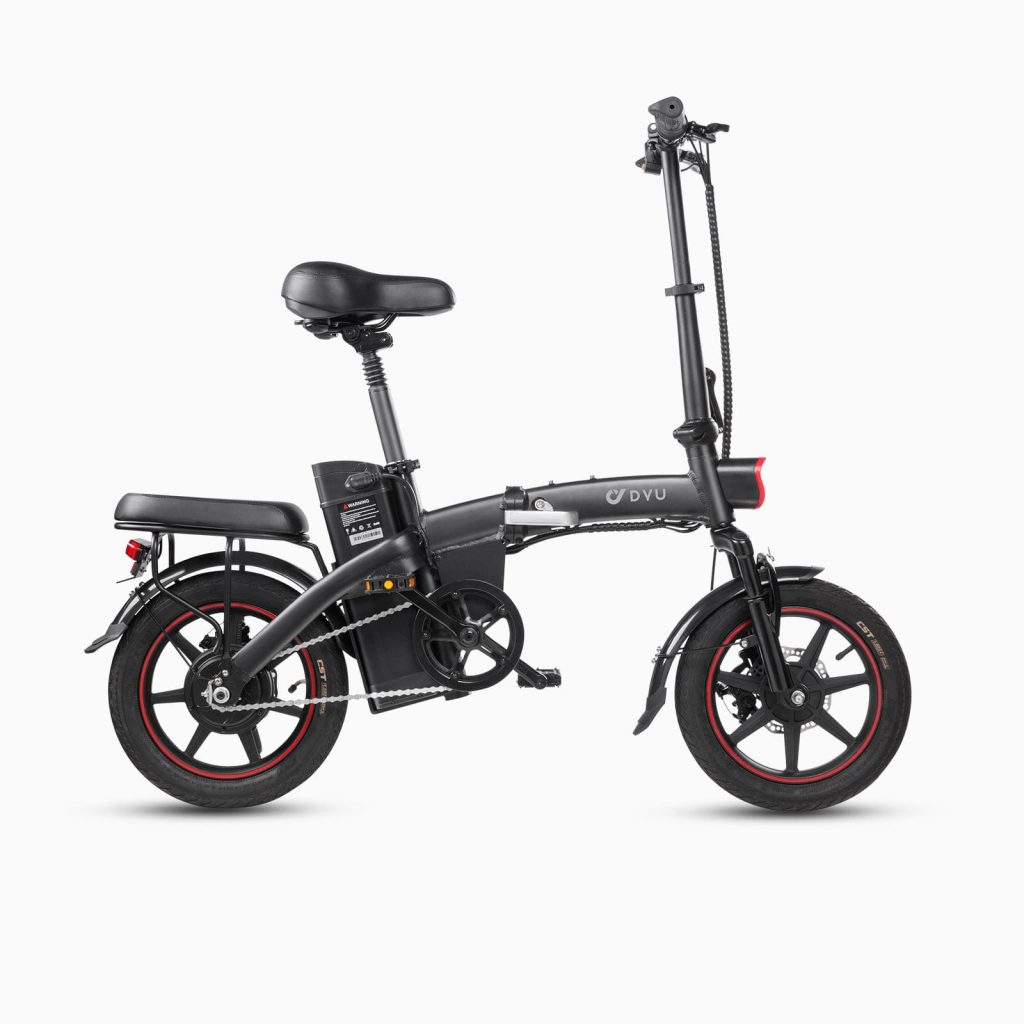
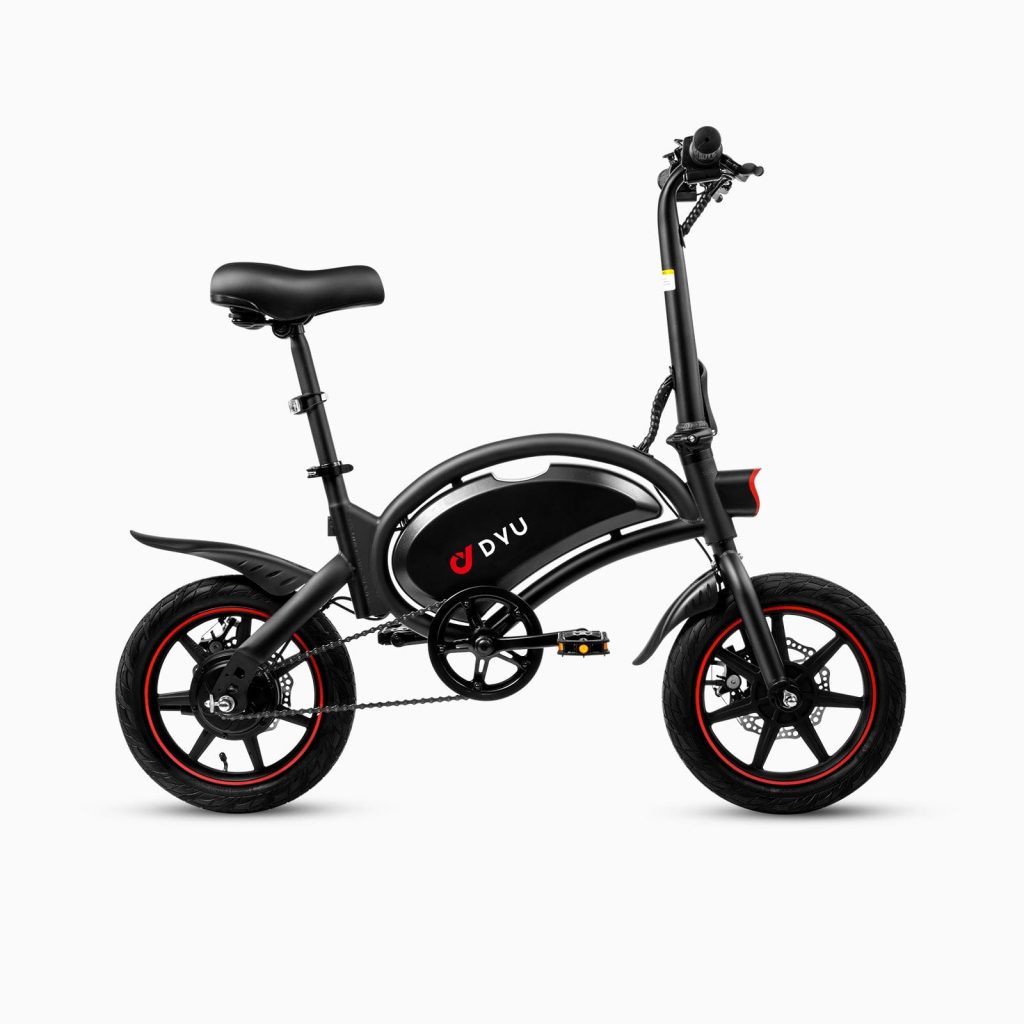
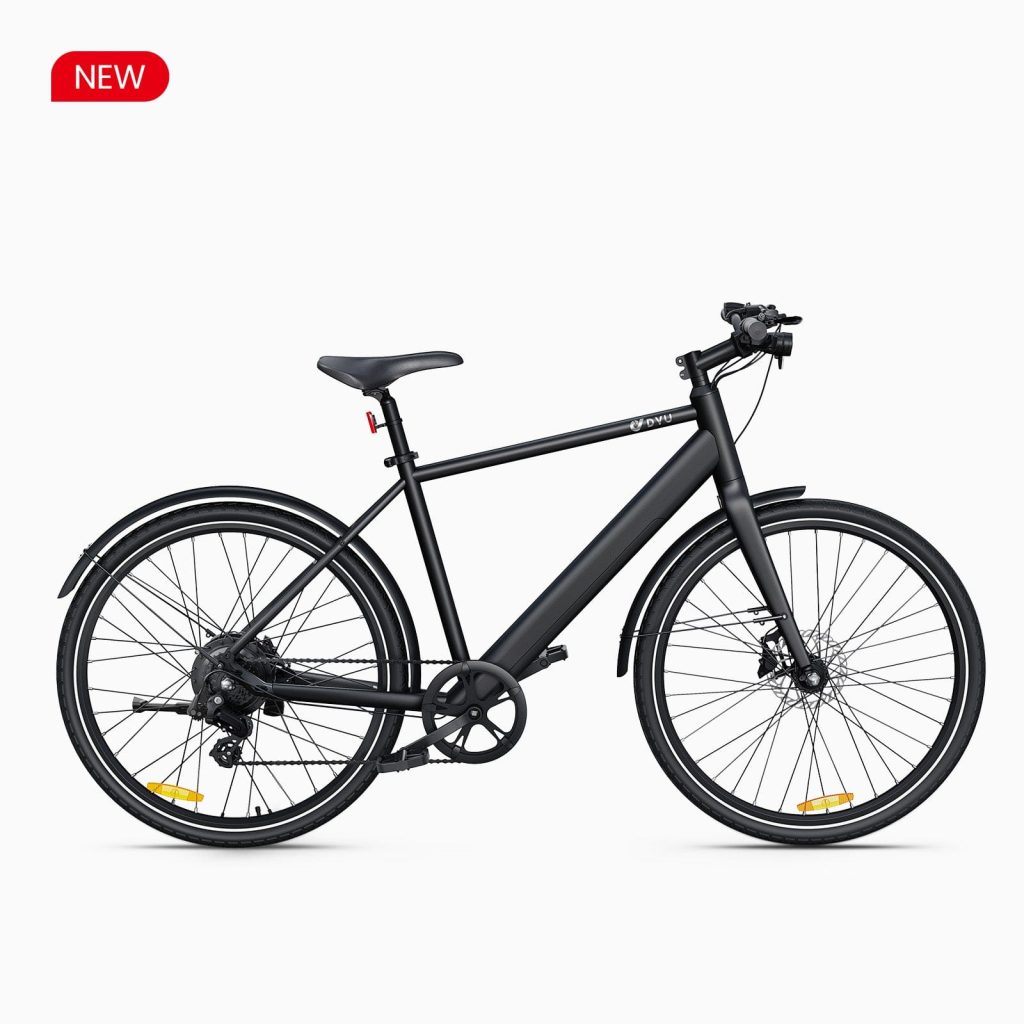
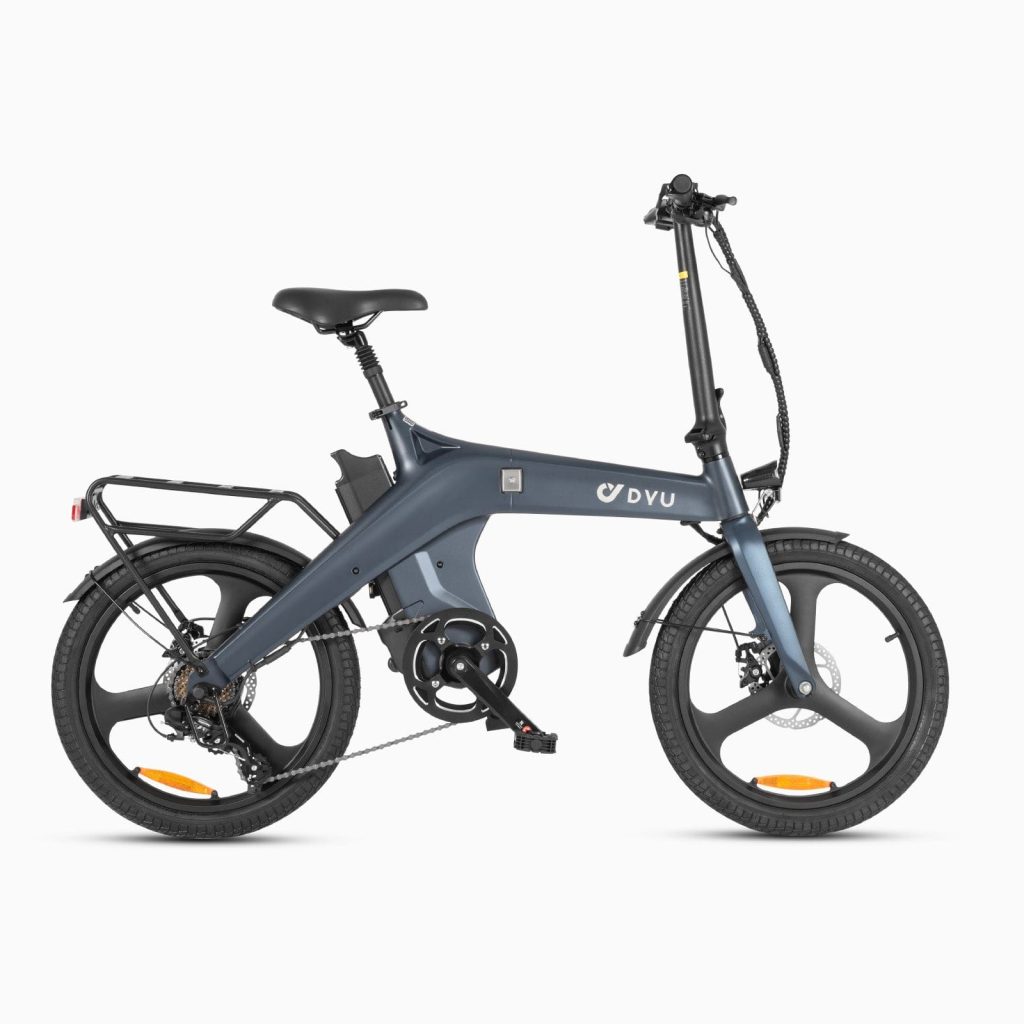


DYU A5 vs ENGWE T14 is the comparison I would make if I wanted a small 14-inch folding e-bike for European city life and had about €400 to €600 to spend.
Both bikes use a 250W motor, both fold small enough for apartments and car boots, and both target short urban trips rather than long touring rides. The difference is in the details: battery range, rider fit, security, price, and how calm each bike feels when a simple commute turns into errands, cobblestones, and a train transfer.
DYU A5 vs ENGWE T14 Quick Comparison
| Feature | DYU A5 | ENGWE T14 |
|---|---|---|
| Current listed price | €519 | €599 |
| Motor | 250W | 250W |
| Battery | 48V 7.5Ah | 48V 10Ah |
| Claimed pedal-assist range | 60 km | 42 km |
| Weight | 22 kg | 22.7 kg |
| Tires | 14-inch city tires | 14 x 2.125 tires |
| Brakes | Disc brakes | Mechanical disc brakes |
| Standout feature | Remote lock and stronger range claim | 48V 10Ah battery and multiple suspension setup |
The short version: the A5 looks stronger for riders who want more claimed range, lower price, and quick-stop security. The T14 is interesting if you prefer ENGWE’s 48V 10Ah battery format and compact mini-bike posture.
If you are new to the category, the PeopleForBikes electric bike guide is a useful plain-English overview before you compare specific models.
Why Compare the DYU A5 With the ENGWE T14?
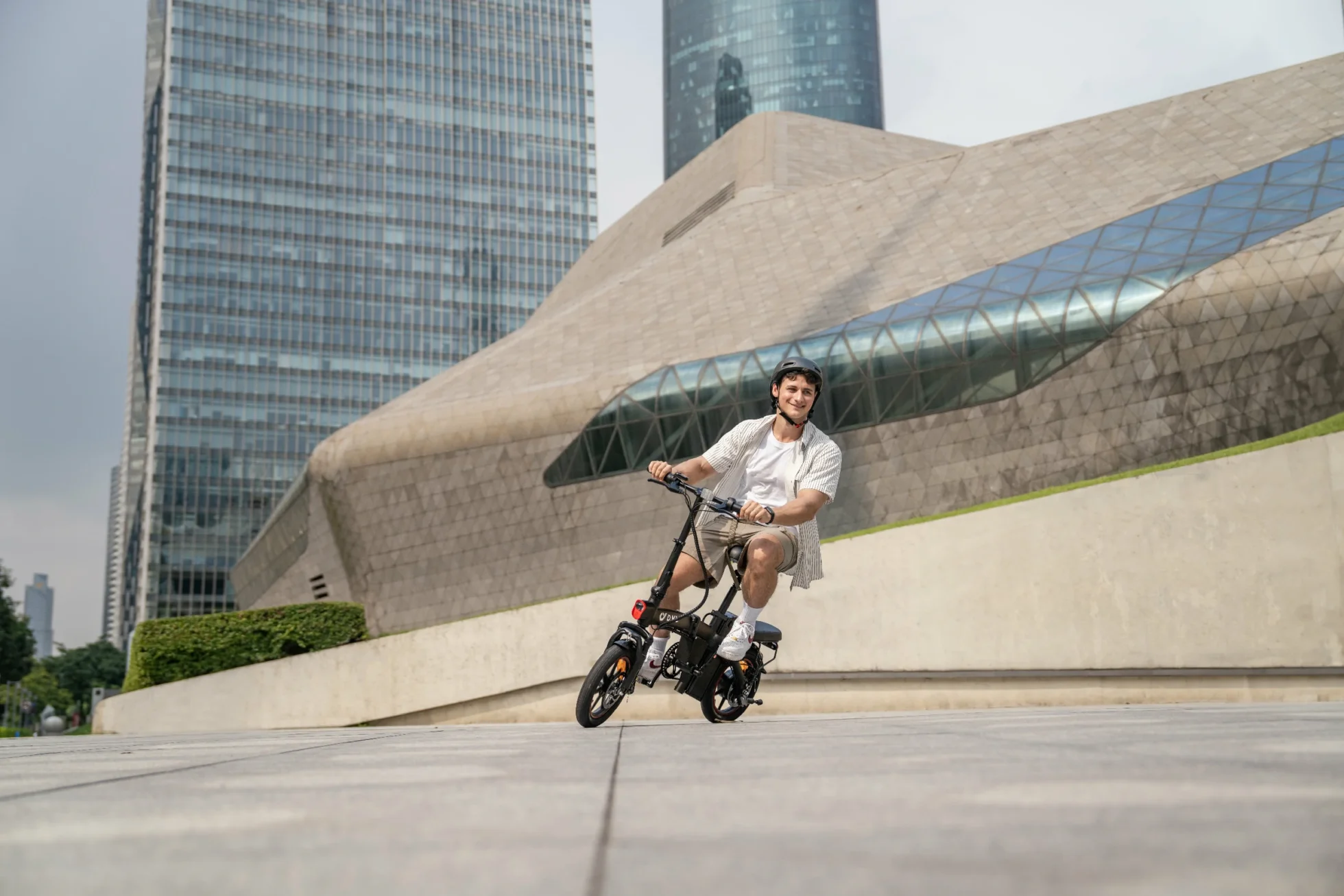
The DYU A5 vs ENGWE T14 decision is not about chasing top speed. In much of Europe, the practical commuter target is a 250W assisted e-bike that stays around the 25 km/h assisted-speed limit. The EU framework around L-category vehicles, including the pedelec exemption, is laid out in Regulation 168/2013.
That means the daily question is less dramatic: which bike is easier to live with when you need to ride to work, fold it near your desk, stop at a shop, and carry it through one awkward doorway?
I like comparing these two because they are close enough to be genuinely confusing. Both are compact. Both are affordable by e-bike standards. Both are small-wheel bikes that make sense for short European routes in Berlin, Amsterdam, Barcelona, Milan, Warsaw, or Paris.
Battery and Range: Numbers Do Not Tell the Whole Story
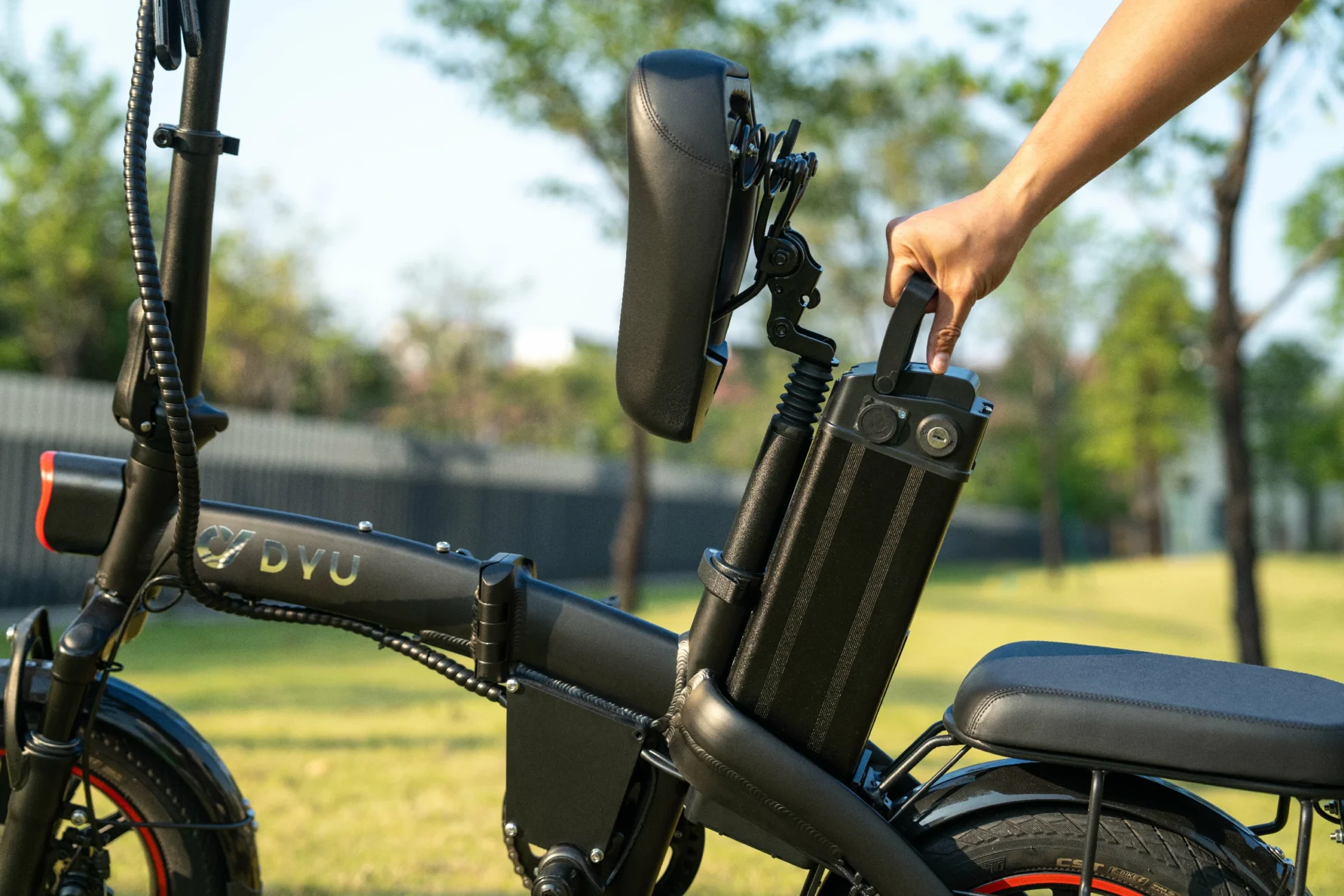
On paper, the ENGWE T14 has the bigger battery at 48V 10Ah. The official ENGWE T14 specification page lists 42 km in pedal-assist mode and 25 km in electric mode. The DYU A5 uses a 48V 7.5Ah battery and claims up to 60 km in pedal-assist mode.
That looks odd until you remember that range claims depend on test speed, rider weight, assist level, tire pressure, terrain, and weather. Battery University explains why lithium battery life and performance vary with use in its guide to prolonging lithium-based batteries.
My practical read: the A5 has the stronger range claim and a lower price, while the T14 has the larger nominal battery. I would not buy either expecting perfect lab numbers. I would buy based on how much buffer I need in a normal week.
- Choose the A5 if you want the stronger claimed pedal-assist range.
- Consider the T14 if the 48V 10Ah battery format matters to you.
- Plan realistically if your route has hills, cold weather, heavy cargo, or frequent starts.
Folding and Carrying: Neither Bike Is Featherlight
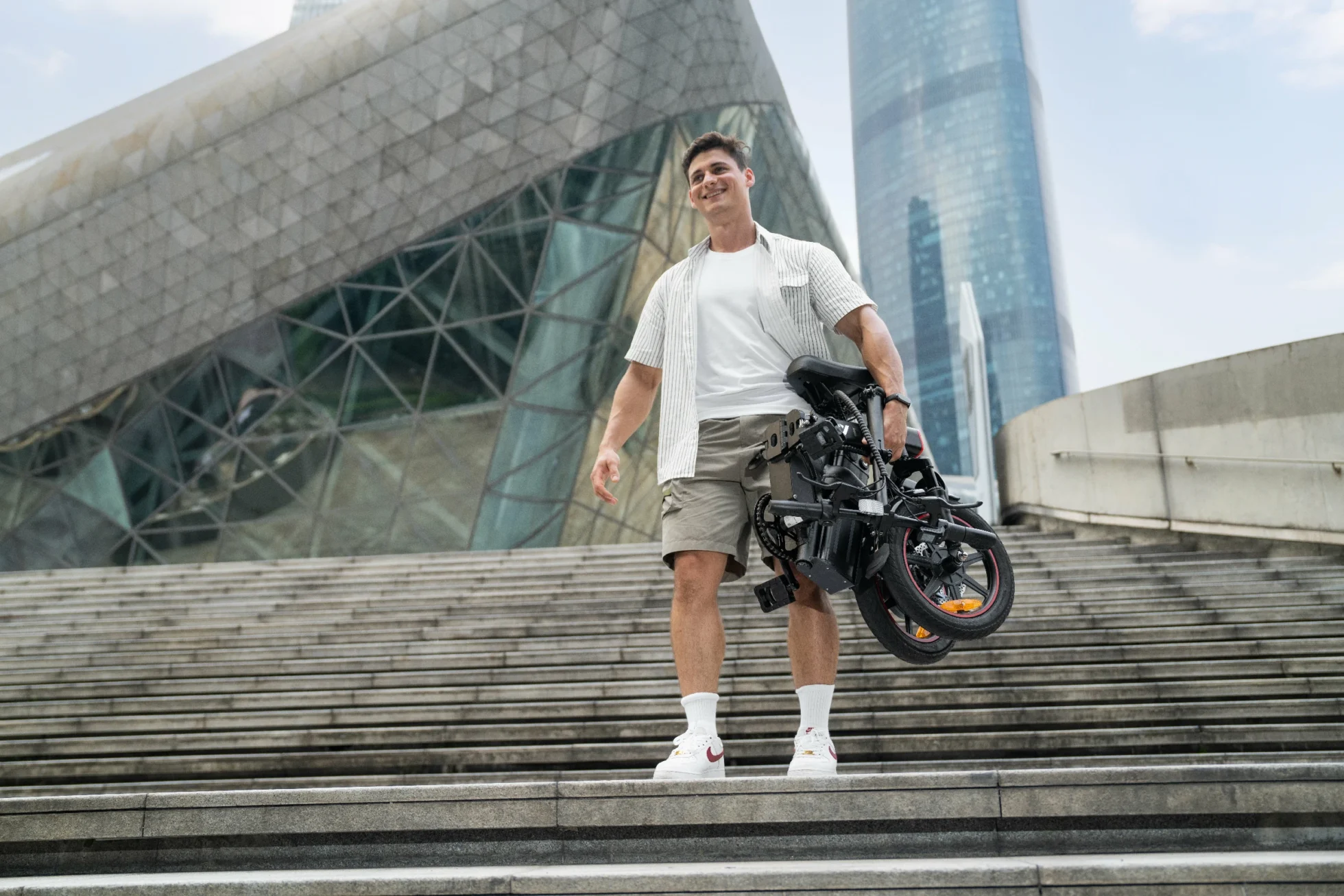
The DYU A5 weighs 22 kg. The ENGWE T14 is listed at 22.7 kg. That difference is small enough that I would not make it the deciding factor.
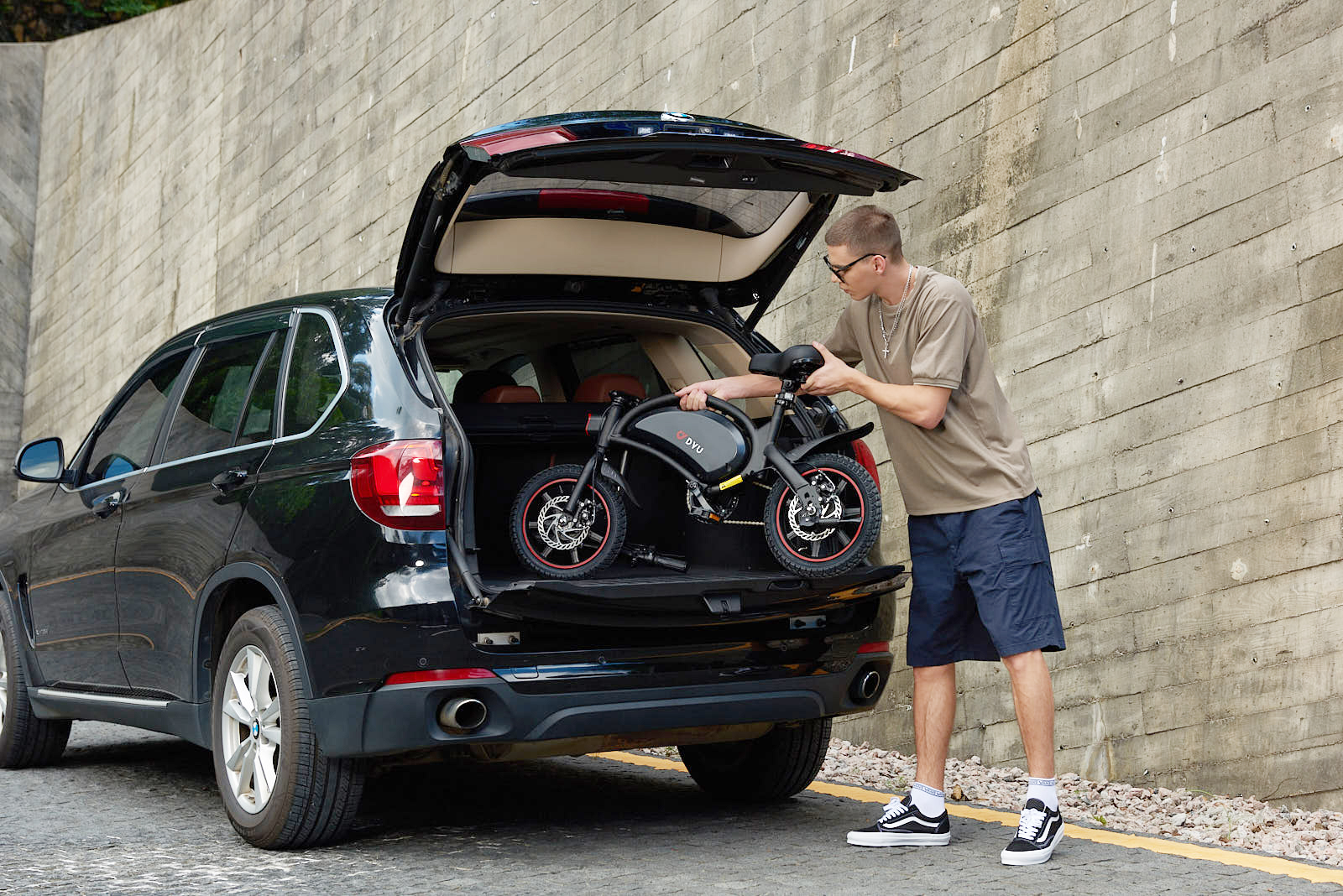
The real issue is shape. Compact folding bikes are easier to store than full-size city bikes, but they are still awkward objects when folded. A 22 kg e-bike is not a Brompton you swing around casually. If your apartment has no lift, test your patience before you test the motor.
This is where the A5’s remote lock starts to matter. If I can leave the bike locked for a quick cafe stop instead of folding and carrying it inside every time, my week gets easier. It is not a replacement for a proper lock, but it adds convenience in exactly the moments when compact-bike owners make small decisions.
For more folding-bike context, DYU’s guide to mini folding e-bikes for public transport commuters is a useful second read.
Ride Feel: Small Wheels Reward Calm Riding
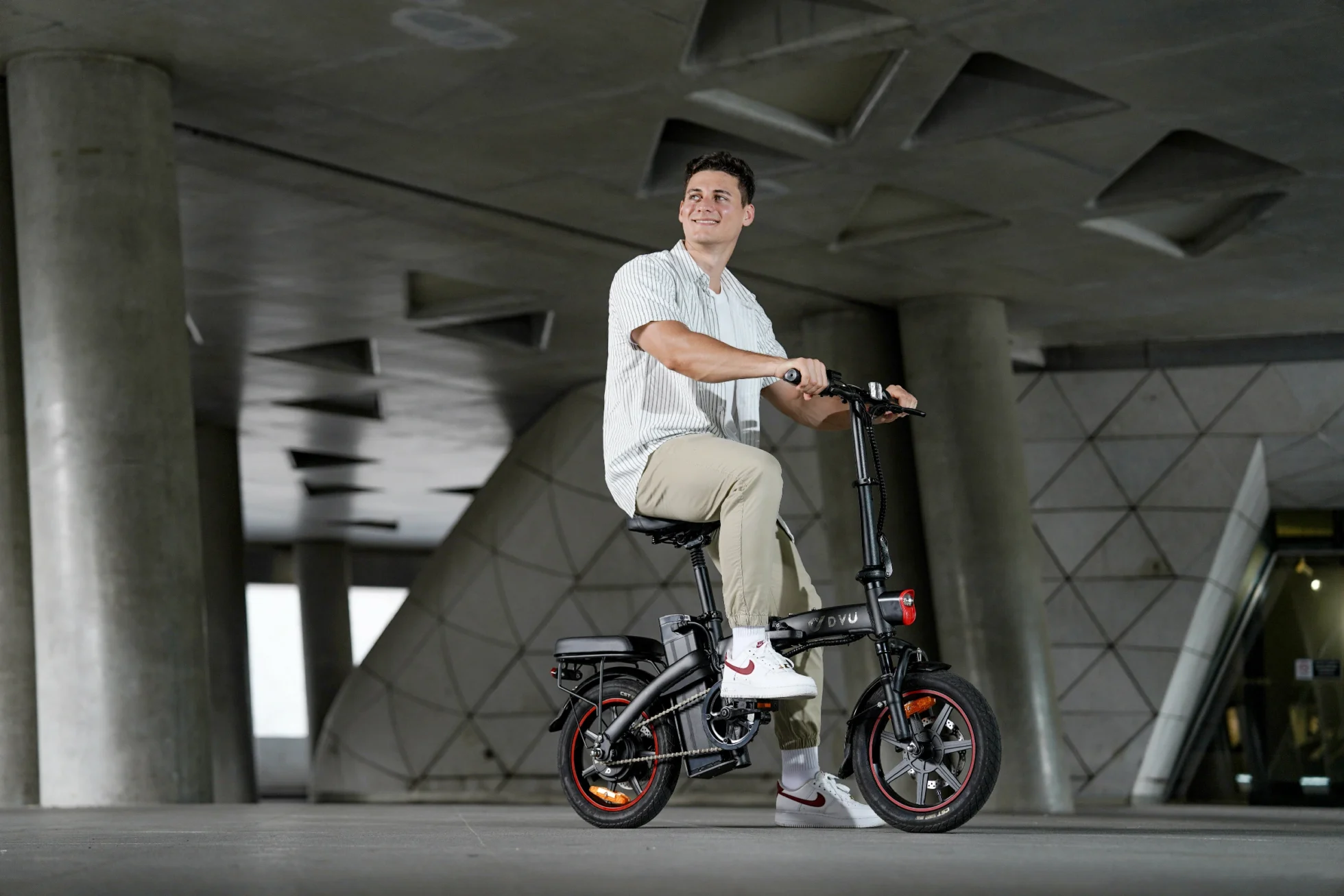
Both bikes use 14-inch wheels, so they are nimble but not as settled as a 20-inch or 26-inch e-bike. Small wheels turn quickly. They also tell you more about the road surface.
The A5 uses front fork and seat suspension, while the T14 is marketed around multiple suspension. In real city riding, the bigger lesson is simple: ride small-wheel folding bikes with a little patience. Slow down before rough paving. Keep tire pressure sensible. Do not attack tram tracks at a lazy angle.
Disc brakes are present on both bikes, and ENGWE specifies mechanical disc brakes for the T14. If braking feel is a major concern for wet streets or hillier routes, DYU’s guide to hydraulic vs mechanical disc brakes on e-bikes explains the difference clearly.
Price and Value: The A5 Makes the Stronger Case
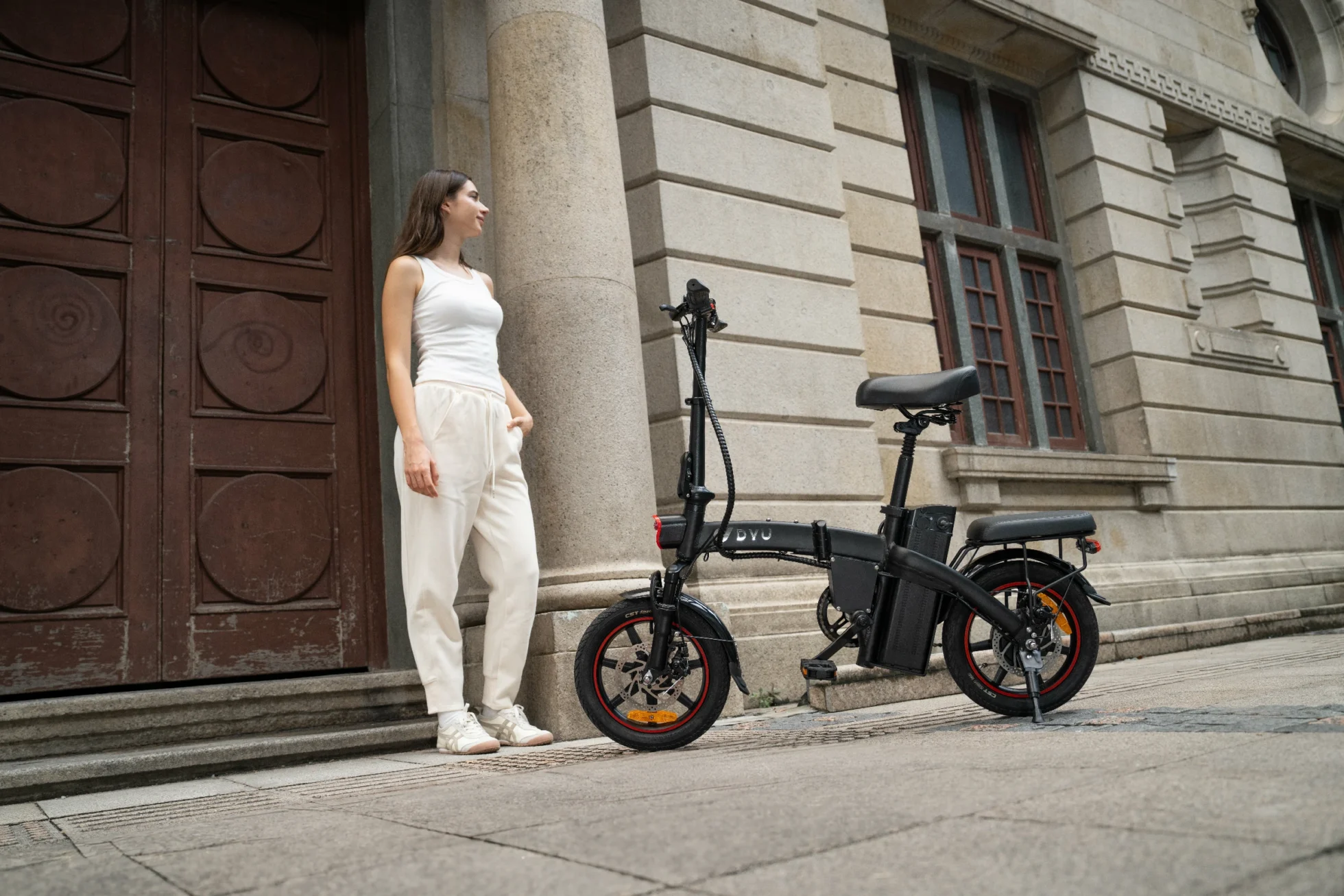
The current DYU A5 price is €519. The ENGWE T14 official page currently lists the bike at €599. Prices move, especially during promotions, but that makes the A5 the cheaper option at the time of writing.
That price gap matters because the A5 is not losing the core spec battle. It still gives you a 48V system, a 250W motor, disc brakes, folding convenience, lights, and a 60 km pedal-assist range claim.
| Buyer priority | Better fit | Why |
|---|---|---|
| Lowest price between these two | DYU A5 | Currently listed lower at €519 |
| Highest listed pedal-assist range | DYU A5 | 60 km claim vs 42 km claim |
| Largest nominal battery capacity | ENGWE T14 | 48V 10Ah listed battery |
| Quick-stop convenience | DYU A5 | Remote lock feature |
| Very compact city storage | Either | Both use small 14-inch folding formats |
If this is your first e-bike, DYU’s first e-bike buying guide will help you decide whether a 14-inch folder is actually the right size for your week.
Who Should Choose the DYU A5?
Choose the A5 if you want a compact bike that feels more complete as a daily tool. The price is lower than the T14 at the time of writing, the claimed range is stronger, and the remote lock is genuinely useful for short urban stops.
The A5 makes most sense for:
- Apartment riders who need compact storage.
- Commuters riding mixed 5 to 20 km days.
- People who stop often for shops, cafes, and errands.
- First-time e-bike buyers who want simple controls and a practical price.
- Riders who want a small folding bike but do not want the bare-minimum option.
The honest downside is weight. At 22 kg, it is compact, not magically light.
Who Should Choose the ENGWE T14?
Choose the T14 if you prefer its specific battery setup, styling, or brand ecosystem. The 48V 10Ah battery is attractive on paper, and the T14 has a strong presence in the affordable compact e-bike category.
It may fit riders who want:
- A 14-inch folding mini e-bike from ENGWE.
- A listed 48V 10Ah battery.
- A compact frame with mechanical disc brakes.
- A bike that feels more like a small mini-bike than a traditional bicycle.
Just be careful with the range expectation. ENGWE’s own page lists 42 km in pedal-assist mode, so I would not assume the larger battery automatically means longer listed range than the A5.
Bottom Line: DYU A5 vs ENGWE T14
The DYU A5 vs ENGWE T14 decision comes down to value and use case. If you want the stronger range claim, lower current price, and remote lock convenience, I would choose the DYU A5. It feels like the more practical commuter pick for European city life.
The ENGWE T14 remains a fair alternative if you like its battery format and mini-bike character. But for a rider who wants a compact folding e-bike that stays useful across a normal work week, the A5 makes the cleaner case.
FAQs
Q1. Is the DYU A5 better than the ENGWE T14?
The DYU A5 is better if you want a lower current price, a stronger claimed pedal-assist range, and remote lock convenience. The ENGWE T14 may appeal if you prefer its 48V 10Ah battery format and mini-bike styling.
Q2. How much does the DYU A5 cost in 2026?
The DYU A5 is currently listed at €519. Check the product page before buying because e-bike prices can change during seasonal promotions.
Q3. How much does the ENGWE T14 cost in 2026?
The ENGWE T14 official page currently lists the bike at €599. Regional pricing and availability can change, so confirm the price on ENGWE’s site before comparing.
Q4. Which has better range, DYU A5 or ENGWE T14?
The DYU A5 has the stronger listed pedal-assist range at 60 km. The ENGWE T14 official specification lists 42 km in pedal-assist mode and 25 km in electric mode.
Q5. Are 14-inch folding e-bikes good for commuting?
Yes, 14-inch folding e-bikes are good for short city commutes, apartment storage, and mixed public transport. For rough roads or longer rides, a larger wheel e-bike may feel more stable.