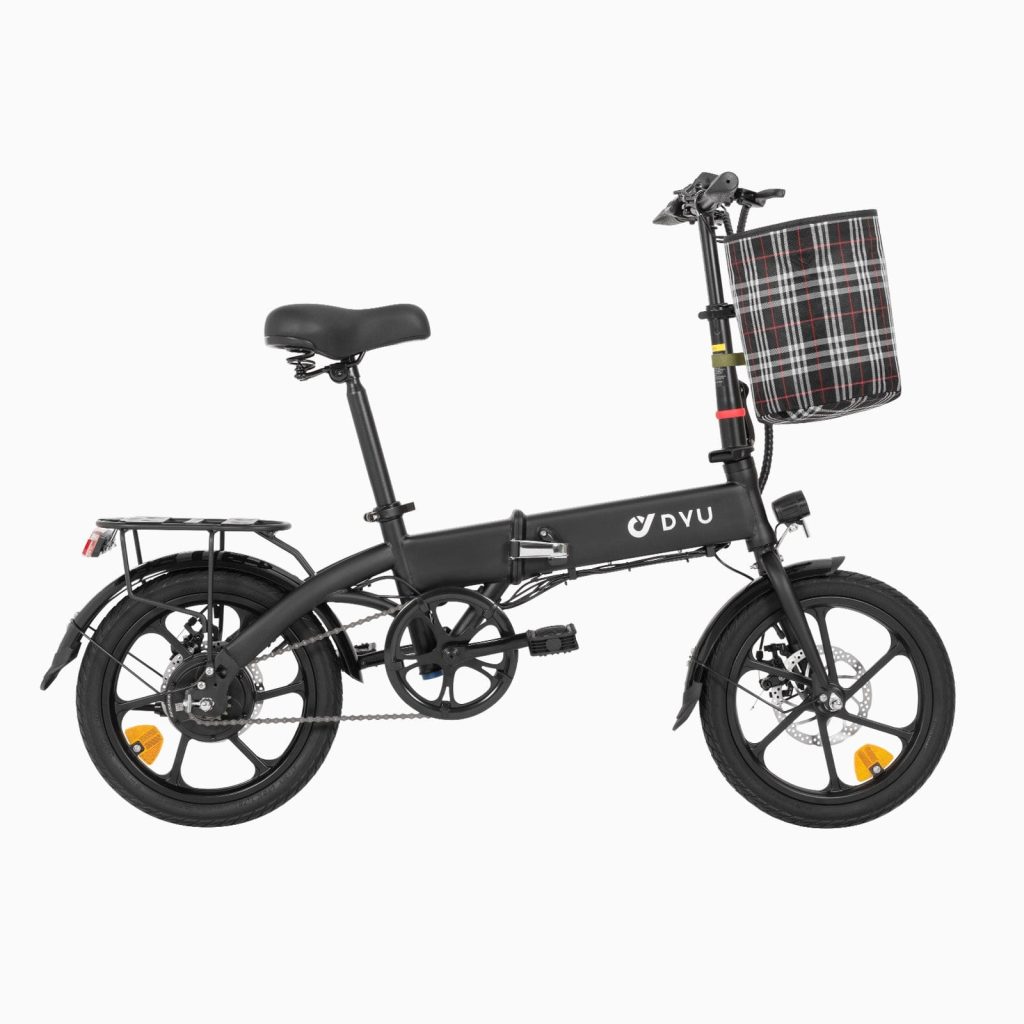
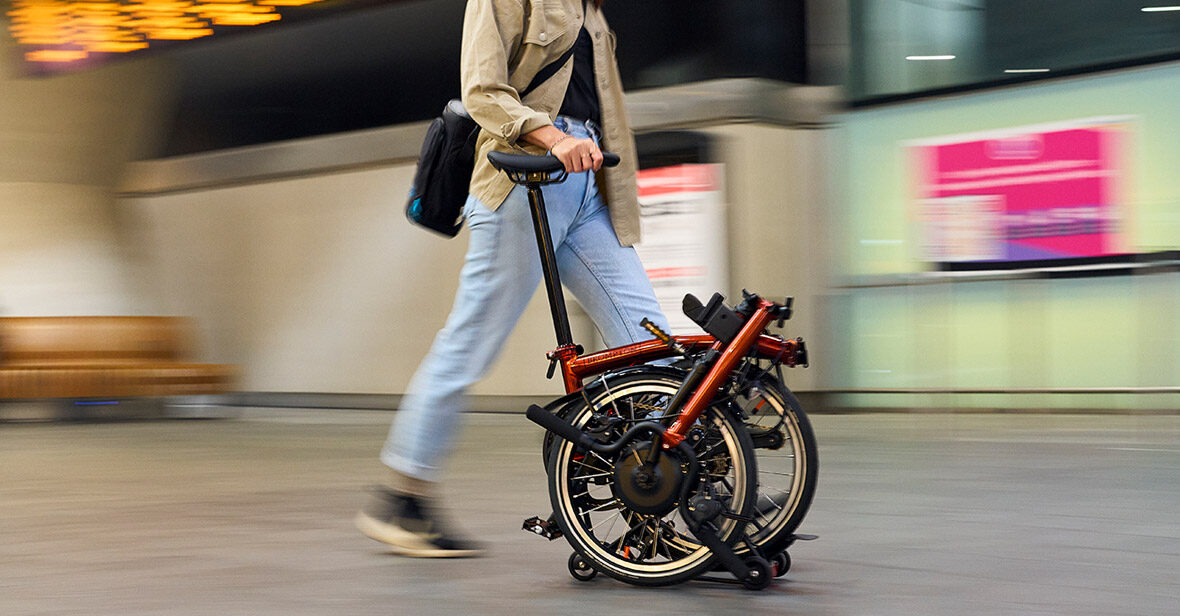
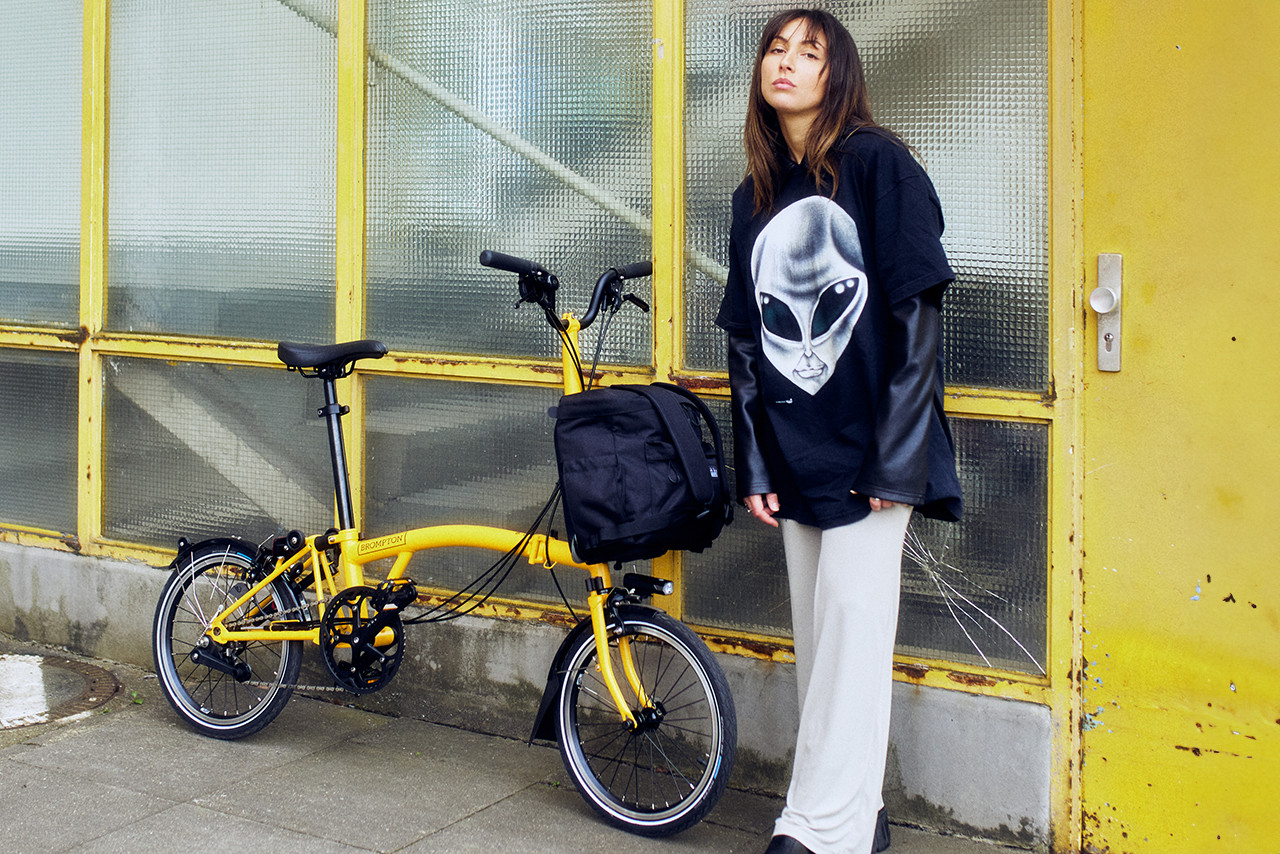
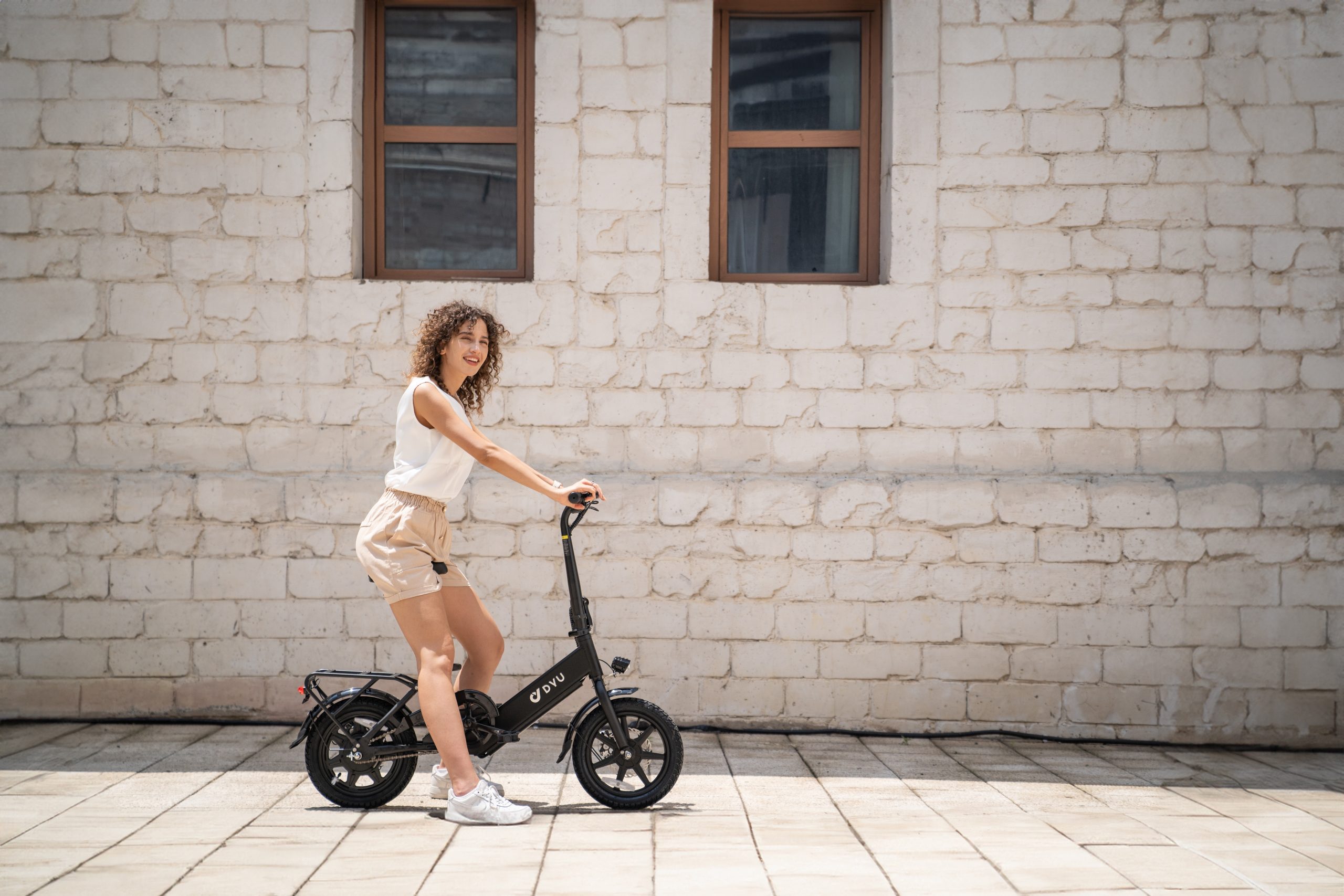


I was standing on platform 6 at Berlin Friedrichstraße, watching a man wrestle a full-sized e-bike through the train doors while commuters squeezed past him. I looked down at my folded 14-inch bike tucked between my feet like an oversized briefcase. That moment pretty much sums up why mini folding e-bikes exist.
If you combine cycling with buses, trams, or trains, the size and weight of your bike matters more than raw speed or range. I’ve spent the past year testing compact folding e-bikes across European cities, timing fold sequences on crowded platforms and hauling them up apartment stairwells. Here’s what I’ve learned about finding the best mini folding e-bike for public transport commuters in 2026.
Why Mini Folding E-Bikes Are Perfect for Public Transport Commuters
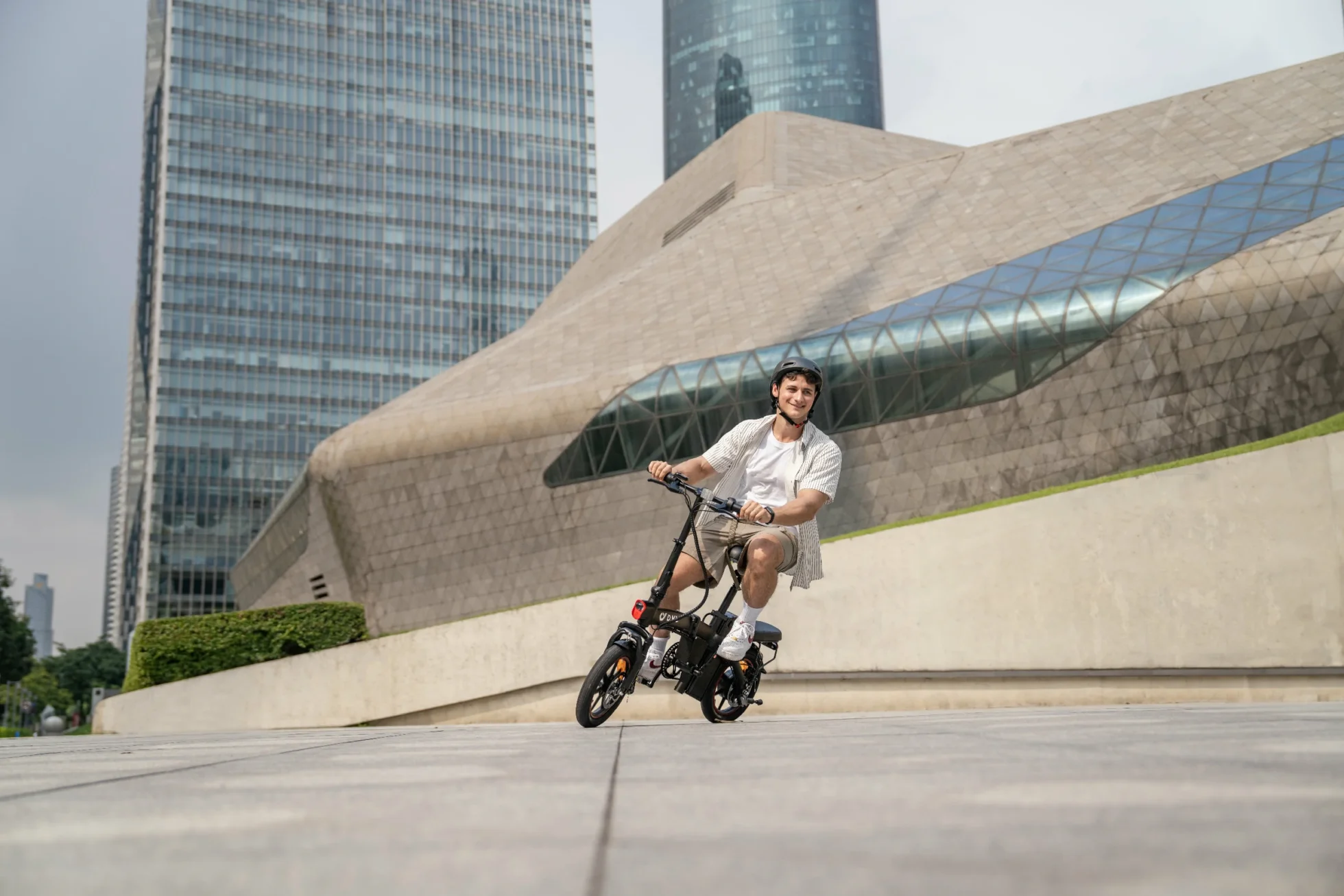
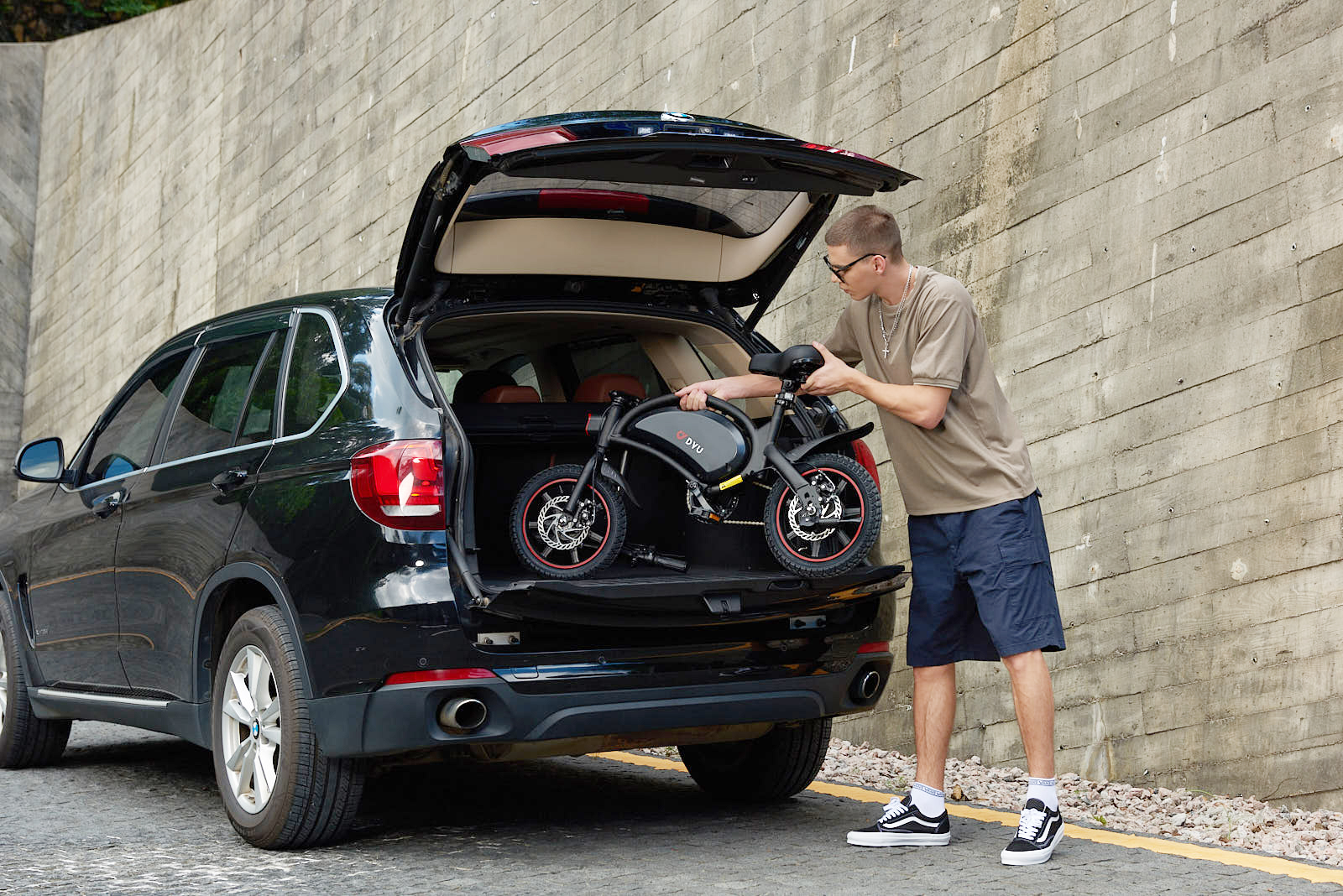
European cities are built around multimodal transport. You ride to the station, fold, board, unfold, and ride the last stretch to work. A full-sized e-bike makes the middle part painful. A mini folding e-bike makes it invisible.
The practical benefits are clear:
- No bike-parking anxiety. Your bike goes where you go. Under your desk, inside a café, into the elevator. No locking it outside where theft rates keep climbing.
- Public transport friendly. Most European transit operators allow folded bikes for free, while full-sized bikes often require separate tickets or are banned during peak hours.
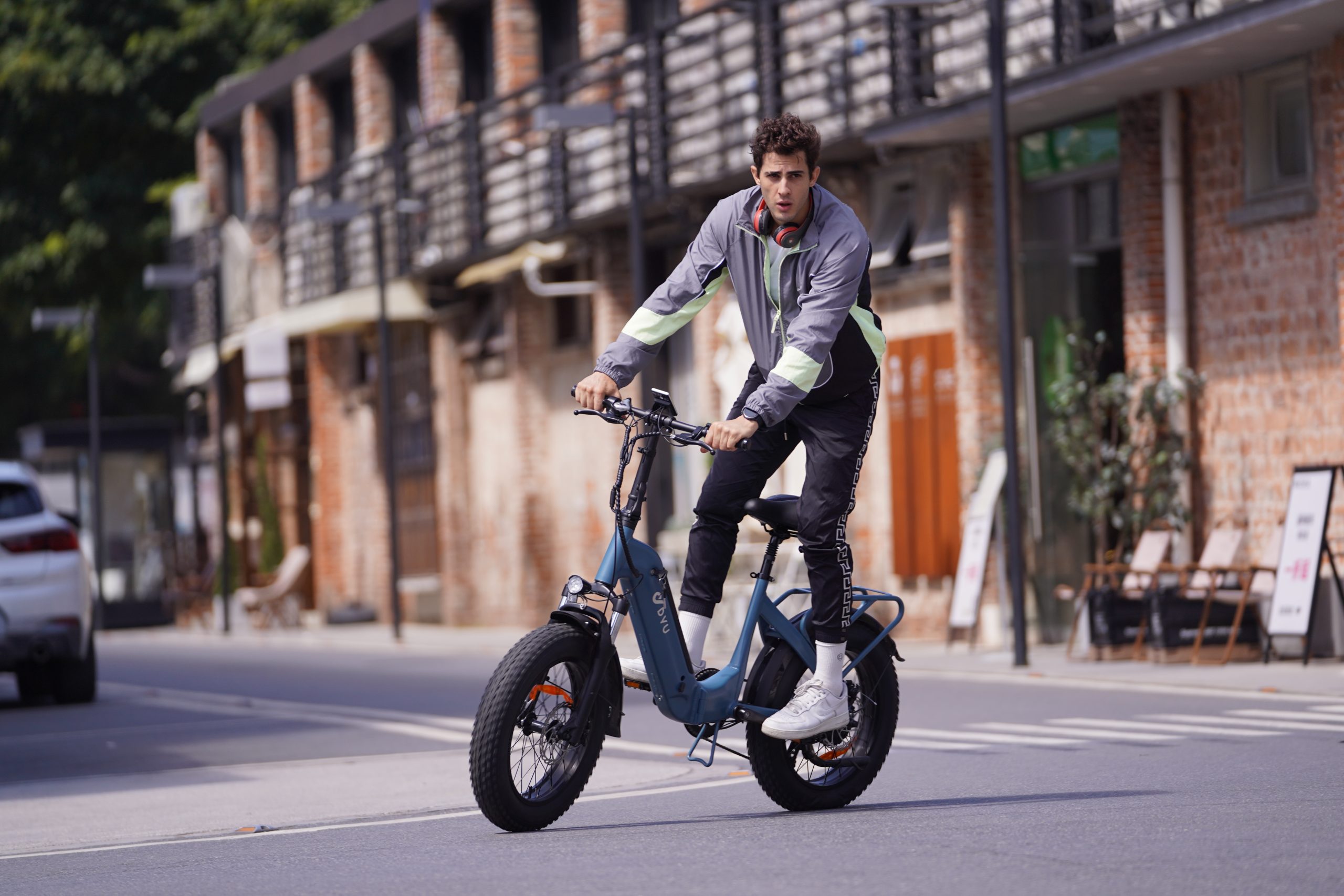
- Apartment storage. If you live in a fourth-floor walk-up in Paris or Amsterdam, a 19-22 kg folding bike beats a 27+ kg city bike every single time.
- Cost savings. A good mini folding e-bike costs €399-€749, which is less than six months of monthly transit passes in most European capitals.
According to the European Cyclists’ Federation, e-bike commuters who combine cycling with public transport save an average of 45 minutes per day compared to car-only commuters in cities with populations over 500,000. The folding bike is what makes that combination work smoothly.
What to Look for in a Mini Folding E-Bike for Commuting
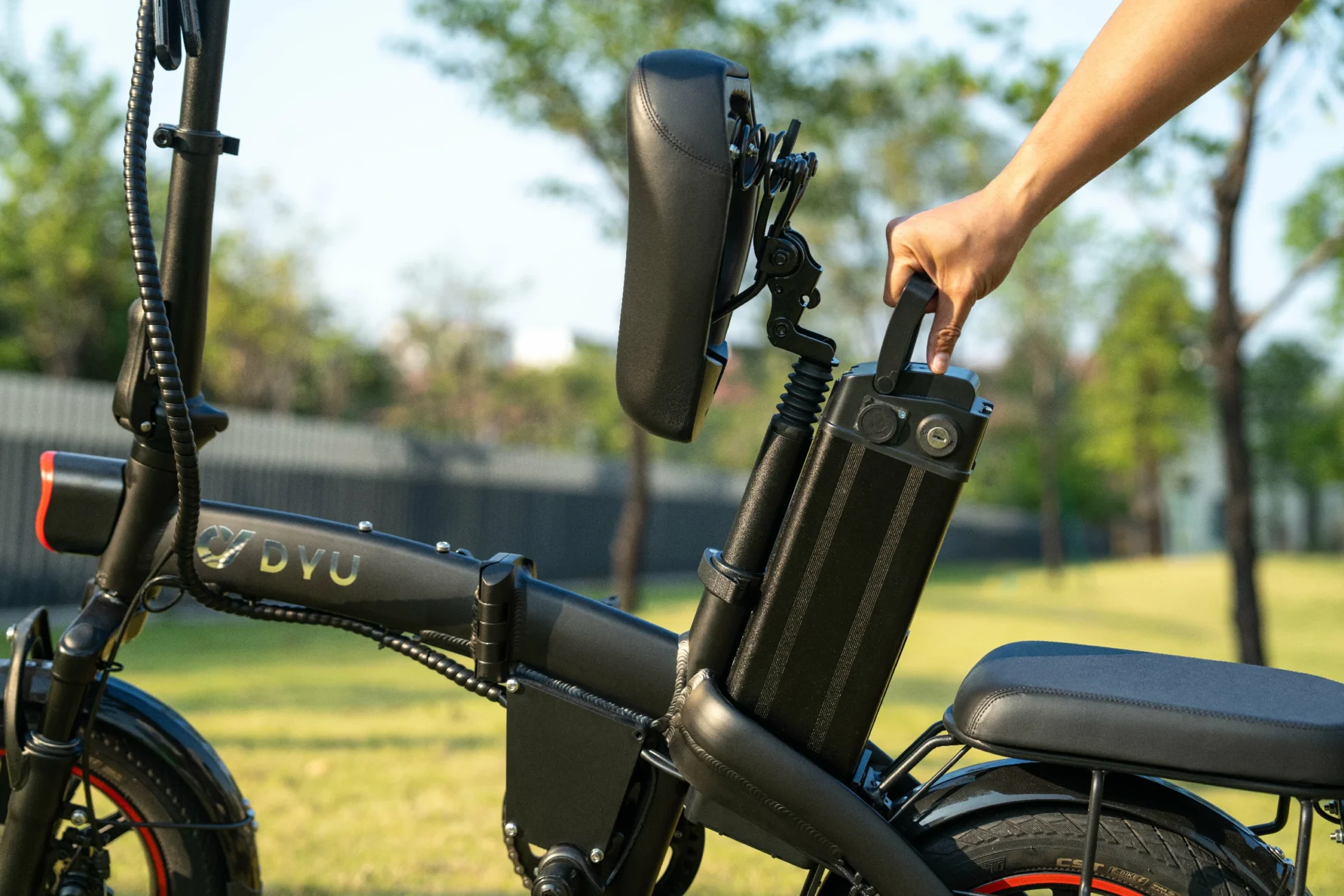
Not every folding e-bike is built for daily commuting. After testing more than a dozen models, I’ve narrowed down the features that actually matter when you’re folding and unfolding twice a day, five days a week.
Weight (the most underrated spec). Anything under 22 kg is manageable for stairs and platform gaps. Below 20 kg feels noticeably easier. Above 25 kg and you’ll start dreading that staircase at your metro stop. I weigh each bike I test on a bathroom scale. Marketing weights are sometimes optimistic.
Fold time and compactness. A fold that takes 15 seconds is fine. Anything over 30 seconds, and you’ll miss your train eventually. The folded dimensions matter too. Can it fit between your legs on a crowded bus? Does the handlebar fold flat, or does it stick out and poke the person next to you?
Range per charge. For multimodal commuting, you typically ride 3-8 km on each end. So 30-60 km of range covers a full work week without daily charging. I test range by riding in pedal-assist mode at a steady 20 km/h on flat urban terrain and measuring how far the battery actually lasts.
Motor and compliance. All e-bikes sold in the EU must comply with EU Regulation 168/2013 for pedelecs: 250W maximum continuous power, 25 km/h speed limit with motor assistance. Every bike in this guide meets those requirements.
Security features. If your bike travels with you everywhere, you still need to park it sometimes. Built-in locks, remote locking, and compact cable locks designed for quick stops make a real difference.
Best Mini Folding E-Bikes Under €800 for Commuters (2026)
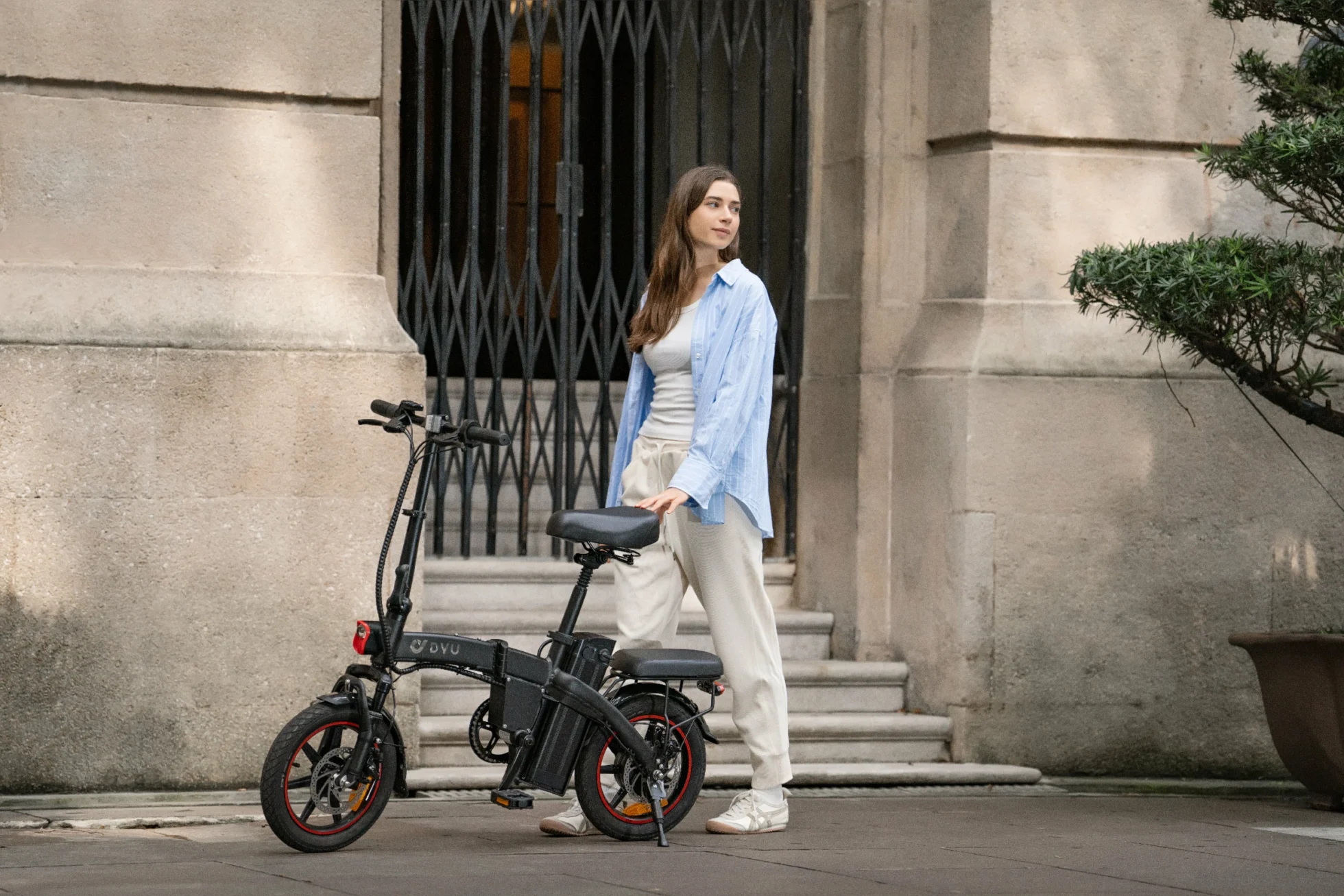
I’ve tested five compact folding e-bikes that work well for multimodal commuters. Here’s how they compare on the specs that matter most for daily train-and-ride use.
| Model | Weight | Wheel | Range | Battery | Special Feature | Price |
|---|---|---|---|---|---|---|
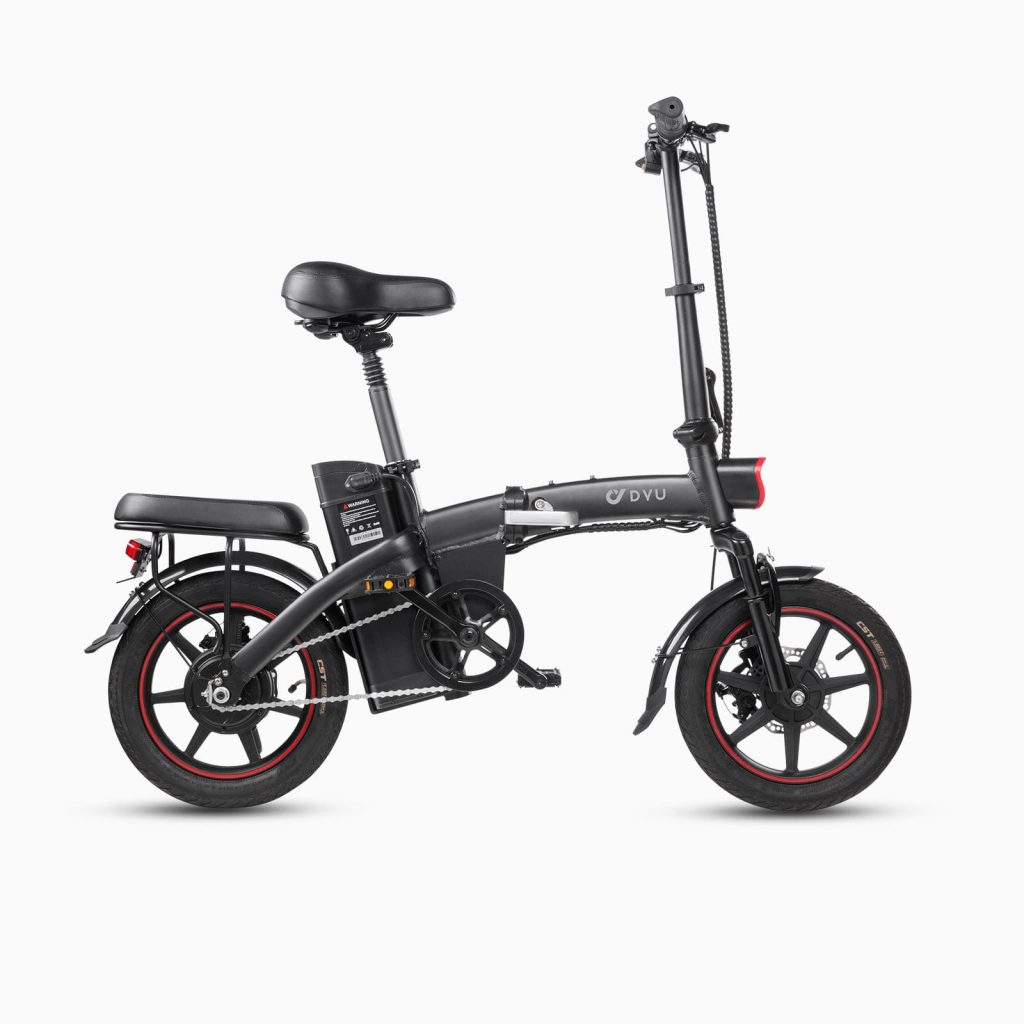
| DYU A5 | 22 kg | 14″ | 60 km | 48V 7.5Ah | Remote lock | €519 |
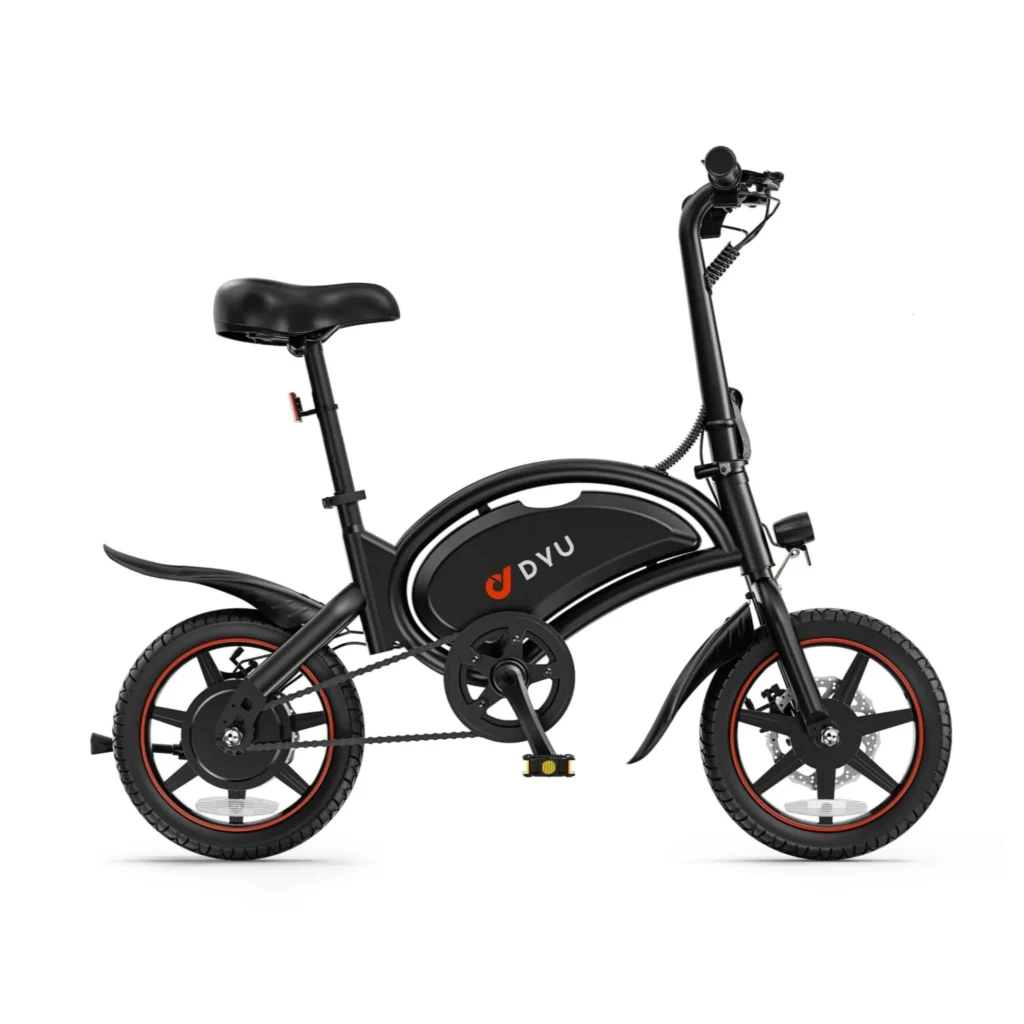
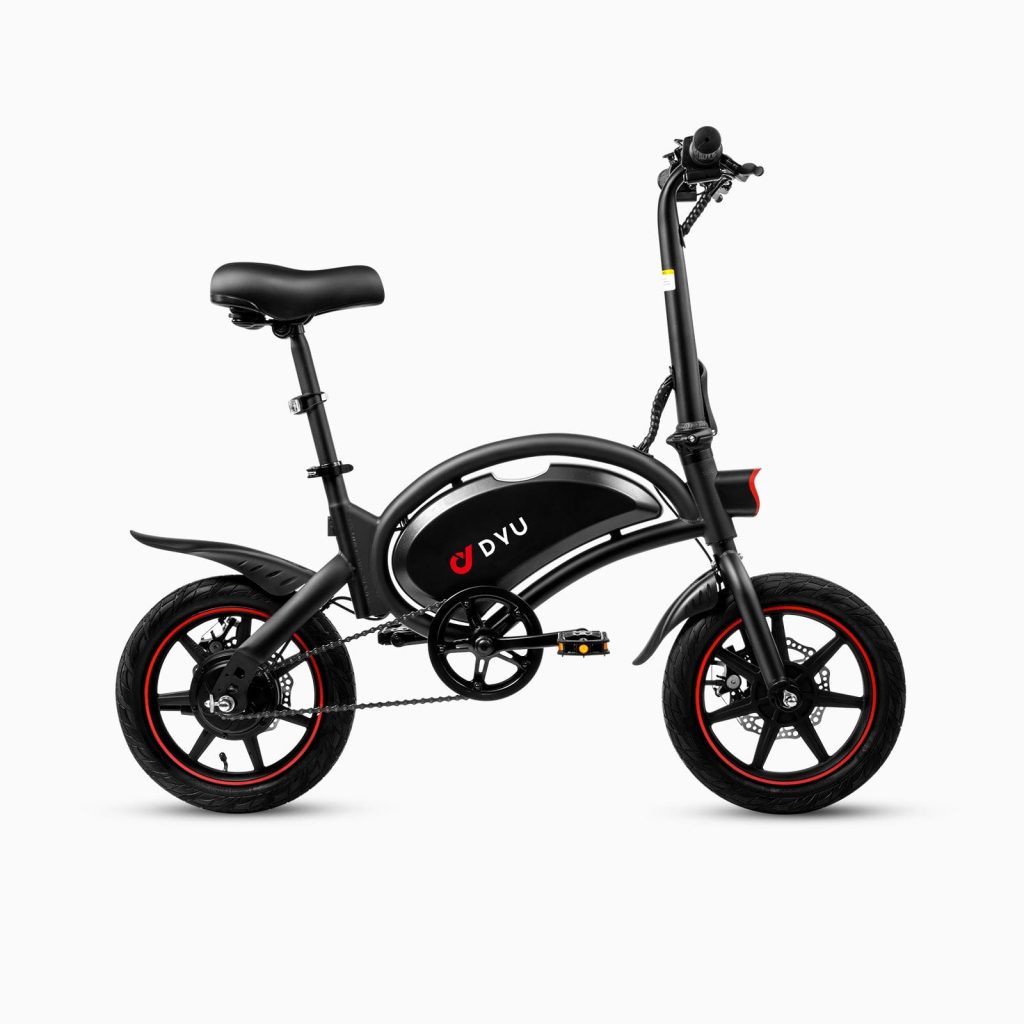
| DYU D3F | 19 kg | 14″ | 50 km | 36V 10Ah | Cruise control | €549 |
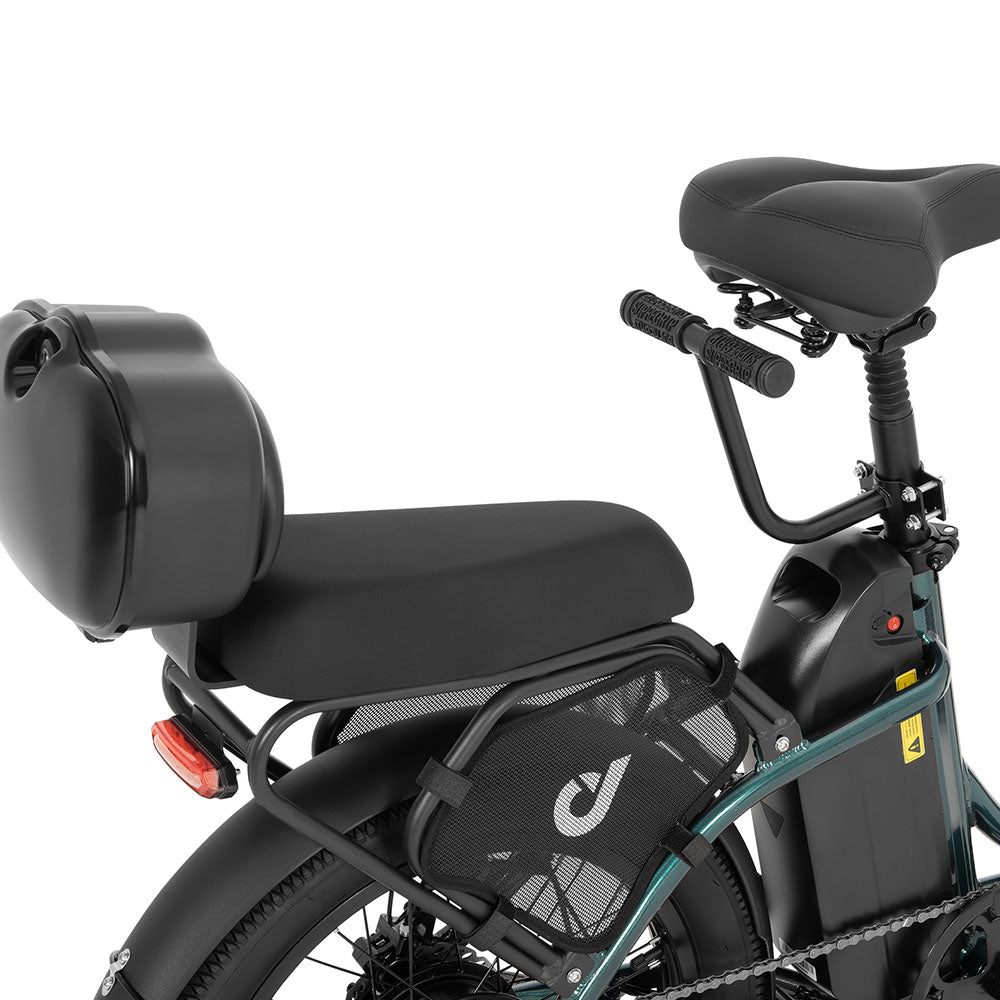
| DYU C3 | 20 kg | 14″ | 34 km | 36V 7.5Ah | Rear rack included | €399 |
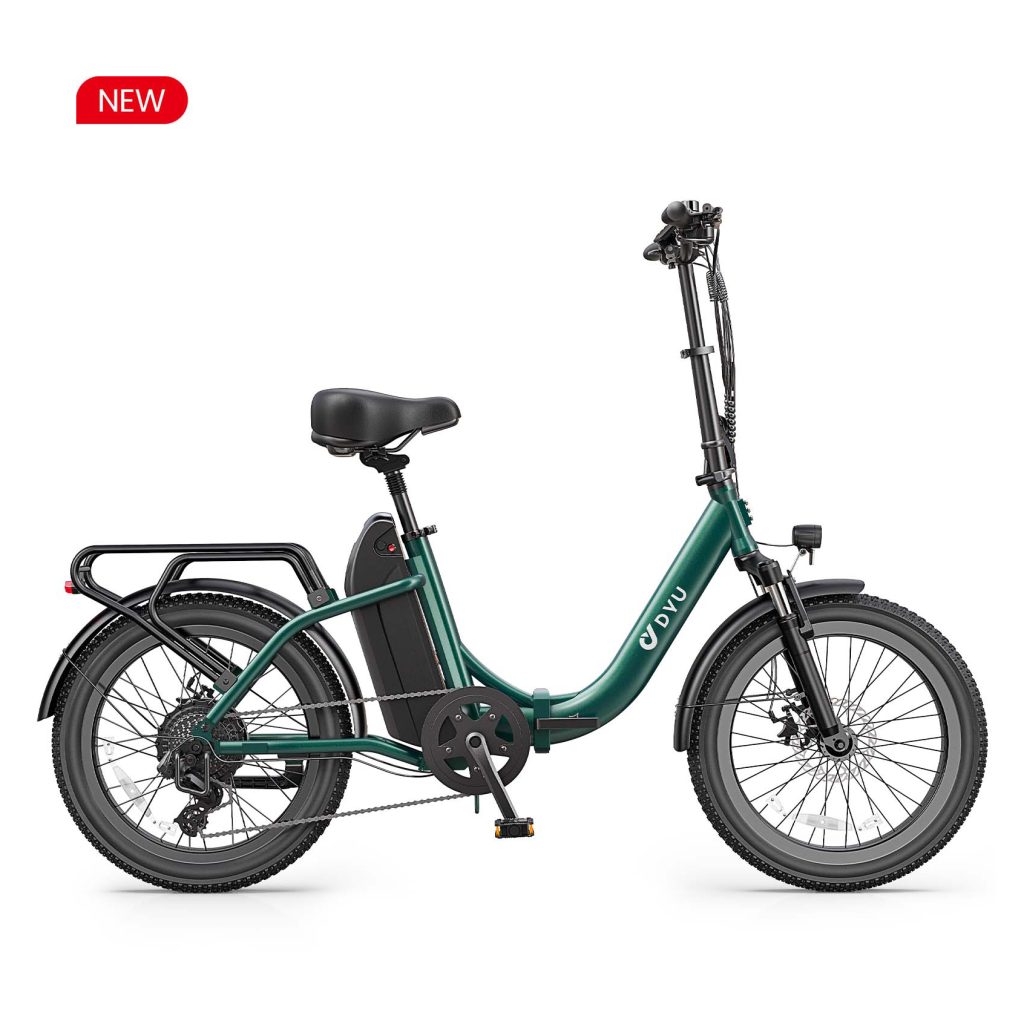
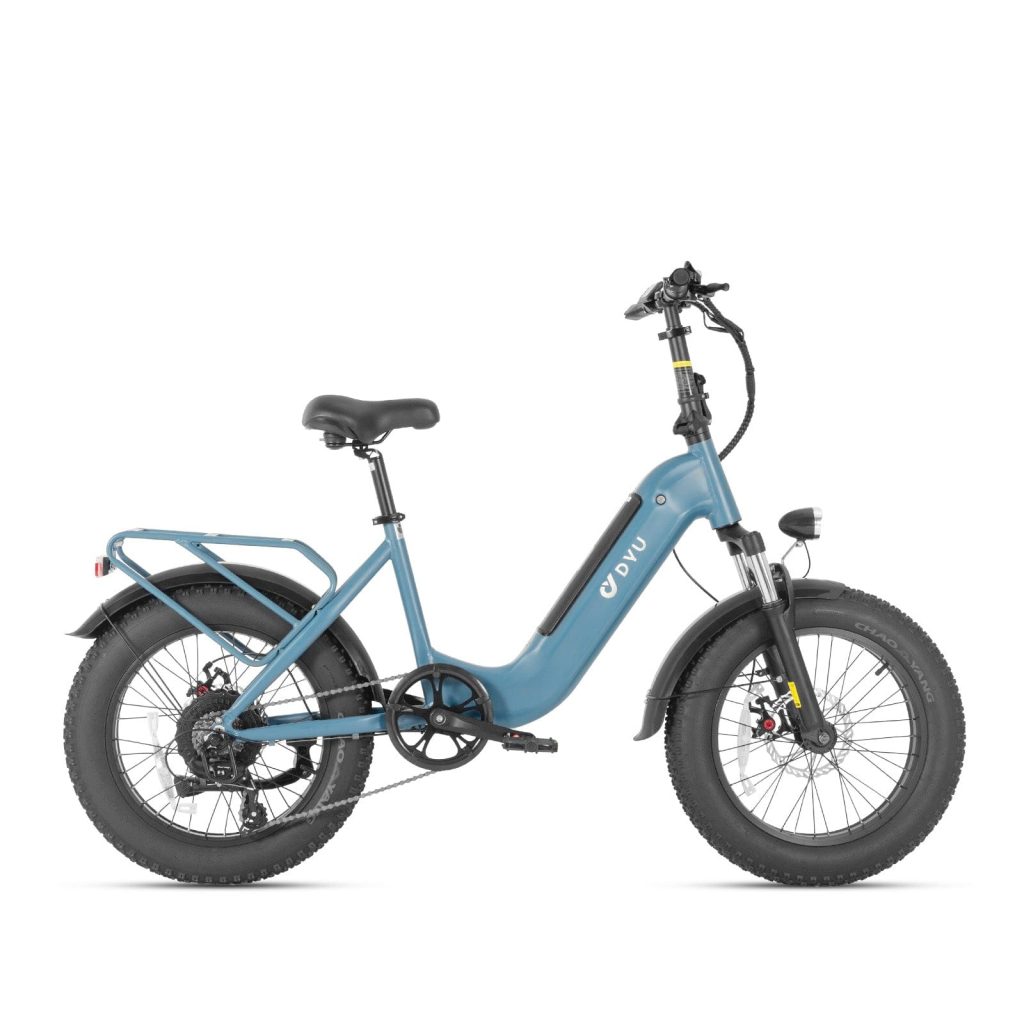
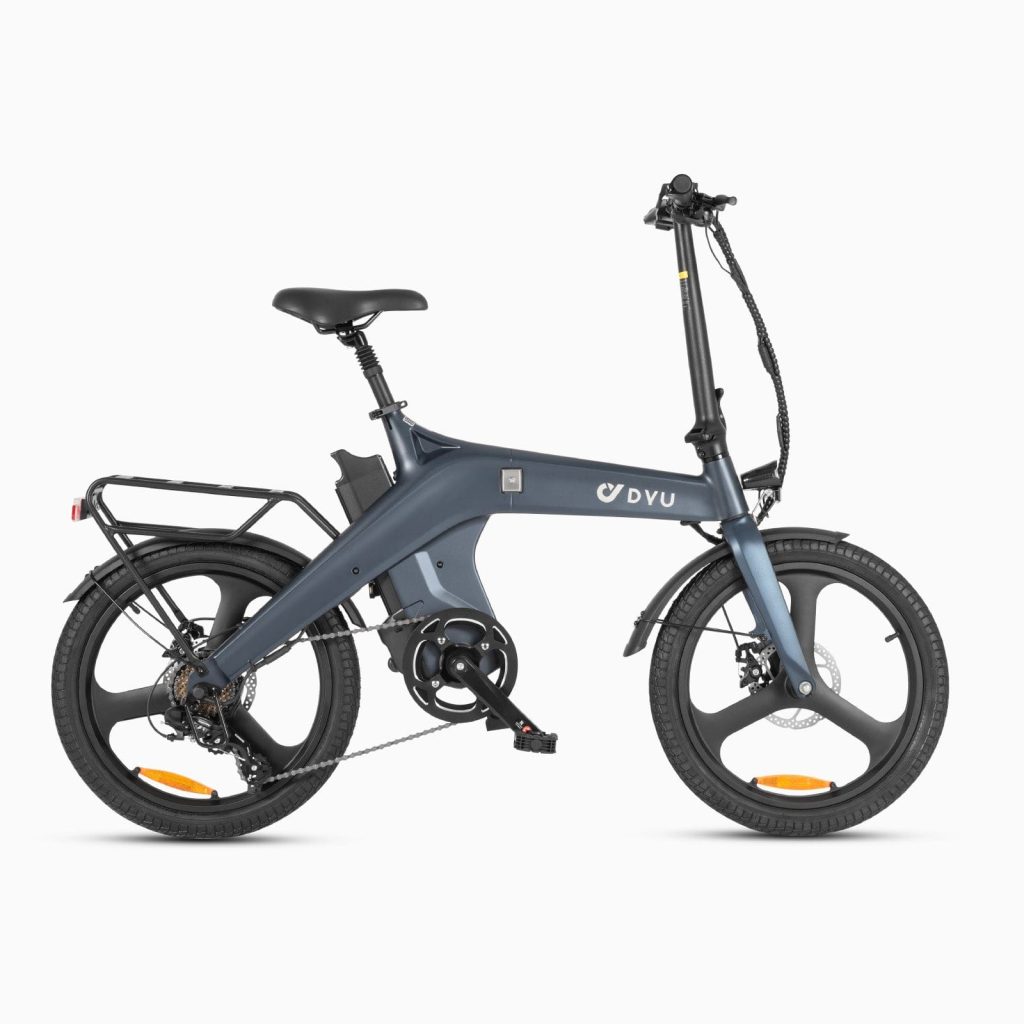
| DYU T1 | 22.5 kg | 20″ | 55 km | 36V 10Ah | Torque sensor | €749 |
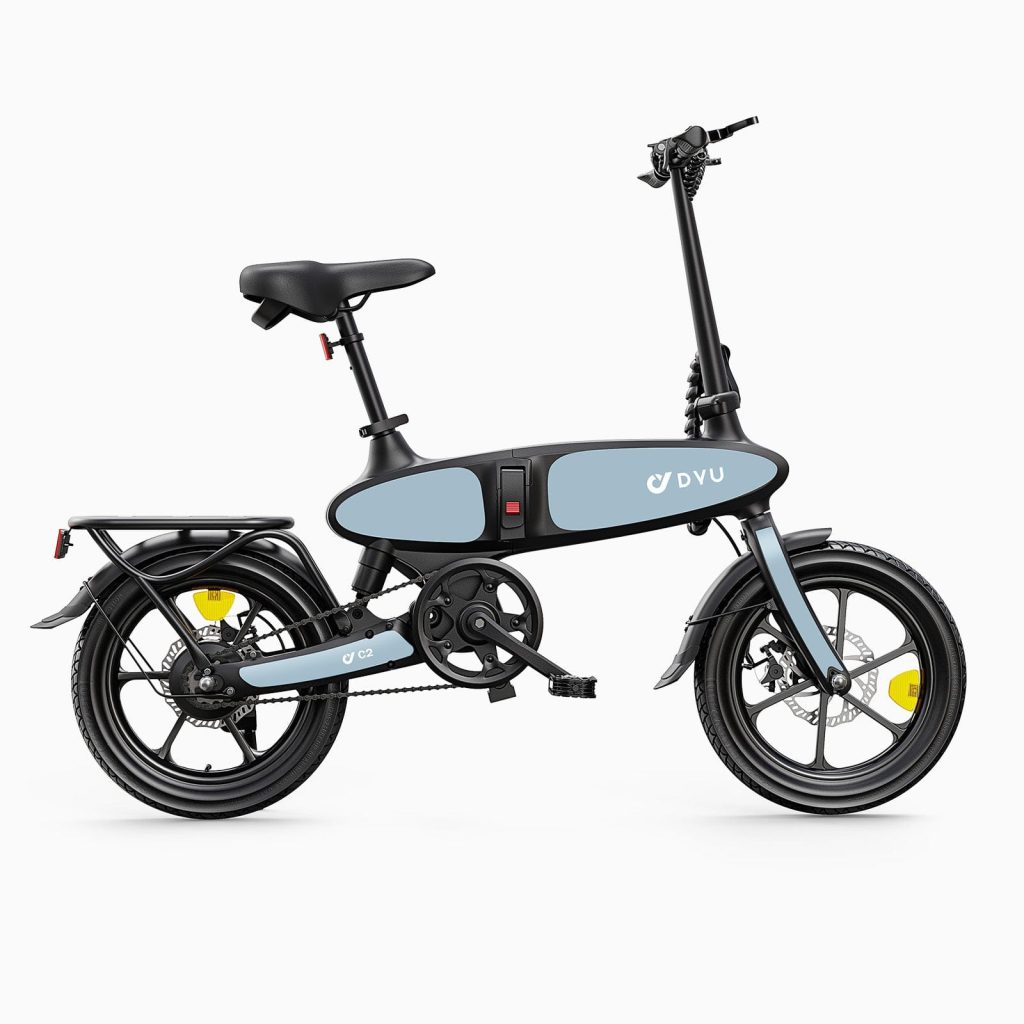
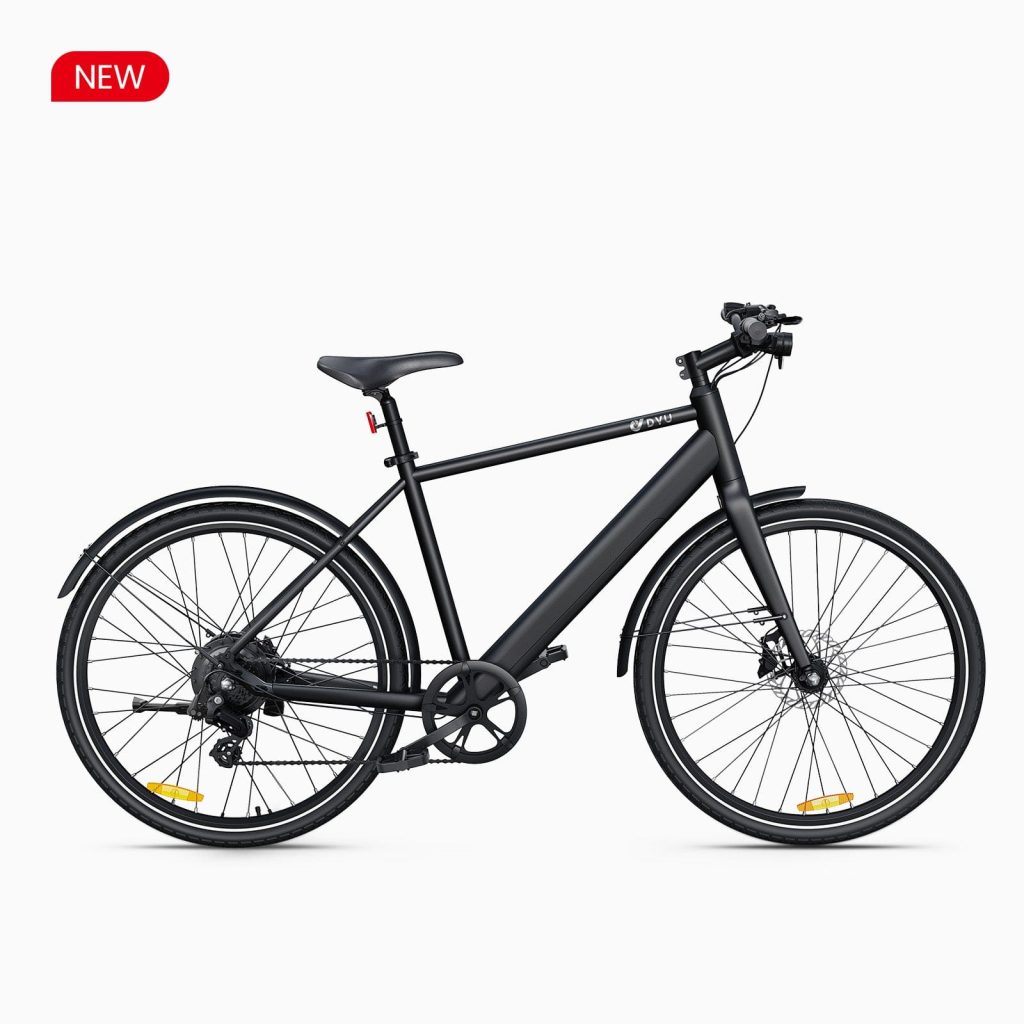
| DYU C2 | 29.6 kg | 16″ | 40 km | 48V 7.5Ah | Full folding frame | €559 |
Let me break down what stood out with each one.
DYU A5: Best Overall for Security-Conscious Commuters
The DYU A5 is the only mini folding e-bike I’ve tested with a built-in remote lock. You park it outside a shop, tap the remote, and the bike locks electronically. No fumbling with cable locks while holding your coffee and bag. At €519 (down from €799), it also packs a 48V 7.5Ah battery that delivered around 52-55 km in my real-world pedal-assist testing. That’s enough for a full week of 5 km each-way commuting without charging.
At 22 kg, it’s not the lightest option, but the front fork and seat suspension smooth out cobblestones that would rattle your teeth on a rigid-frame mini bike. I rode it daily in Munich for three weeks, folding it onto the S-Bahn every morning. The fold takes about 12 seconds once you get the hang of it.
DYU D3F: Lightest Option at Just 19 kg
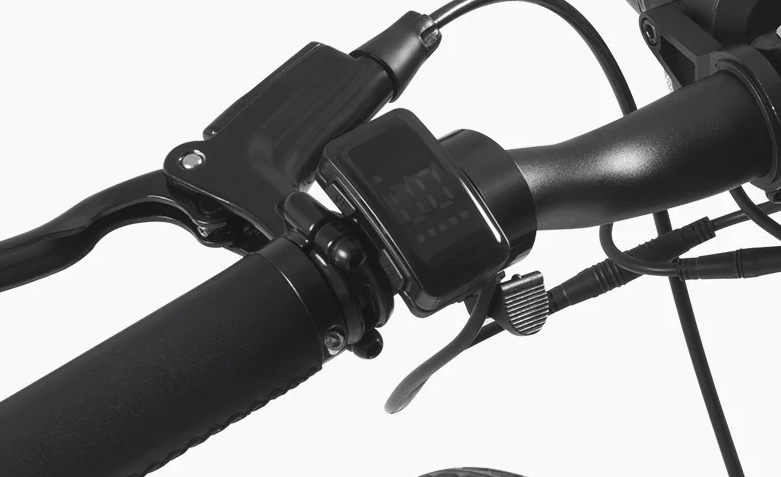
If pure portability is your priority, the DYU D3F wins on weight alone. At 19 kg, it’s the lightest folding e-bike in the entire DYU lineup. The foldable pedals are a small detail that makes a big difference on packed trains, because nothing says “sorry” like jabbing someone’s shin with a protruding pedal. The cruise control feature (hold the throttle for 8 seconds to lock in your speed) is surprisingly useful on long, flat bike paths where you just want to relax.
The trade-off? Range drops to 50 km, and you lose the front fork suspension that the A5 has. At €549, it costs slightly more than the A5, which makes the A5’s combination of longer range, remote lock, and suspension hard to ignore.
DYU C3: Best Budget Pick at €399
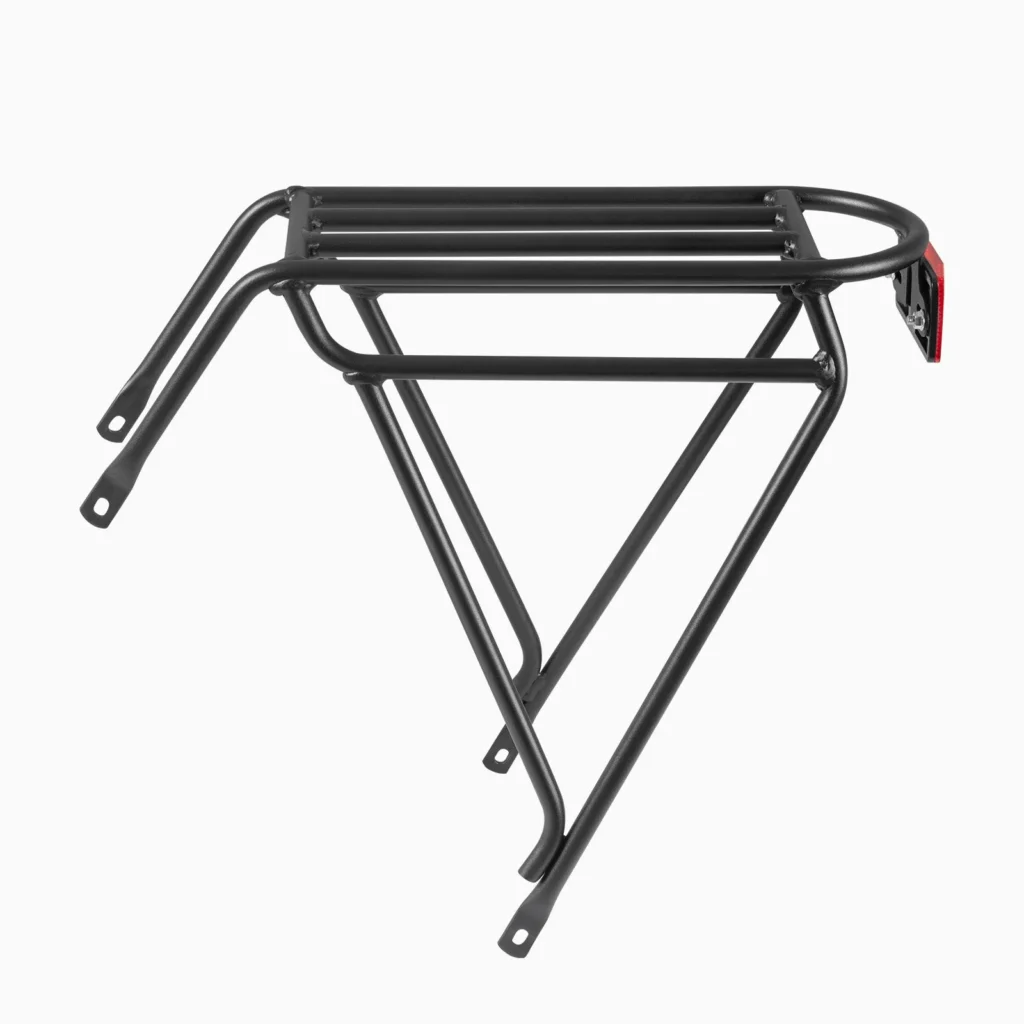
The DYU C3 proves you don’t need to spend €700+ to get a functional commuter e-bike. At €399, it’s the most affordable option here, and it includes a rear rack rated for 25 kg. That’s enough for a laptop bag or a grocery run on the way home. The 34 km range is the clear limitation. If your daily round trip is under 15 km, it’s perfectly adequate. Beyond that, you’ll be charging every other day.
Build quality surprised me. The 2-year frame warranty and 1-year battery/motor warranty suggest DYU is confident in its durability. At 20 kg, it sits comfortably in the portable range.
How I Test Mini Folding E-Bikes for Public Transport Use
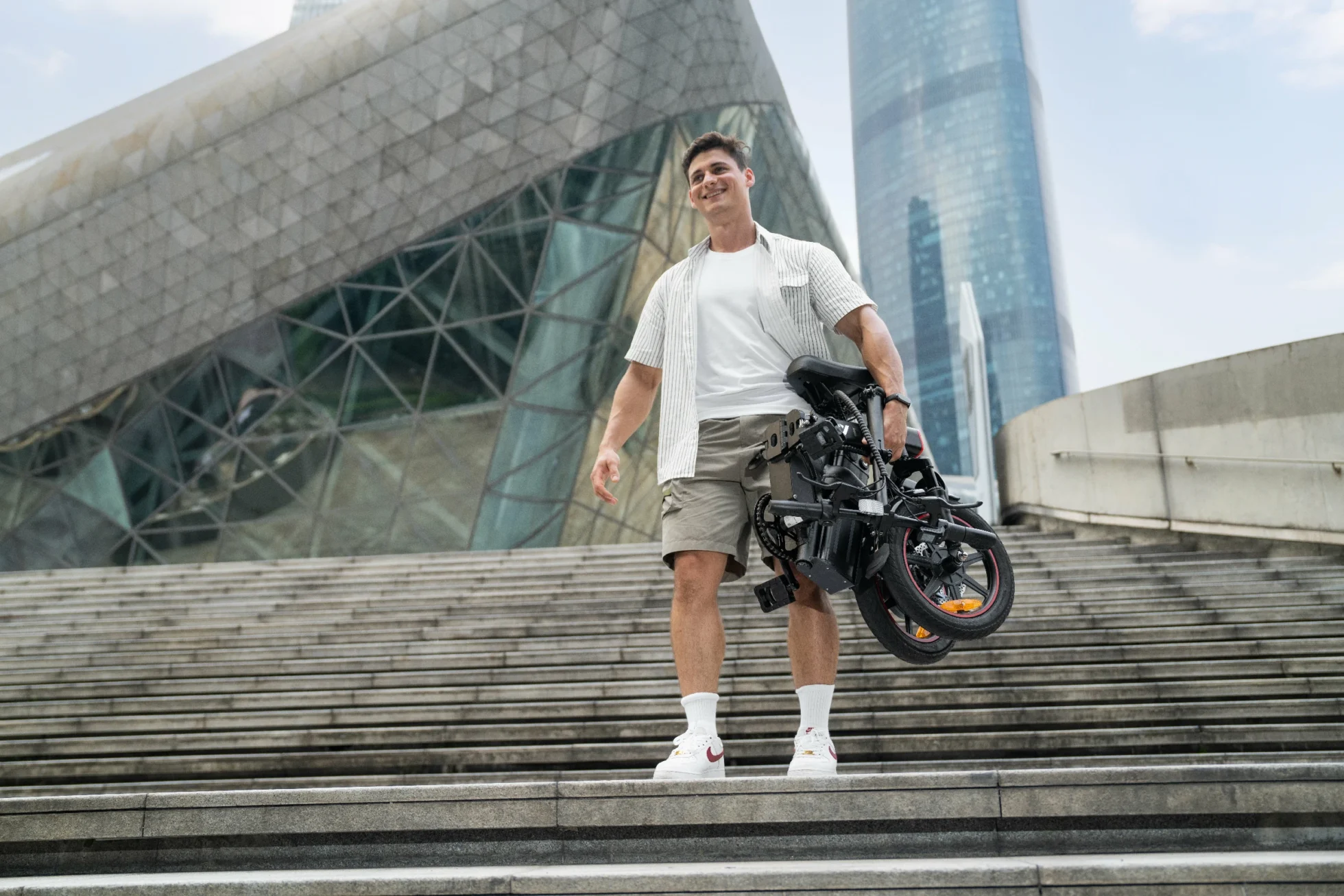
Reviews that only test bikes on open roads miss the point for commuters. Here’s my testing approach for folding e-bikes, which focuses on the scenarios you’ll actually encounter.
The platform test. I time how long it takes to fold the bike from riding position to carrying-onto-the-train position. I do this five times and average it. Anything under 15 seconds is excellent. I also measure the folded dimensions and check whether it fits between seats on common European train models.
The staircase test. I carry each bike up four flights of stairs (typical European apartment building) and note how my arms feel at the top. The 19 kg D3F? Manageable. The 29.6 kg C2? I’d want an elevator.
The range reality check. Manufacturer range claims assume ideal conditions: flat roads, light rider, moderate speed, maximum pedal assist. I ride at a realistic 20-22 km/h on mixed urban terrain with occasional gentle hills, using the middle assist level. My numbers are typically 10-15% below the marketed range, and I report what I actually measured.
The “did anyone give me a dirty look” test. This one’s informal but telling. If I can fold, board, ride, and unfold without annoying a single fellow commuter, the bike passes. Size, fold speed, and sharp edges all factor in.
Which Mini Folding E-Bike Should You Choose?
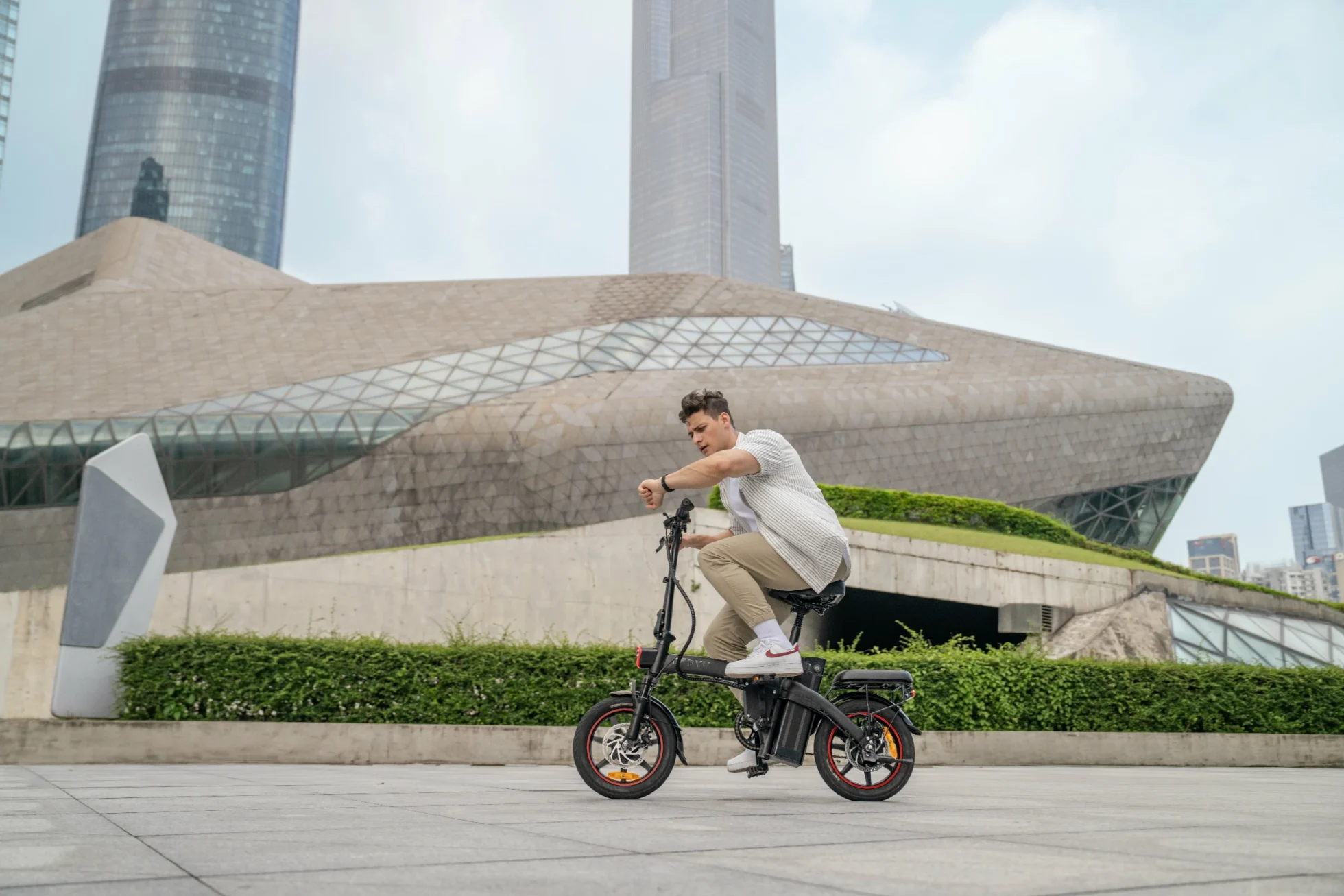
After hundreds of kilometres across five bikes, here’s my practical breakdown by commuter type.
| Your Situation | Best Pick | Price | Why |
|---|---|---|---|
| Security matters most | DYU A5 | €519 | Only model with remote lock + longest 14″ range (60 km) |
| Lightest possible bike | DYU D3F | €549 | 19 kg, foldable pedals, cruise control for relaxed rides |
| Tightest budget | DYU C3 | €399 | Includes rear rack, 2-year warranty, solid for short commutes |
| Best ride quality | DYU T1 | €749 | Torque sensor + 20″ wheels = most natural pedal feel |
| Longest range on 16″ wheels | DYU C2 | €559 | 48V battery, 40 km range, but at 29.6 kg it’s heavy for stairs |
If I had to pick just one for the average European train commuter, I’d recommend the DYU A5. The remote lock alone saves you from the daily hassle of threading a cable lock, and the 60 km range means you charge once or twice a week instead of every day. At €519, it sits at a sweet spot between the budget C3 and the premium T1.
That said, if you live on the third floor without an elevator and every kilogram counts, the DYU D3F at 19 kg is noticeably easier to carry. And if this is your first e-bike and you want to test the waters without a big investment, the C3 at €399 is the lowest-risk entry point. You can always check out my guide on choosing your first e-bike for more detailed buying advice.
For a deeper dive into how the A5 performs over time, I documented six weeks and 400 km of daily riding in my full DYU A5 review. And if you’re curious about the D3F’s metro-friendliness, I carried it on public transport for a month and wrote about it here.
FAQs
Q1. What is the best mini folding e-bike for daily commuting in 2026?
For most commuters combining cycling with public transport, the DYU A5 offers the strongest combination of range (60 km), weight (22 kg), and security features (remote lock) at €519. If weight is your top priority, the DYU D3F at 19 kg is the lightest option available.
Q2. Can you take a folding e-bike on the train in Europe?
Yes. Most European train operators allow folded e-bikes on board for free, treating them as luggage. However, rules vary by operator and country. In Germany (Deutsche Bahn), folded bikes travel free. In the Netherlands (NS), folded bikes are allowed outside peak hours without a supplement. Always check your local operator’s policy before traveling.
Q3. How long does it take to fold a mini e-bike?
Most mini folding e-bikes fold in 10-20 seconds with practice. The DYU D3F and A5 both fold in roughly 12-15 seconds. The key is whether the handlebars and pedals also fold, as this determines the final compact size. Foldable pedals (like on the D3F) make a noticeable difference on crowded platforms.
Q4. Is a 14-inch wheel e-bike safe to ride on city streets?
14-inch wheels are stable at speeds up to 25 km/h on paved roads and bike lanes. They handle potholes and tram tracks less gracefully than 20-inch wheels, so you need to stay alert in cities with rough road surfaces. Suspension (like the front fork on the A5) helps significantly. For longer commutes over 10 km each way, consider a 20-inch option like the DYU T1 for added comfort.
Q5. How much does a good folding e-bike cost in Europe?
Functional folding e-bikes start at around €399 (like the DYU C3) for basic models with shorter range. Mid-range options with better batteries and features typically cost €500-€750. Premium folding e-bikes from brands like Brompton Electric can exceed €3,000. For most commuters, the €500-€600 range offers the best balance of quality, range, and portability.


