
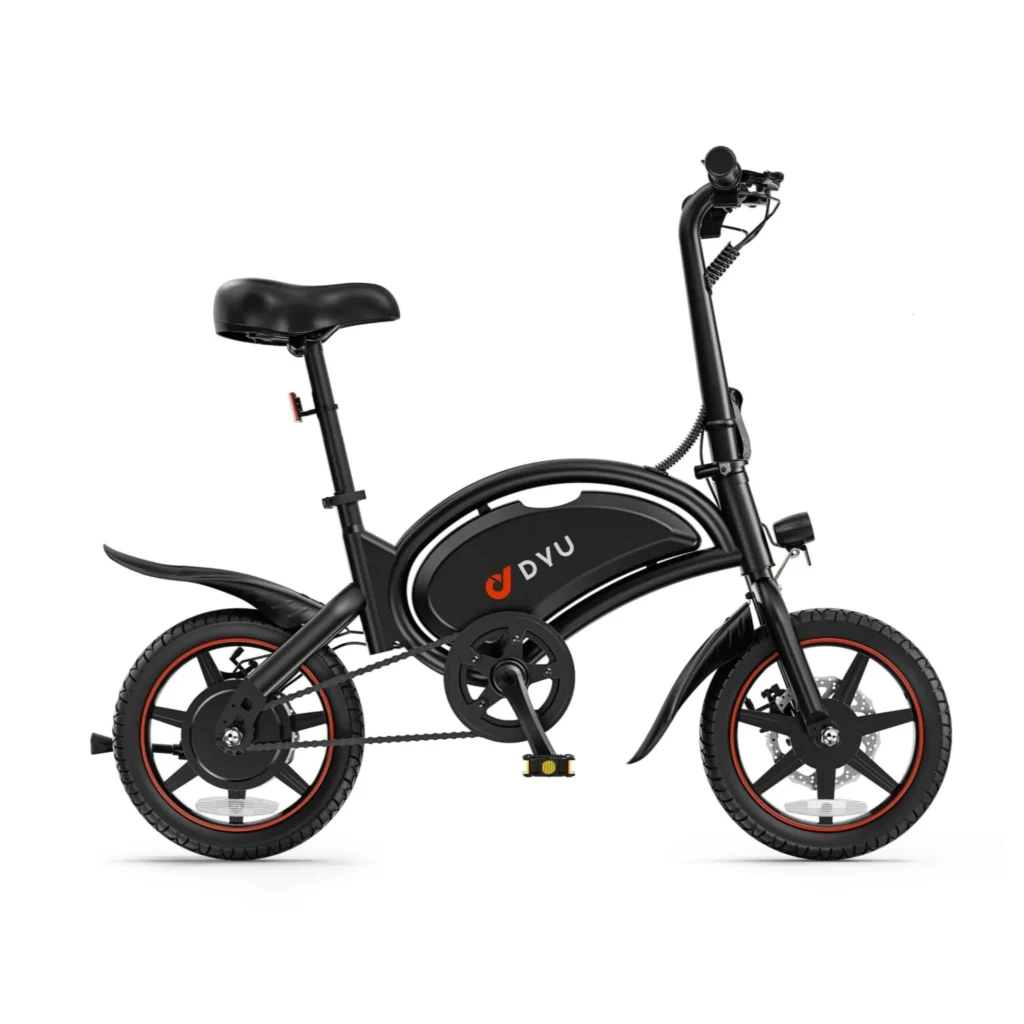
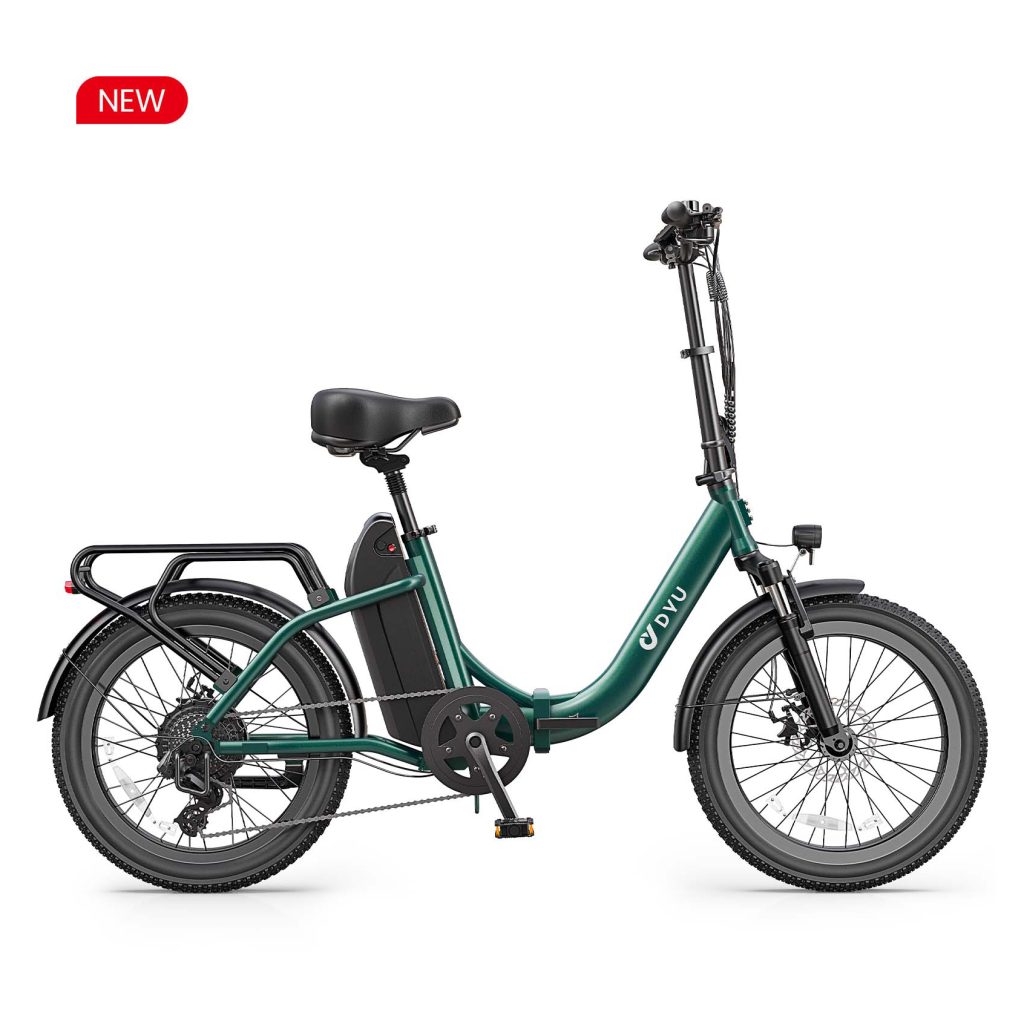
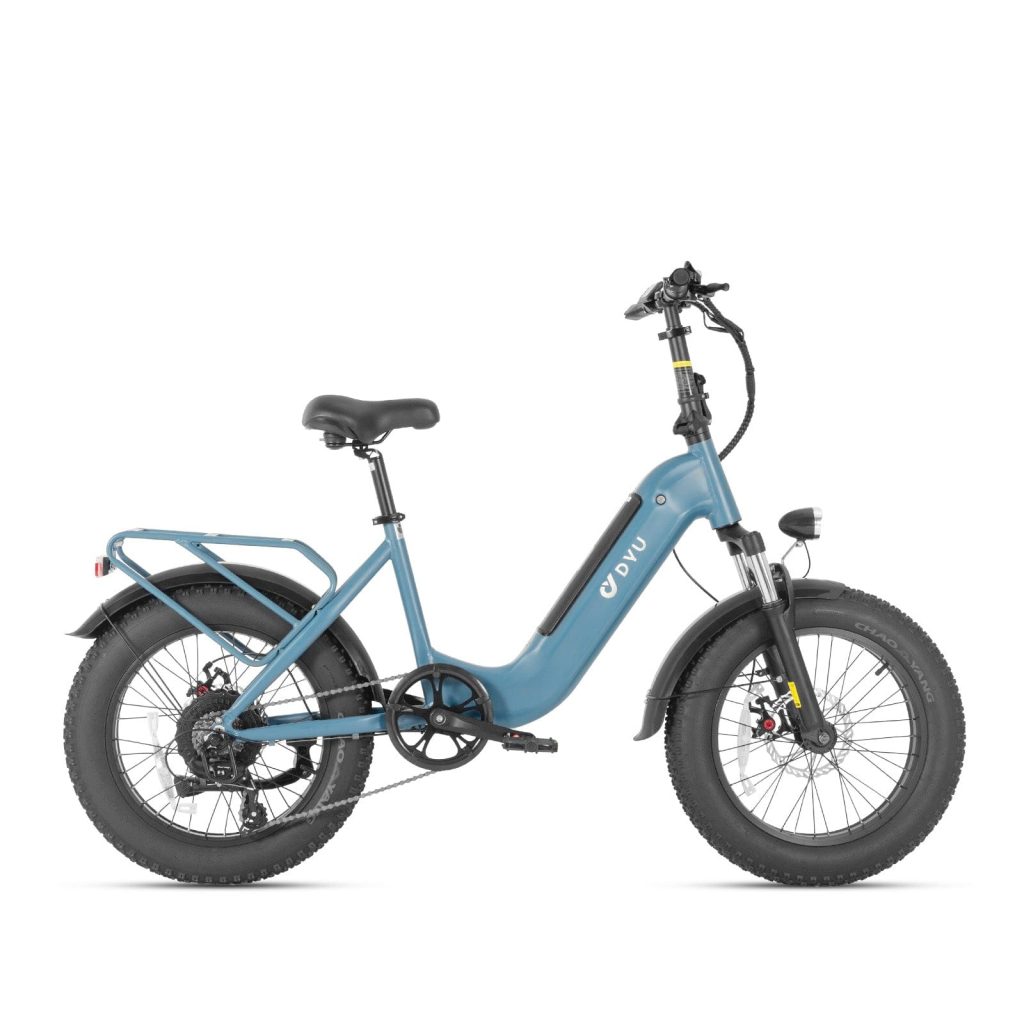
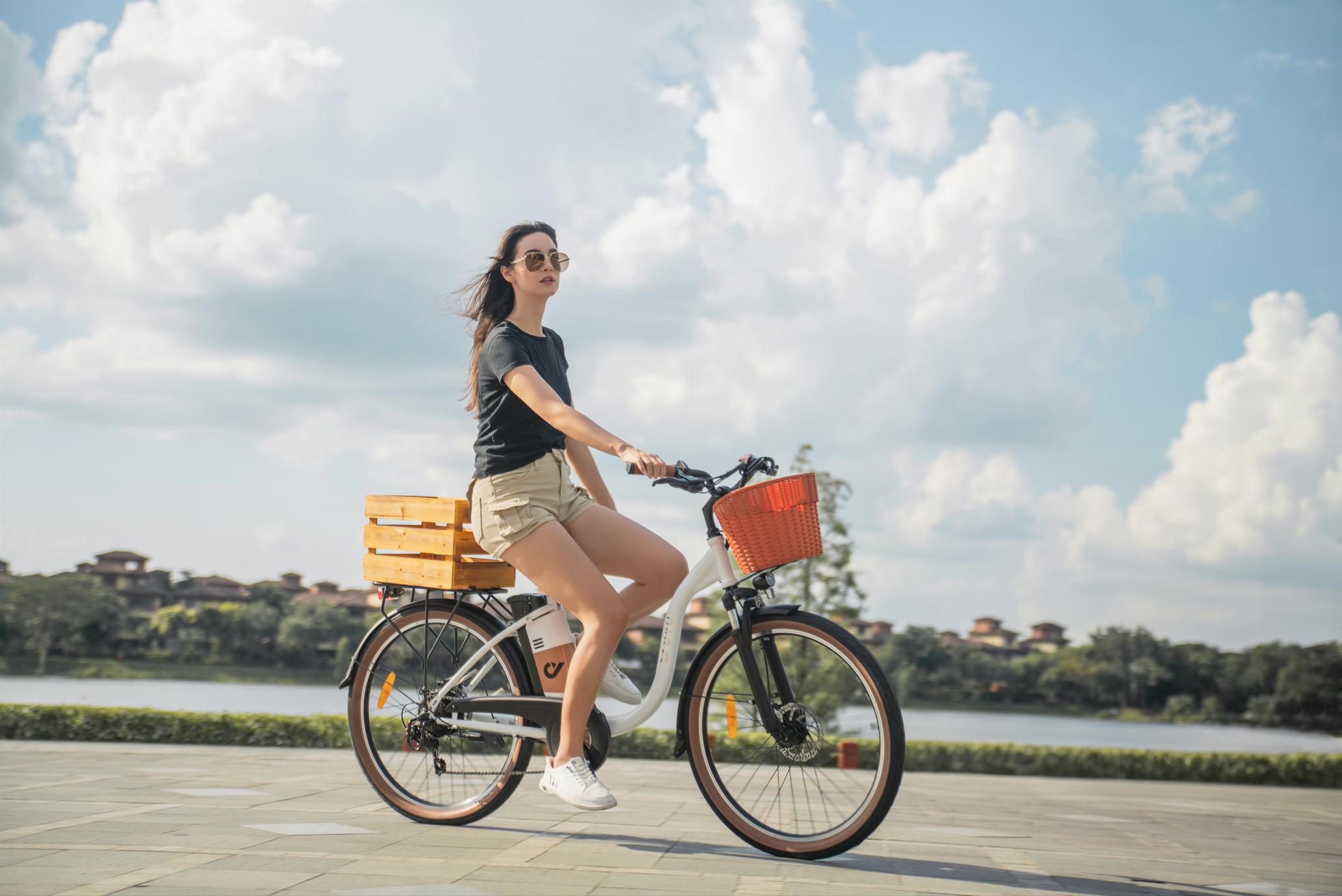



I was spending €187 a month on parking, fuel, and public transport. That number hit me one morning while I was standing in the rain at a bus stop in Munich, watching three e-bikes glide past. Three months later, I’d cut that number to €12 in electricity. The secret wasn’t finding the “best” e-bike. It was finding the right one for my specific commute.
If you’re considering your first electric bike, this guide walks you through the five decisions that actually matter, based on what I’ve learned testing 14 DYU models over the past two years.
Start with Your Commute Distance
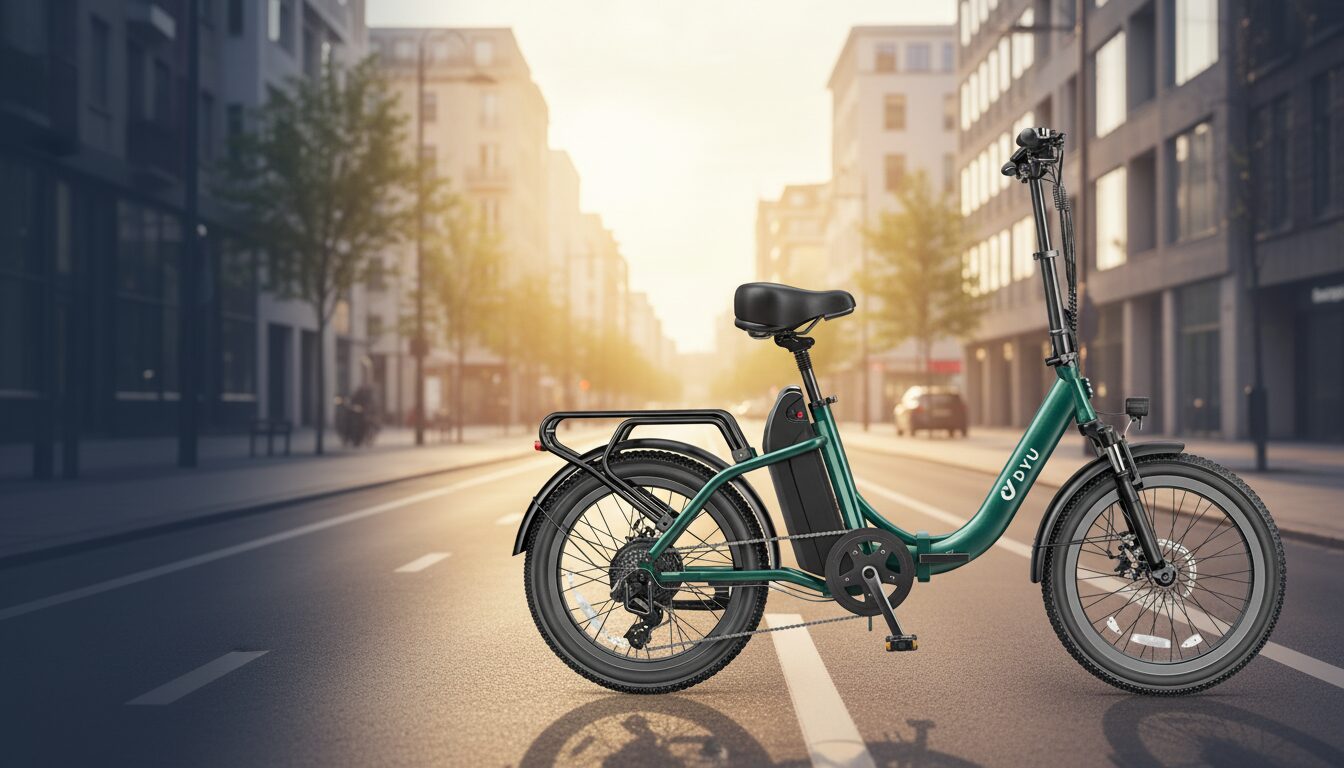
This is the single most important factor, and most buyers get it wrong. They buy based on price or looks, then discover three weeks later that their bike doesn’t have the range for a round trip on a cold Tuesday.
Here’s a practical breakdown:
| Daily Round Trip | Minimum Range Needed | Budget Range | Recommended Models |
|---|---|---|---|
| Under 20 km | 30+ km | €399–€559 | DYU C3 (€399), DYU A1F Pro (€459) |
| 20–40 km | 50–65 km | €549–€819 | DYU D3F (€549), DYU C6 (€819) |
| 40–60 km | 70–100 km | €749–€899 | DYU C6 Pro (€899), DYU C9 (€899) |
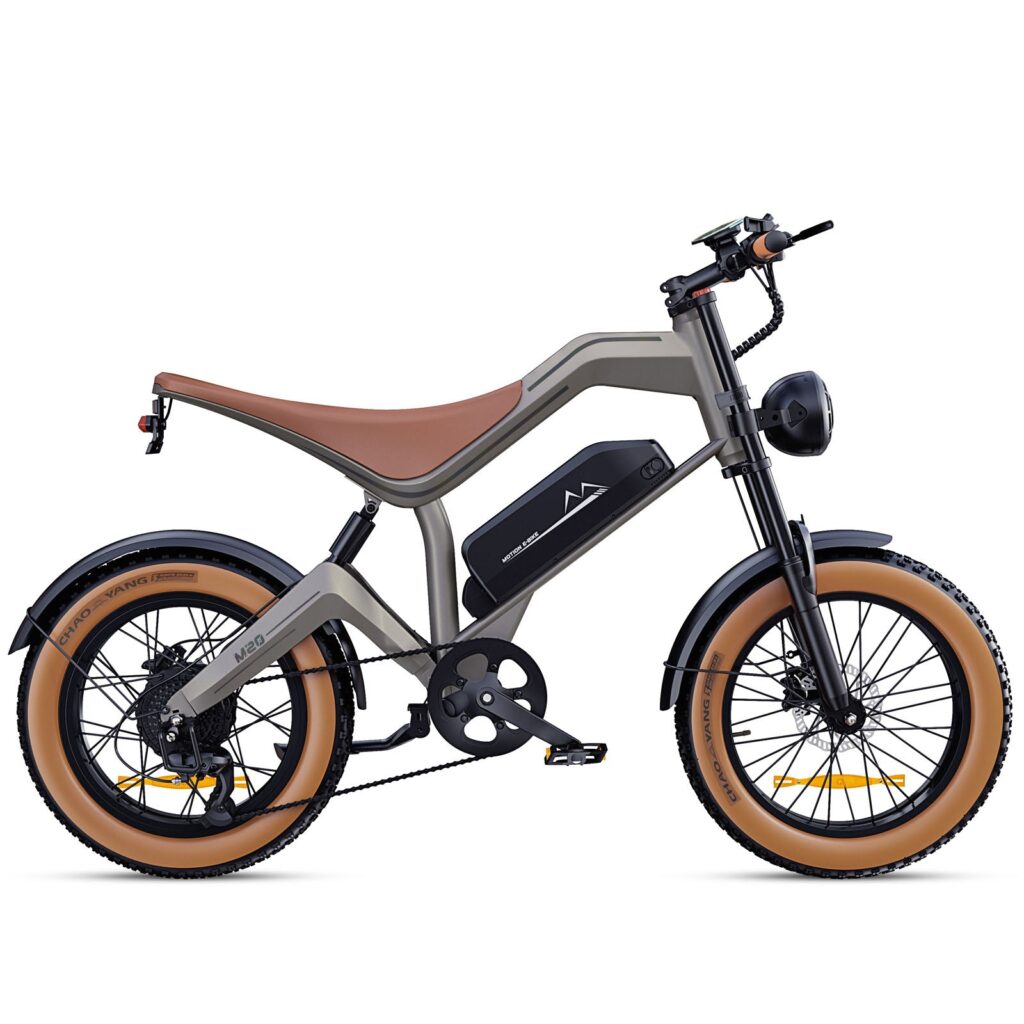
| 60+ km | 100+ km | €899–€1,199 | DYU M20 (€899), Stroll 1 (€999) |
One thing I always tell people: budget 20% less real-world range than what the spec sheet says. Manufacturer numbers come from ideal conditions (flat road, no wind, light rider, eco mode). Add hills, cold weather, or headwind, and that 80 km claim becomes 60 km in practice. Electric Bike Review’s range guide explains the variables well.
Folding vs Non-Folding: A Lifestyle Decision
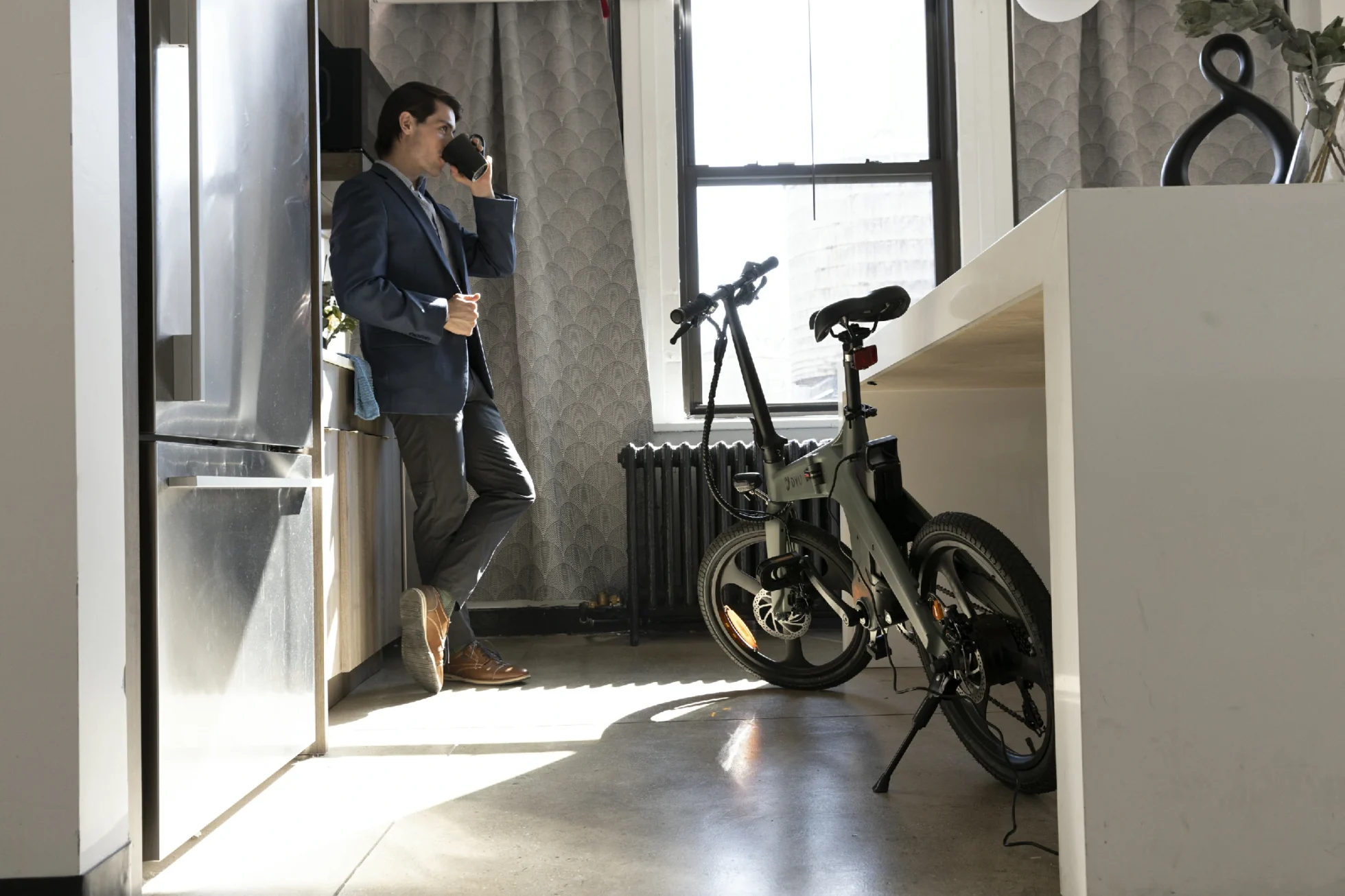
This isn’t about which is “better.” It’s about how you live. I tested both types for months, and the answer became obvious once I stopped thinking about specs and started thinking about my daily routine.
Choose folding if:
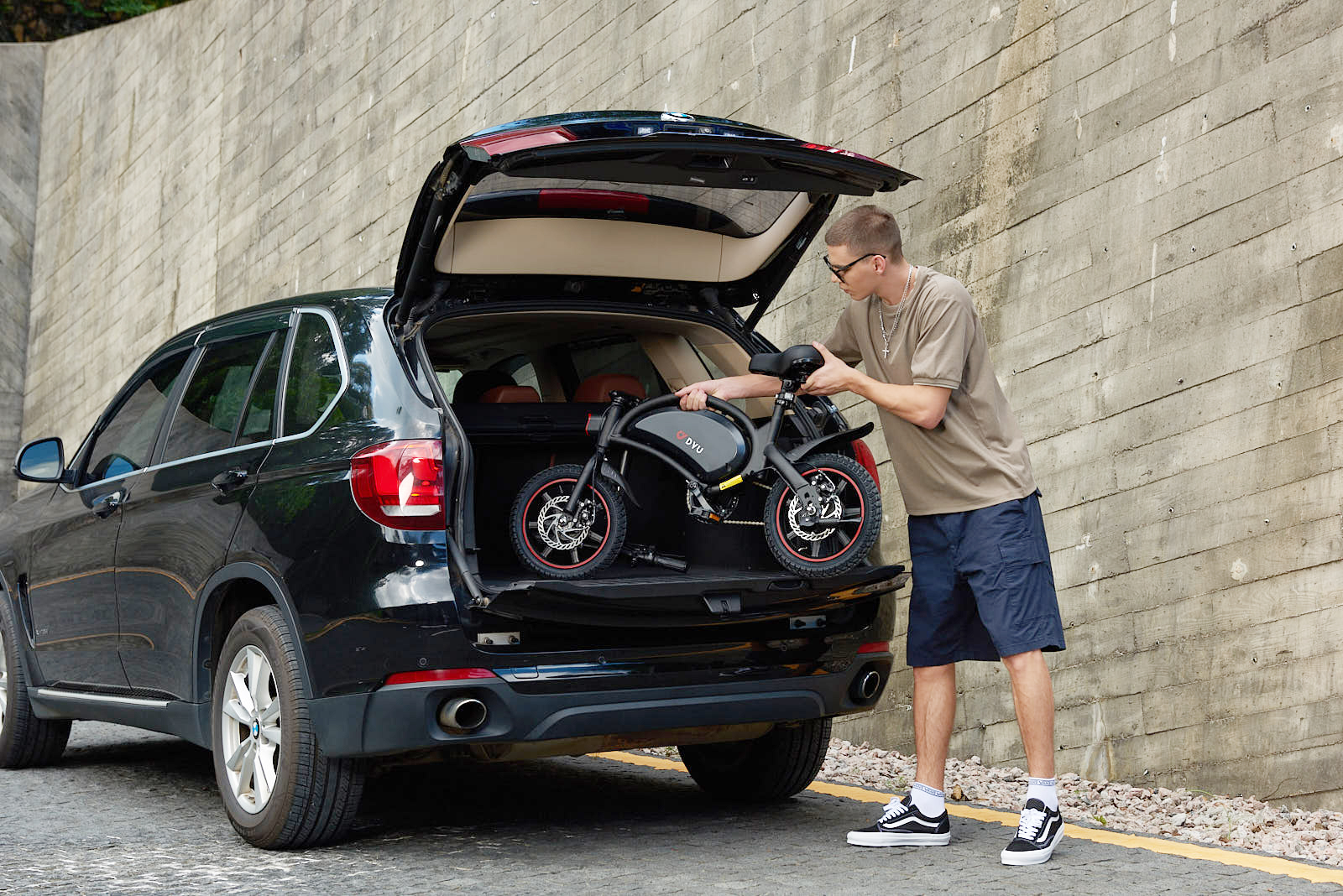
- You combine cycling with trains, buses, or trams (common in Amsterdam, Berlin, Paris)
- You live in an apartment without ground-floor bike storage
- You want to store the bike inside your office
- You travel on weekends and want to bring your bike along
Choose non-folding if:
- You have a garage, shed, or secure bike rack
- Your commute is simple point-to-point with no public transport
- You prioritize maximum range and ride comfort
- You prefer larger wheels for stability on rough roads
The trade-off is real: folding bikes typically weigh 2–4 kg more than non-folding equivalents at the same price, and their smaller wheels (14–20 inches vs 26–27.5 inches) feel less stable on cobblestones. But the flexibility of walking onto an S-Bahn with your bike tucked beside you is something non-folding riders simply can’t do.
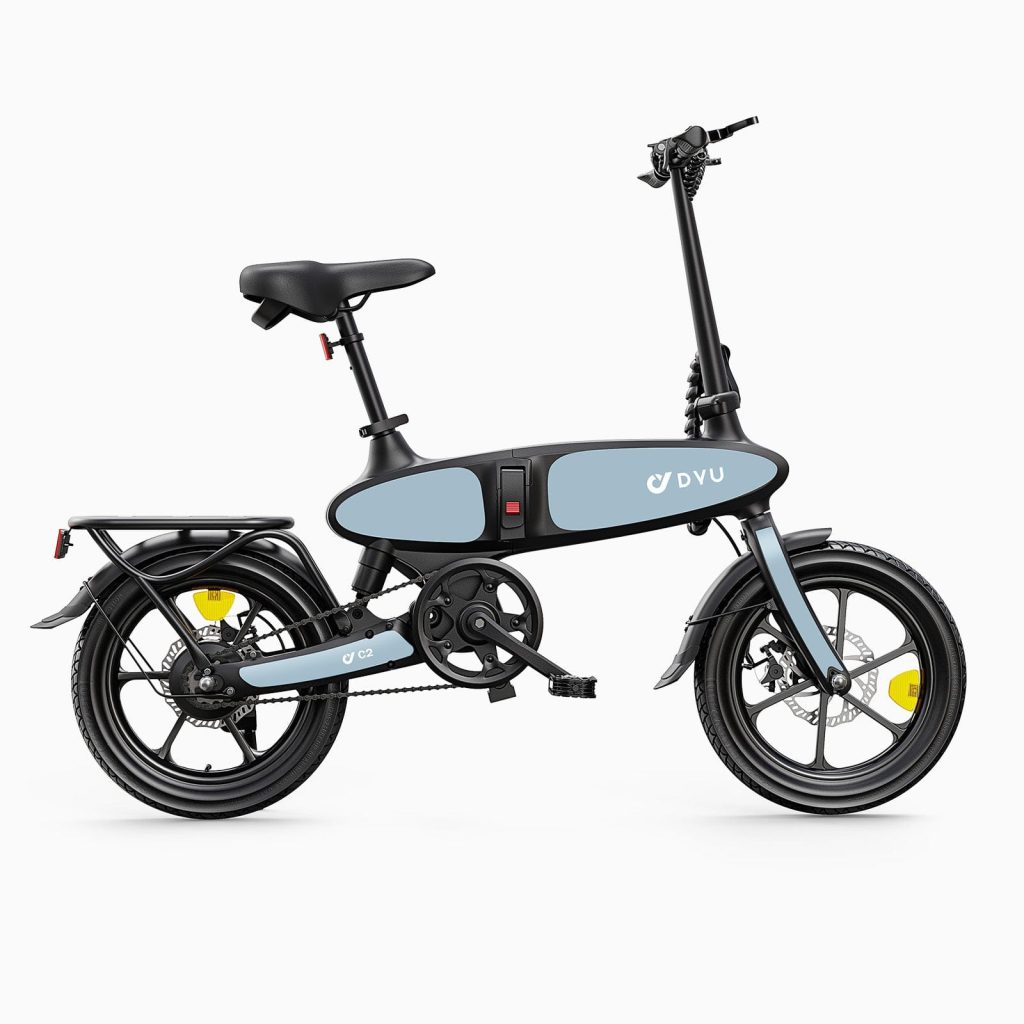
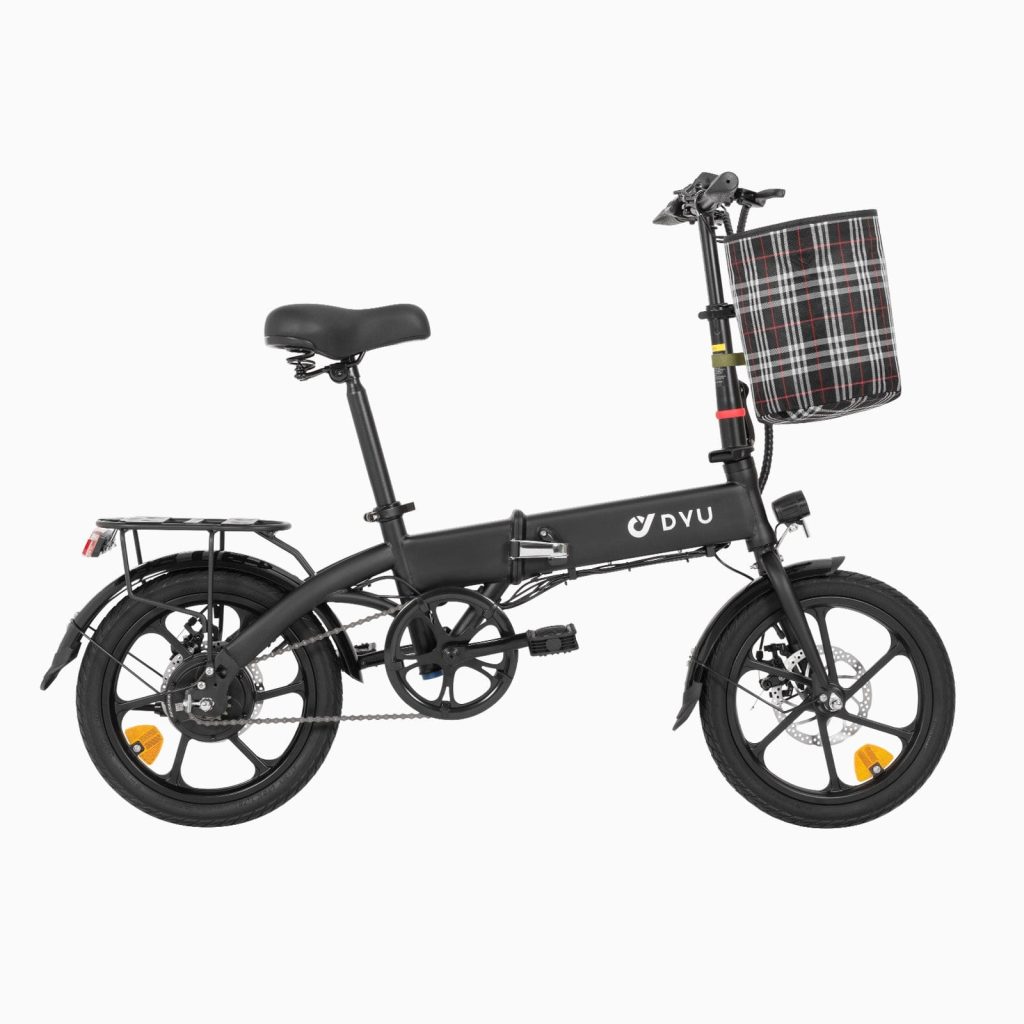
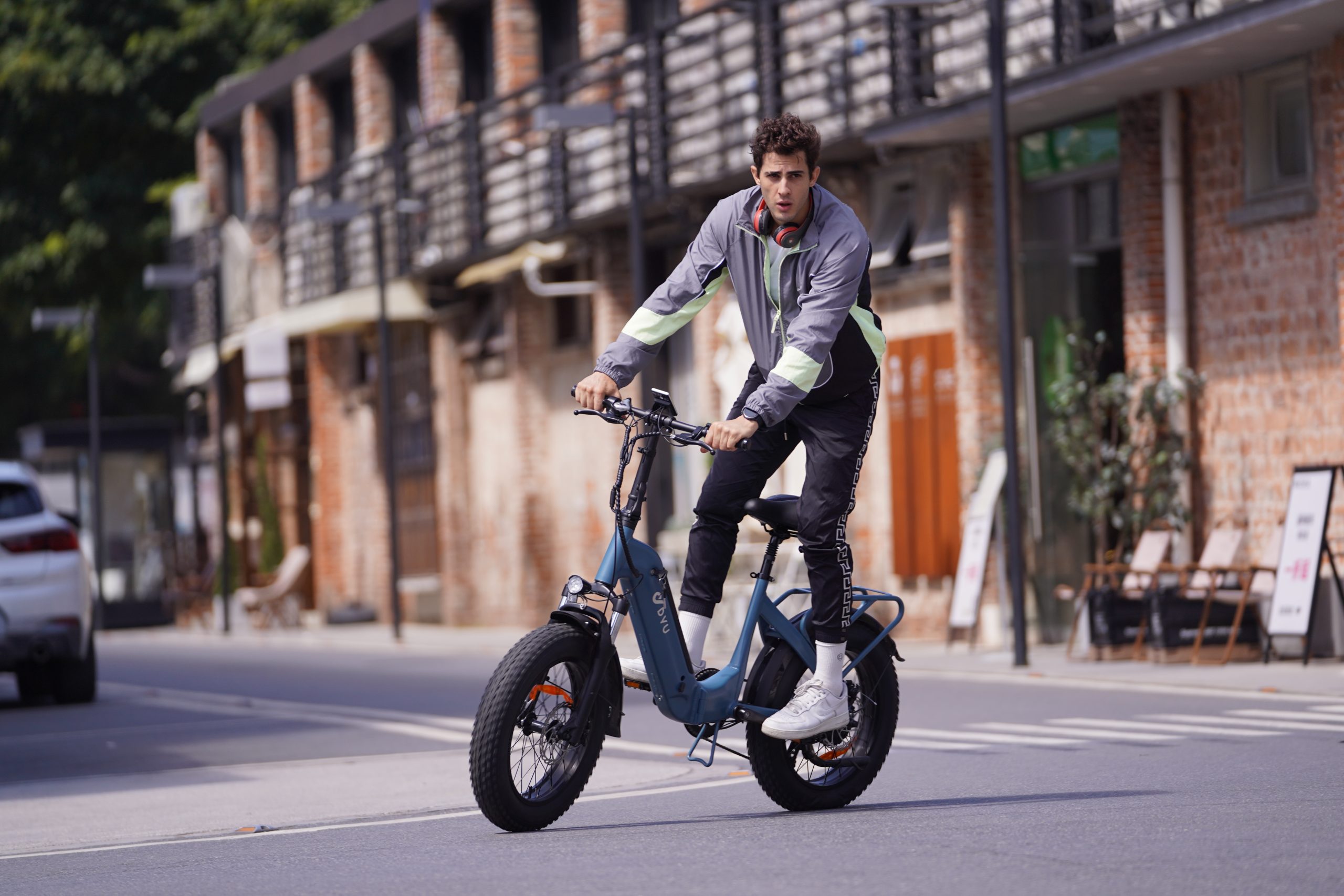
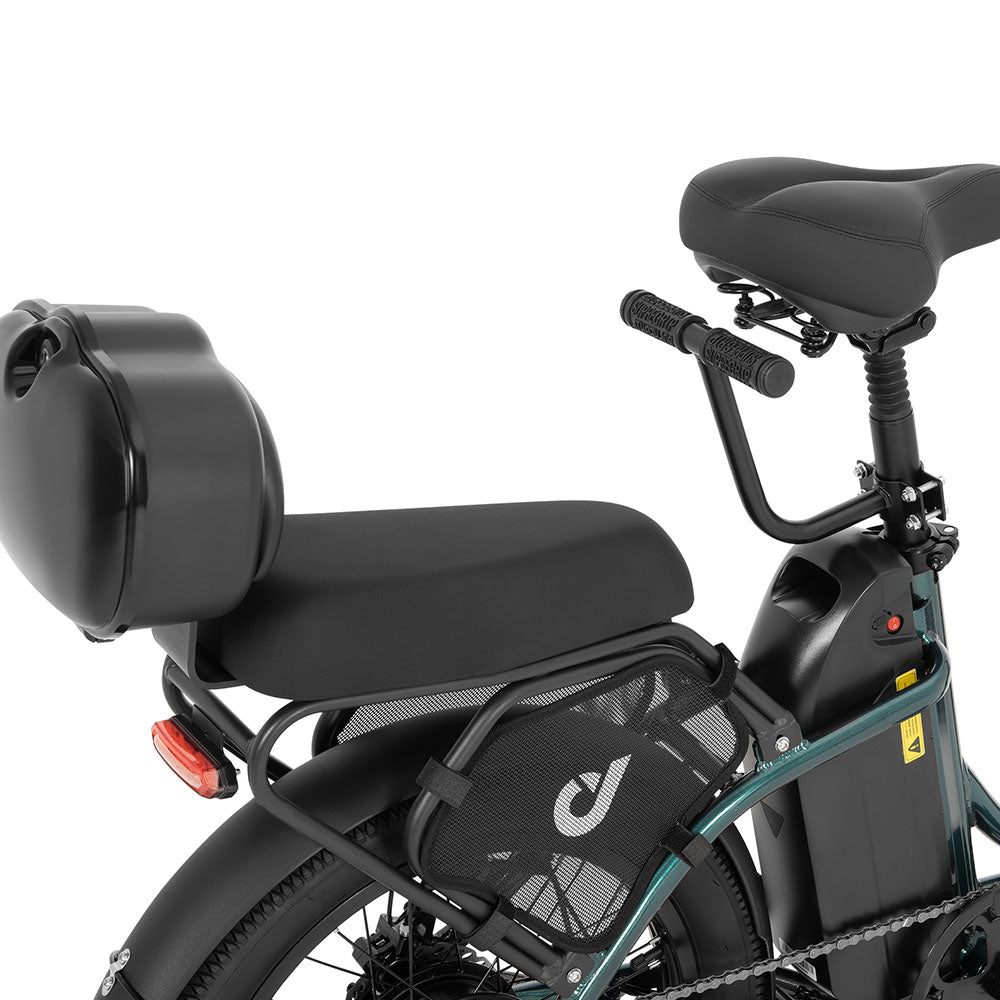
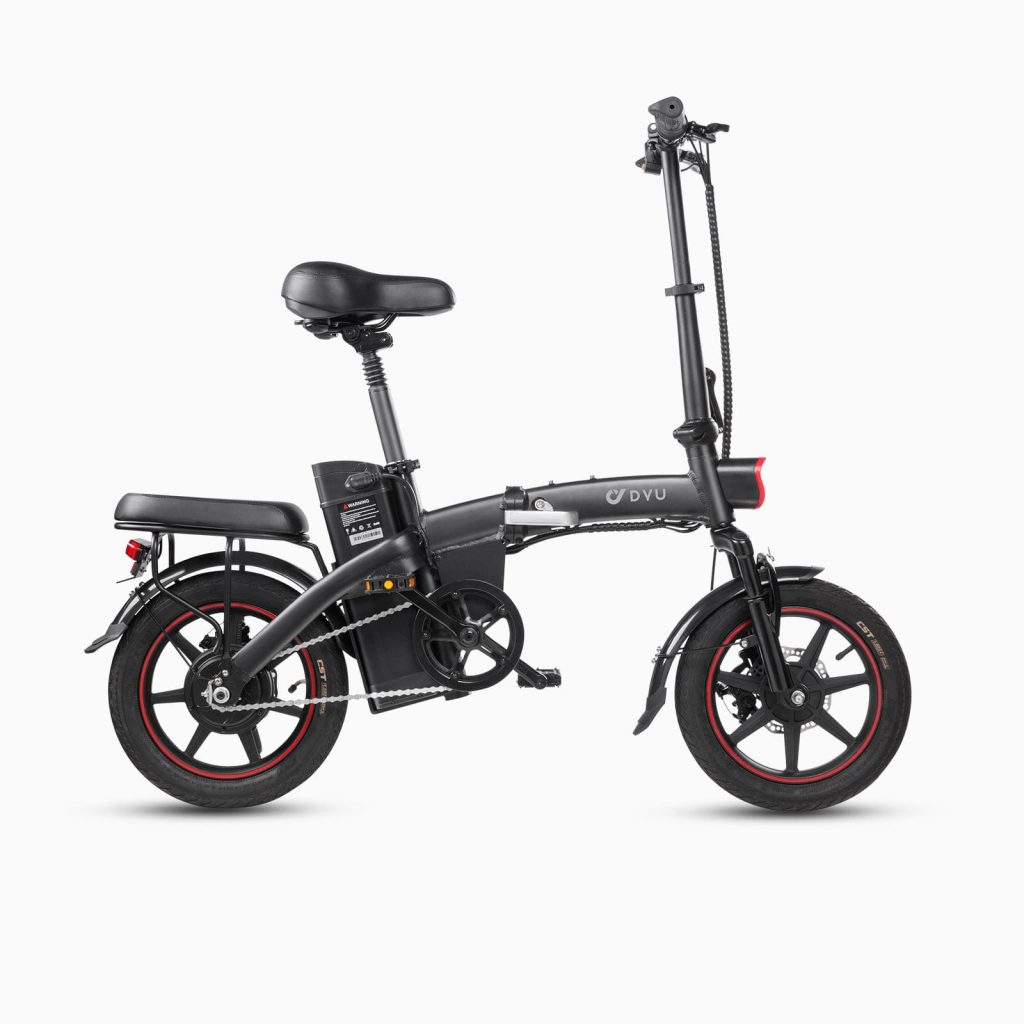
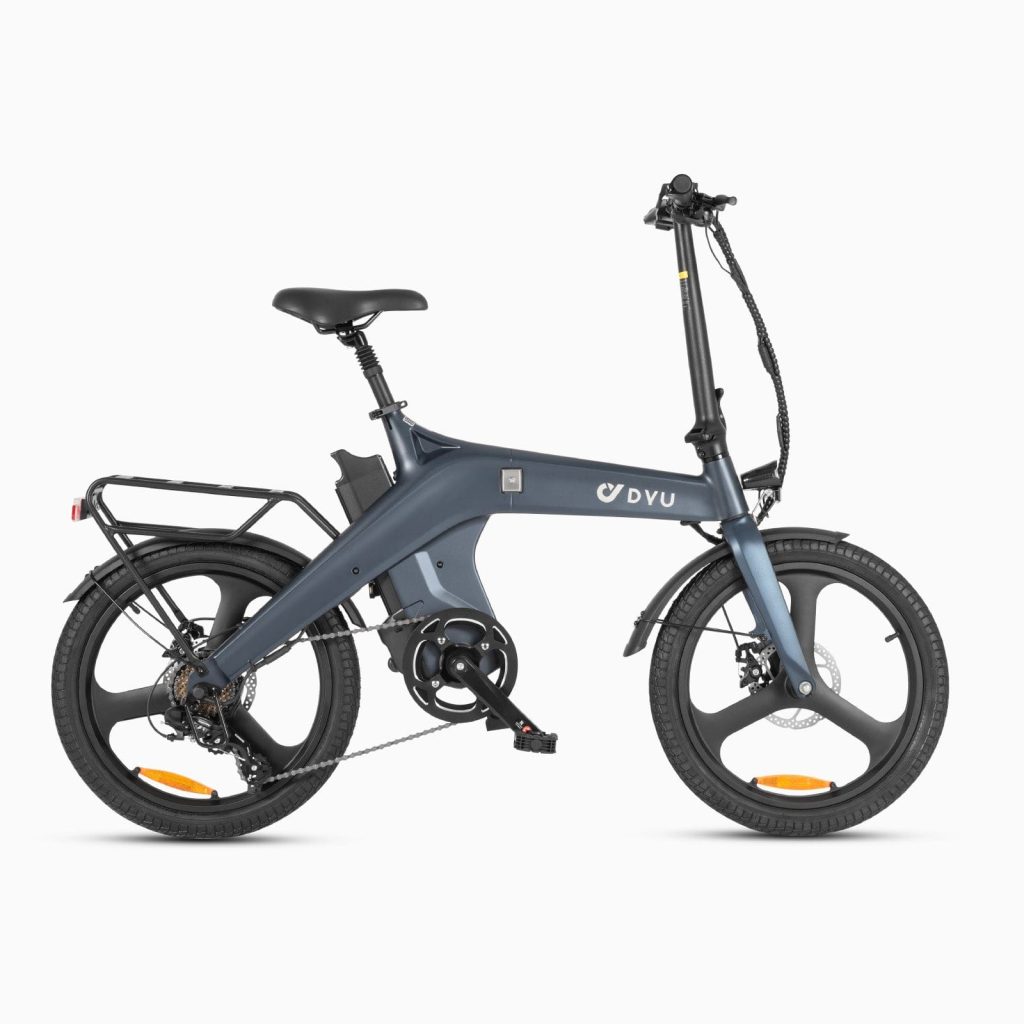
Best folding picks: DYU C9 (€899, 150 km range, balanced), DYU T1 (€749, torque sensor, premium feel), DYU A1F Pro (€459, budget-friendly with cargo).
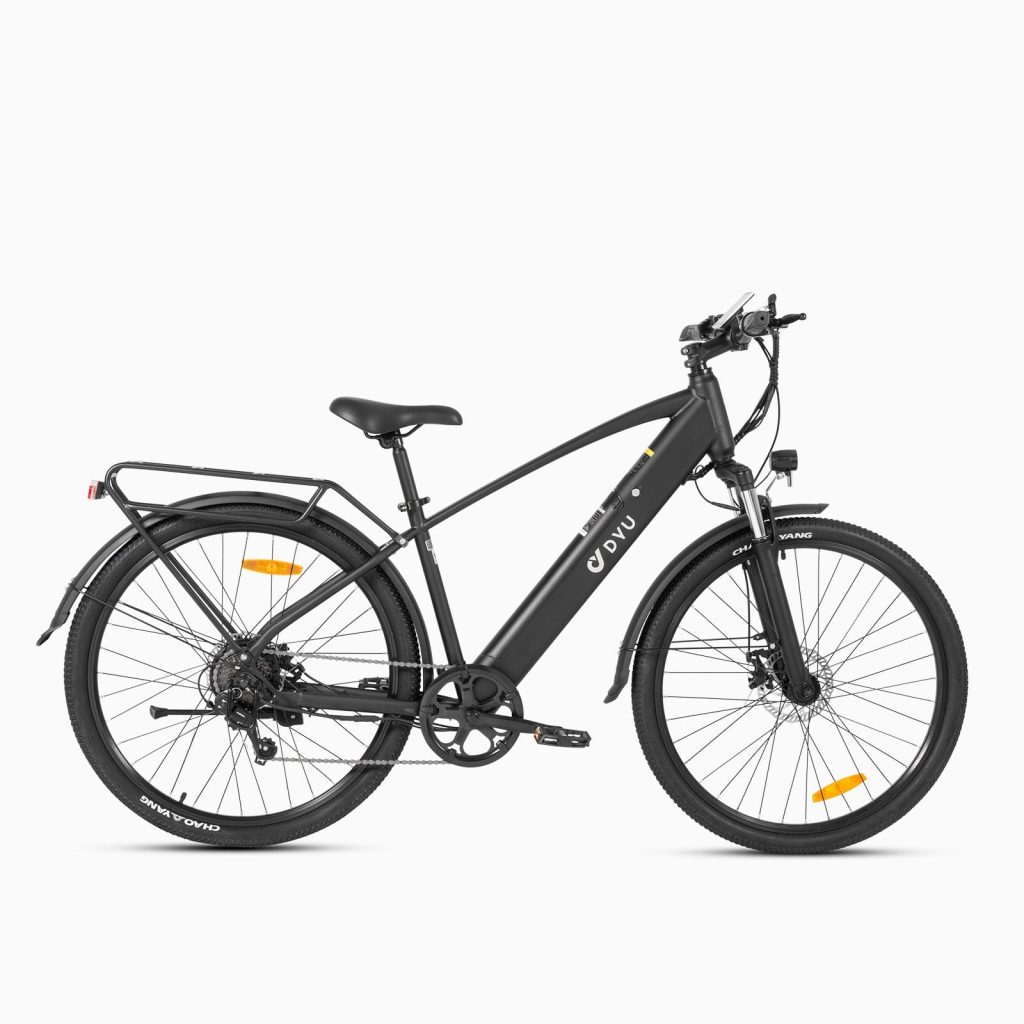
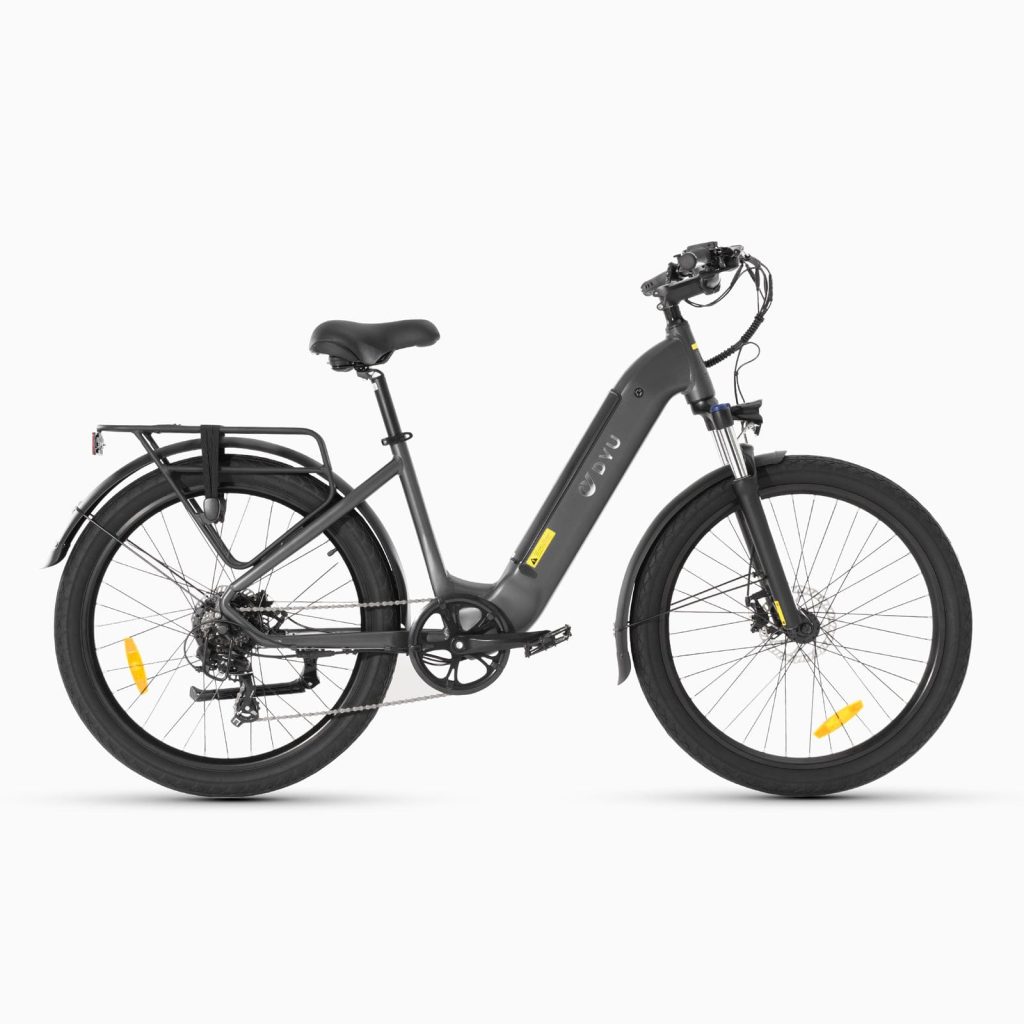
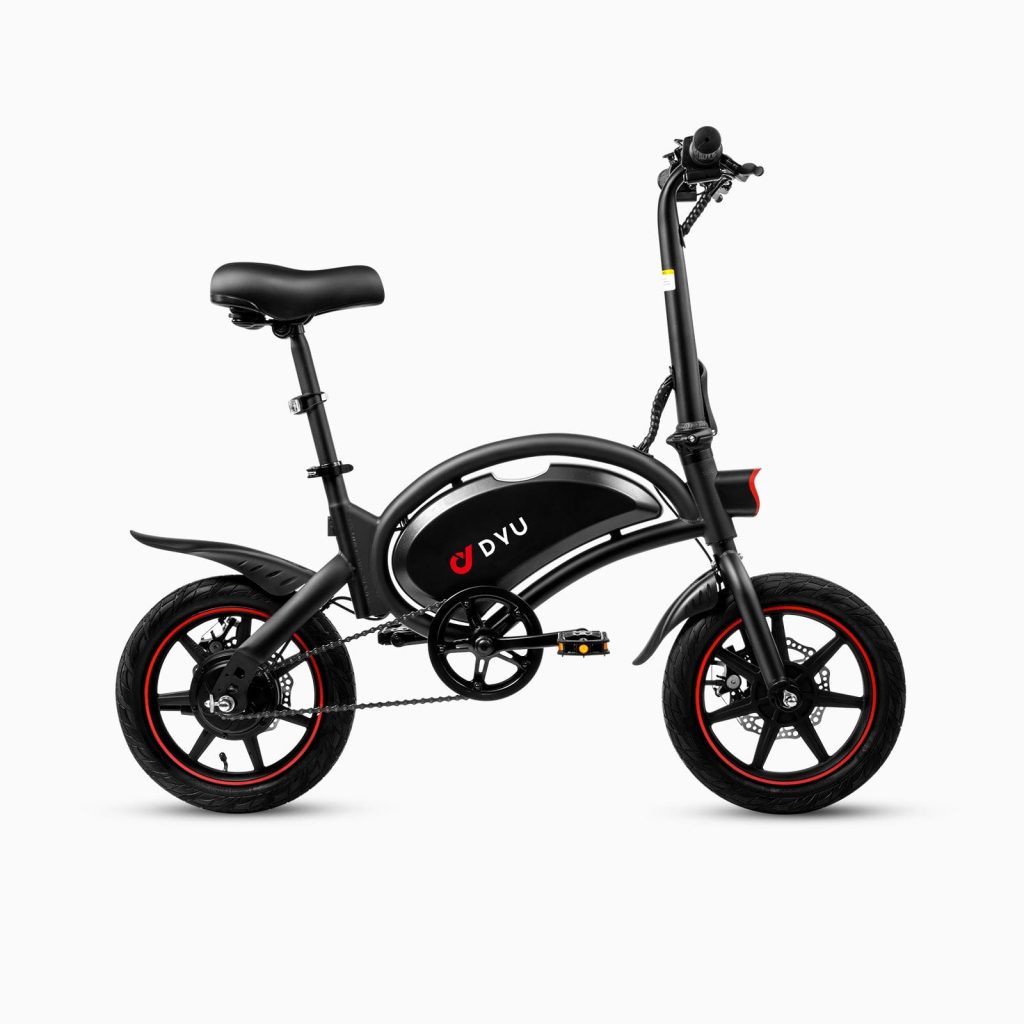
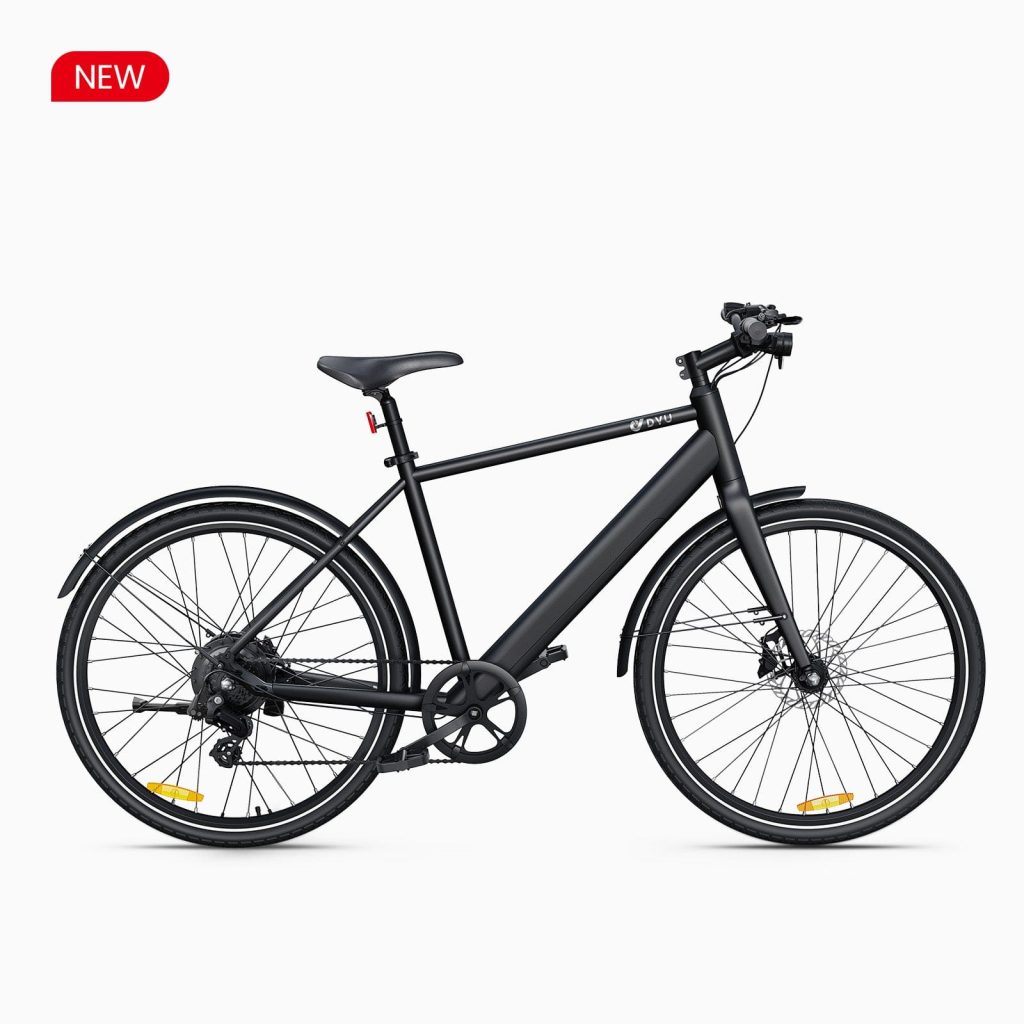
Best non-folding picks: DYU C6 Pro (€899, 80 km, cargo ready), Stroll 1 (€999, 100 km, ultralight frame).
Understanding Motors: Hub vs Torque Sensor
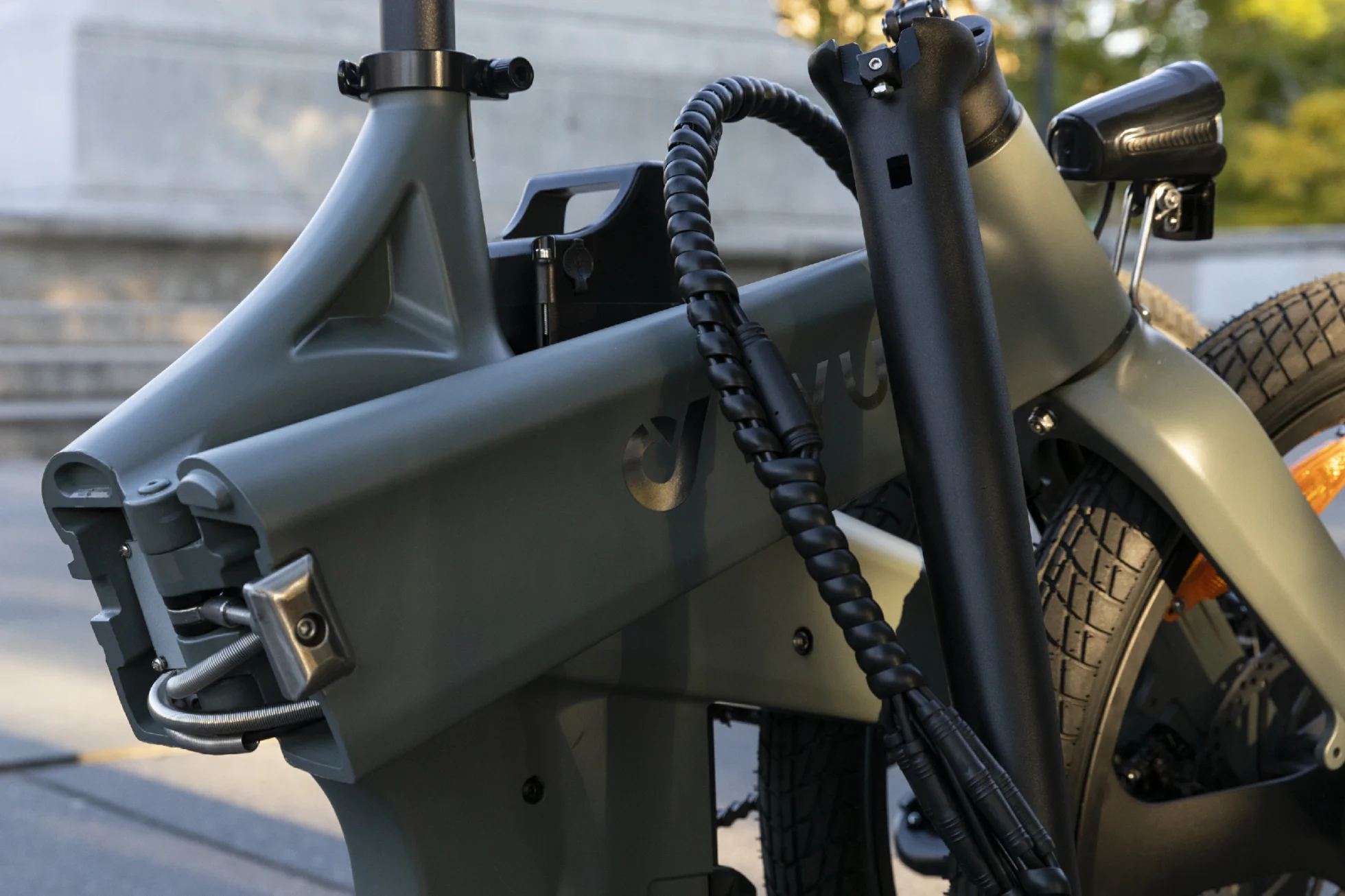
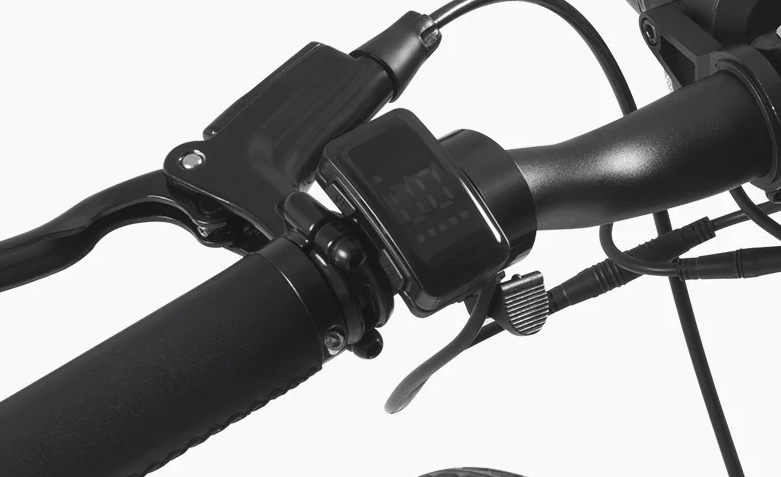
Every DYU model uses a hub motor (placed in the wheel), which is the most common type in the EU market. One exception: the DYU T1 uses a torque sensor system that reads how hard you’re pedaling and adjusts assistance accordingly.
| Feature | Hub Motor (Most DYU Models) | Torque Sensor (DYU T1) |
|---|---|---|
| How it works | Motor in wheel hub, cadence-based assistance | Measures pedal force, adjusts power proportionally |
| Riding feel | Slight delay between pedaling and boost | Smooth, natural, like riding a regular bike with a tailwind |
| Maintenance | Very low, simple design | Low, slightly more complex |
| Best for | Commuting, casual riding, beginners | Cycling enthusiasts, mixed terrain, fitness-conscious riders |
| Price example | €399–€999 | €749 (T1 only) |
My honest take: after weeks of switching between hub motor and torque sensor bikes, most commuters won’t notice the difference during a typical flat-road ride to the office. The torque sensor shines on hills and when you want cycling to feel like cycling, not like riding a moped. Under EU Regulation 2002/24/EC, all pedelecs are limited to 250W continuous and 25 km/h assisted speed, so the motor type affects feel, not top speed.
Weight, Stairs, and the Reality of Apartment Living
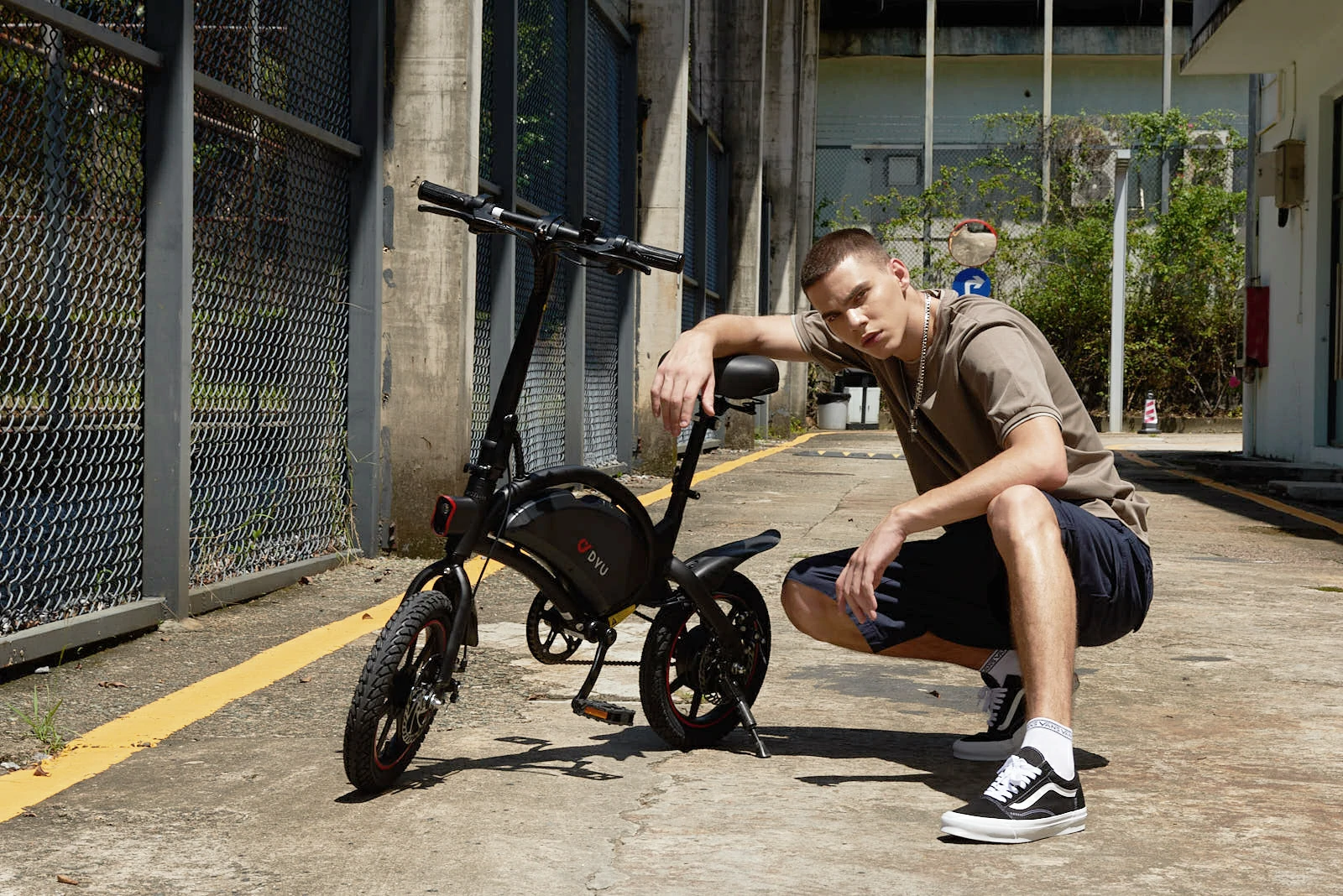
This is the question nobody thinks about until it’s too late. E-bikes are heavy. The lightest DYU model (D3F) weighs 19 kg. The heaviest (M20) weighs 39 kg. If you live on the third floor of a Berlin Altbau with no elevator, that weight difference is the difference between “I’ll ride today” and “I’ll take the bus.”
Practical weight guidelines:
- No stairs at all: Weight doesn’t matter. Pick based on range and features.
- One flight occasionally: Stay under 25 kg. The DYU D3F (19 kg) and DYU T1 (22.5 kg) are manageable.
- Multiple flights daily: Think carefully. Even 19 kg gets tiring on the fourth floor, five days a week. A removable battery helps (charge upstairs, store bike downstairs).
Every DYU e-bike has a removable battery, which is a genuine advantage. You can lock the bike in a ground-floor corridor and carry just the 2–3 kg battery upstairs to charge. According to Battery University, lithium-ion batteries also last longer when stored and charged at room temperature rather than in a cold garage.
How to Set Your Budget
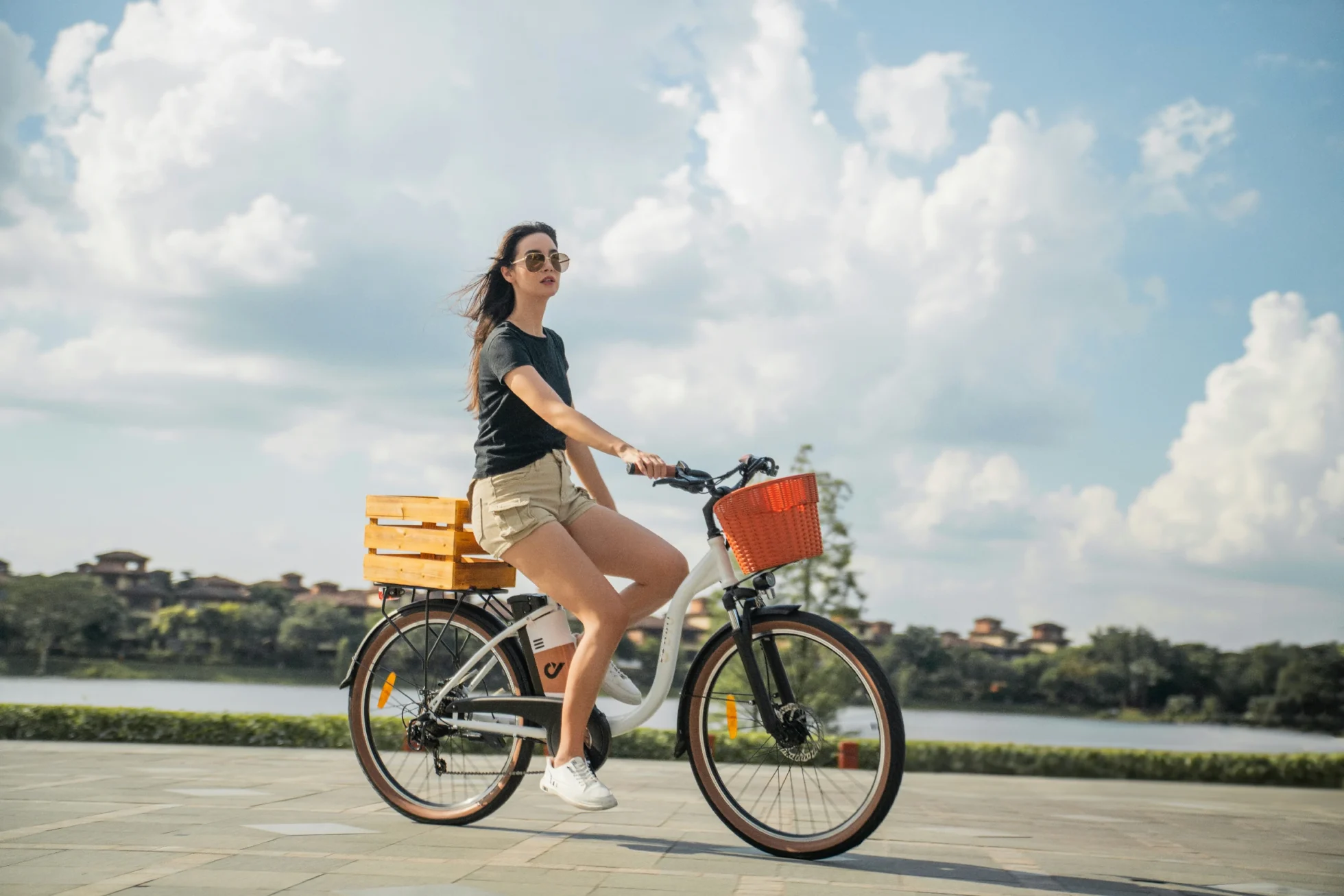
DYU’s lineup spans €399 to €1,199. Here’s what your money buys at each tier:
| Budget Tier | Price Range | Models | What You Get |
|---|---|---|---|
| Entry | €399–€559 | C3, A1F Pro, A5, D3F | Short commutes under 15 km. Solid basics, smaller batteries, compact frames. |
| Mid-range | €559–€799 | C2, T1, C5, C1 | Sweet spot for most commuters. Balanced range (40–65 km), better build quality. |
| Premium | €799–€999 | C6, C6 Pro, C9, M20, Stroll 1 | Long range (60–160 km), specialized features, best value for daily use. |
| Specialist | €1,199 | FF500 | Fat tire, 500W, 70 km range. Off-road and all-weather riding. |
My advice after testing all of them: don’t buy the cheapest option just because it’s cheap. The jump from a €399 C3 to a €749 T1 is the difference between “I ride when the weather is perfect” and “I ride every day, rain or shine.” That extra €350 usually pays for itself within four months of saved transport costs. A European Cyclists’ Federation study found that the average European urban commuter saves €1,200 or more per year by switching from car to e-bike.
Use the 30-Day Trial
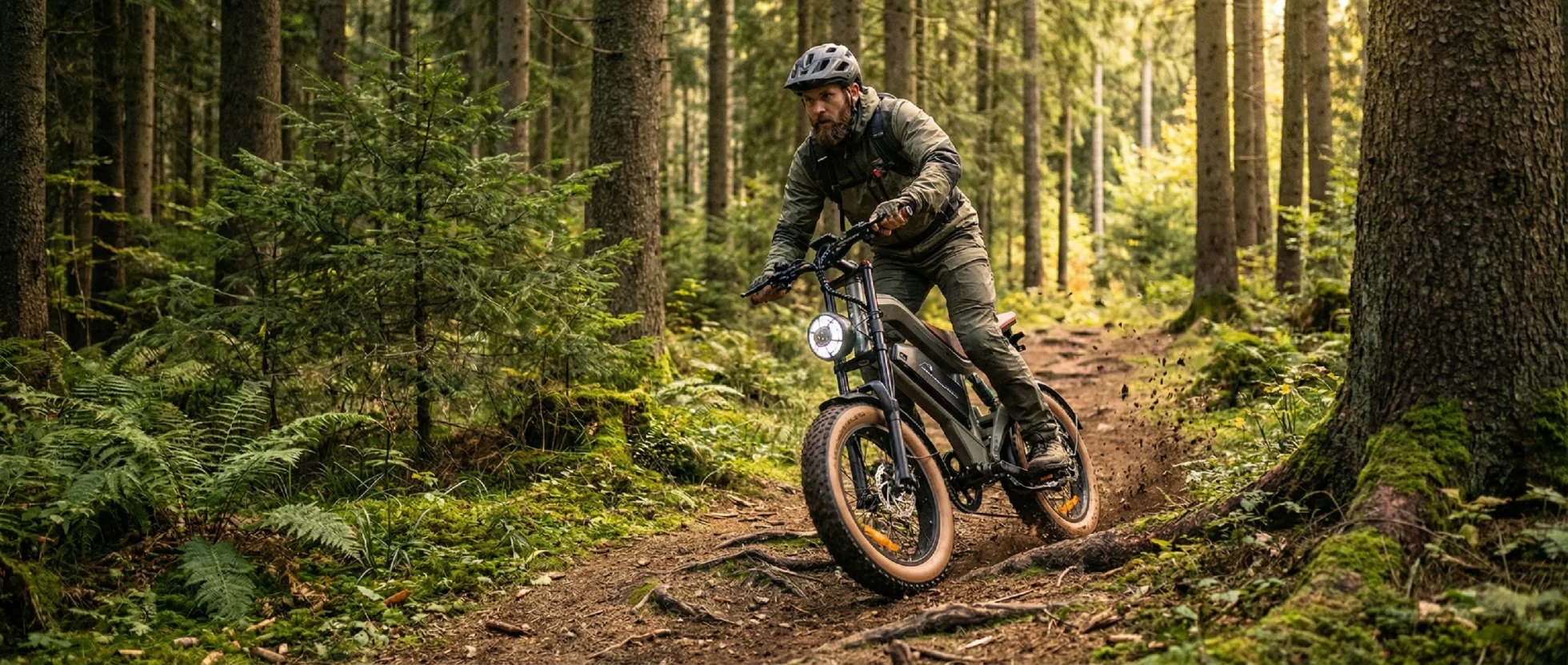
DYU offers a 30-day risk-free trial on all models. I cannot stress this enough: use it. A showroom test ride tells you almost nothing. What matters is how the bike performs on your actual commute, in your actual weather, with your actual hills.
During your trial, pay attention to:
- Real-world range on your exact route (not the spec sheet number)
- Comfort over cobblestones, potholes, and bike lane transitions
- Folding speed if you’re catching trains (can you fold and board in 30 seconds?)
- Braking confidence in wet conditions
- Battery logistics at home and at work (where will you charge?)
The Recommendation Table
| Your Situation | Recommended Model | Price | Why This One |
|---|---|---|---|
| Short commute, tight budget | DYU C3 | €399 | Lightest on the wallet, 34 km range covers short trips |
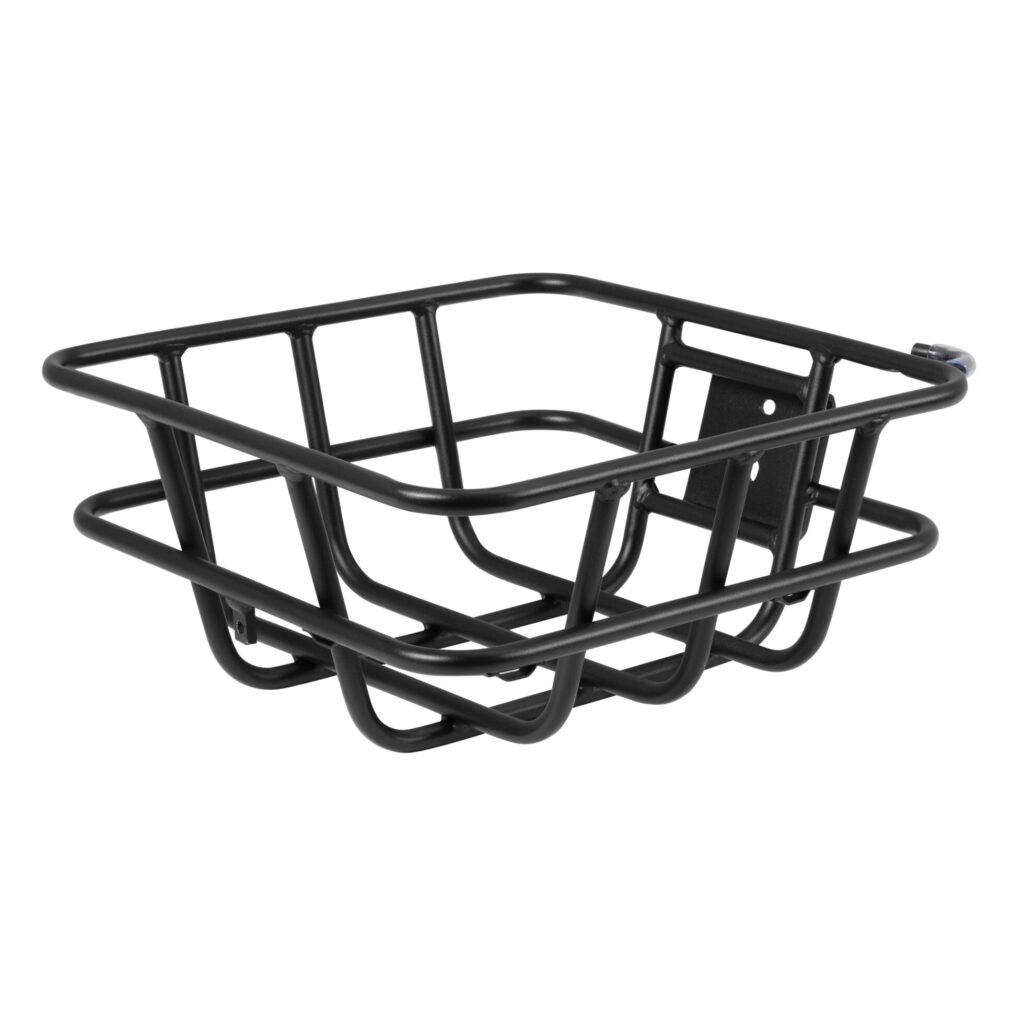
| Short commute, need cargo | DYU A1F Pro | €459 | Folding + front basket + rear rack at entry price |
| Medium commute, best value | DYU T1 | €749 | Torque sensor, 55 km range, 22.5 kg, premium ride feel |
| Medium commute, non-folding | DYU C6 | €819 | 26-inch wheels, 60 km range, stable and comfortable |
| Long commute, folding | DYU C9 | €899 | 150 km range in a foldable frame, best range-to-size ratio |
| Long commute, non-folding | DYU C6 Pro | €899 | 80 km range, cargo-ready, Shimano 7-speed |
| Ultra-long distance | Stroll 1 | €999 | 100 km range, 700C wheels, lightweight city cruiser |
| Off-road + commute | DYU M20 | €899 | 160 km range, fat tires, dual suspension, all-terrain |
Conclusion
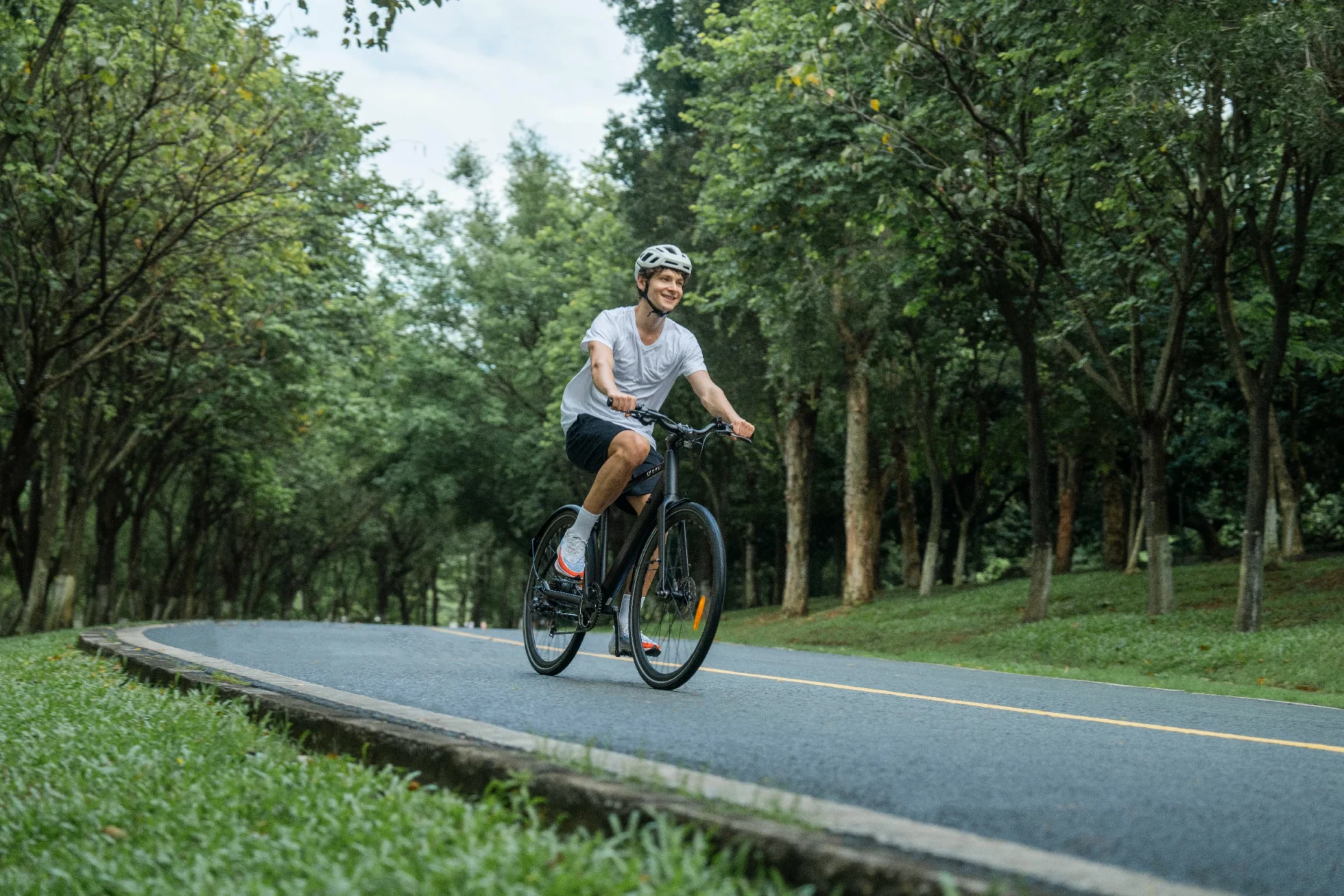
Choosing your first e-bike comes down to five questions: How far do I commute? Do I need folding? Do I have stairs? Will I carry cargo? What’s my realistic budget?
Answer those honestly, match them to the recommendation table above, and use the 30-day trial. I’ve seen too many riders overbuy on range they don’t need or underbuy on comfort they do need. The right bike isn’t the most expensive one. It’s the one you’ll actually ride every morning, even when it’s raining.
FAQs
Q1. What is the best electric bike for beginners in 2026?
It depends entirely on your commute distance and lifestyle. For most first-time buyers doing 15–30 km round trips, the DYU T1 (€749) offers the best balance of ride quality and value thanks to its torque sensor. For budget-conscious buyers with shorter commutes, the DYU A1F Pro (€459) is hard to beat.
Q2. How much range does an electric bike need for daily commuting?
Your e-bike should have at least 1.5 times the range of your daily round trip. If you commute 20 km each way (40 km round trip), look for 60+ km range. This gives you buffer for cold weather, headwinds, and detours. Lithium-ion batteries also lose 10–20% capacity in winter.
Q3. Are folding e-bikes worth it for city commuting?
Yes, if you use public transport as part of your commute or lack secure outdoor storage. The ability to fold and carry your bike onto a train or store it under your desk solves two of the biggest barriers to e-bike commuting in European cities. The trade-off is slightly more weight and smaller wheels.
Q4. How much should I spend on my first e-bike?
Budget €600–€800 for a solid first e-bike. This mid-range covers models with 50+ km range, decent build quality, and reliable performance. Going below €500 means real compromises on range and features. Going above €900 is worthwhile only for specific needs like long-distance commuting or off-road riding.
Q5. Can I ride an e-bike in the rain across Europe?
Yes. All DYU models are rated for wet weather riding with water-resistant electronics and sealed battery compartments. Hydraulic disc brakes (standard on most models) maintain stopping power in rain. The main precaution is drying the bike after rides and avoiding submerging the battery in standing water.

2 comments
Marta K.
the distance first approach makes so much more sense than starting with motor size. wish i read this before buying a bike with double the range i actually needed
Daniel Novak
it’s the most overlooked step. people overbuy on range and underbuy on fit, then wonder why they stopped riding after a month