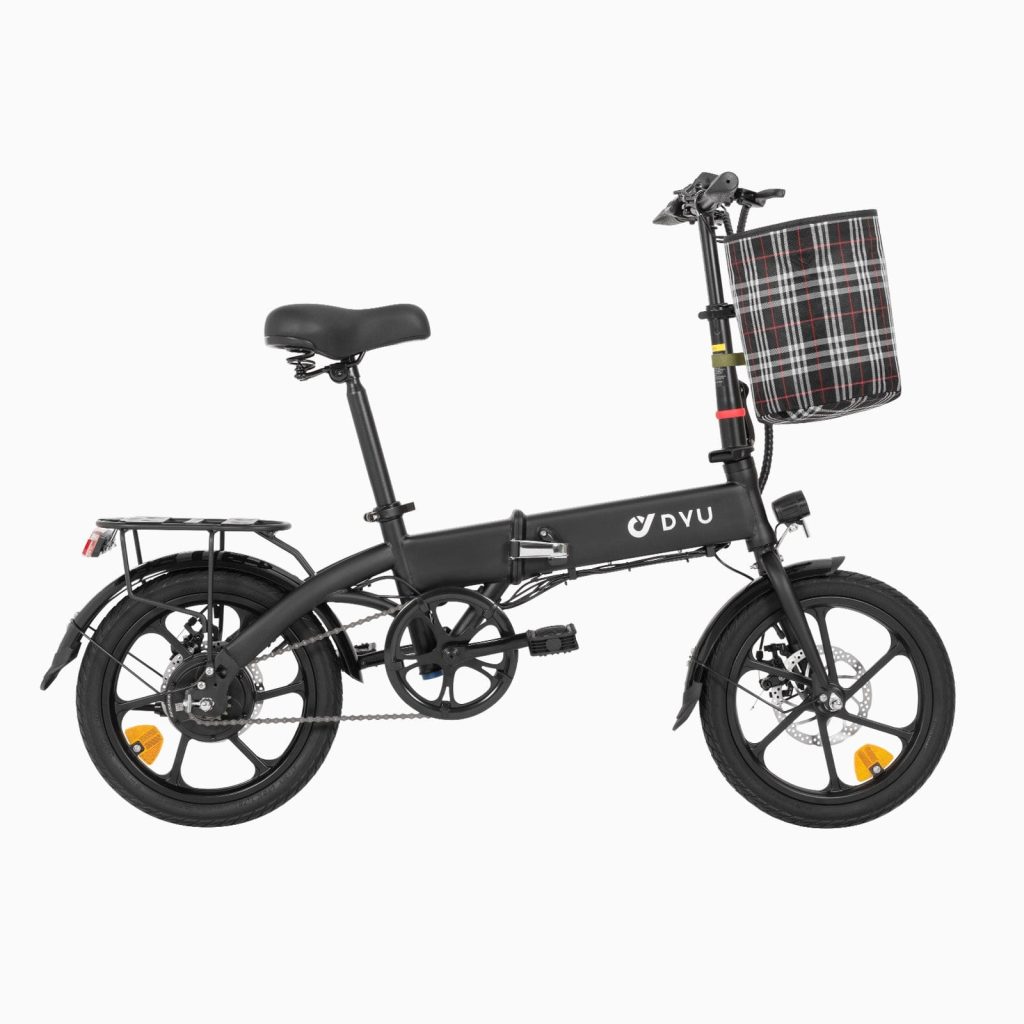

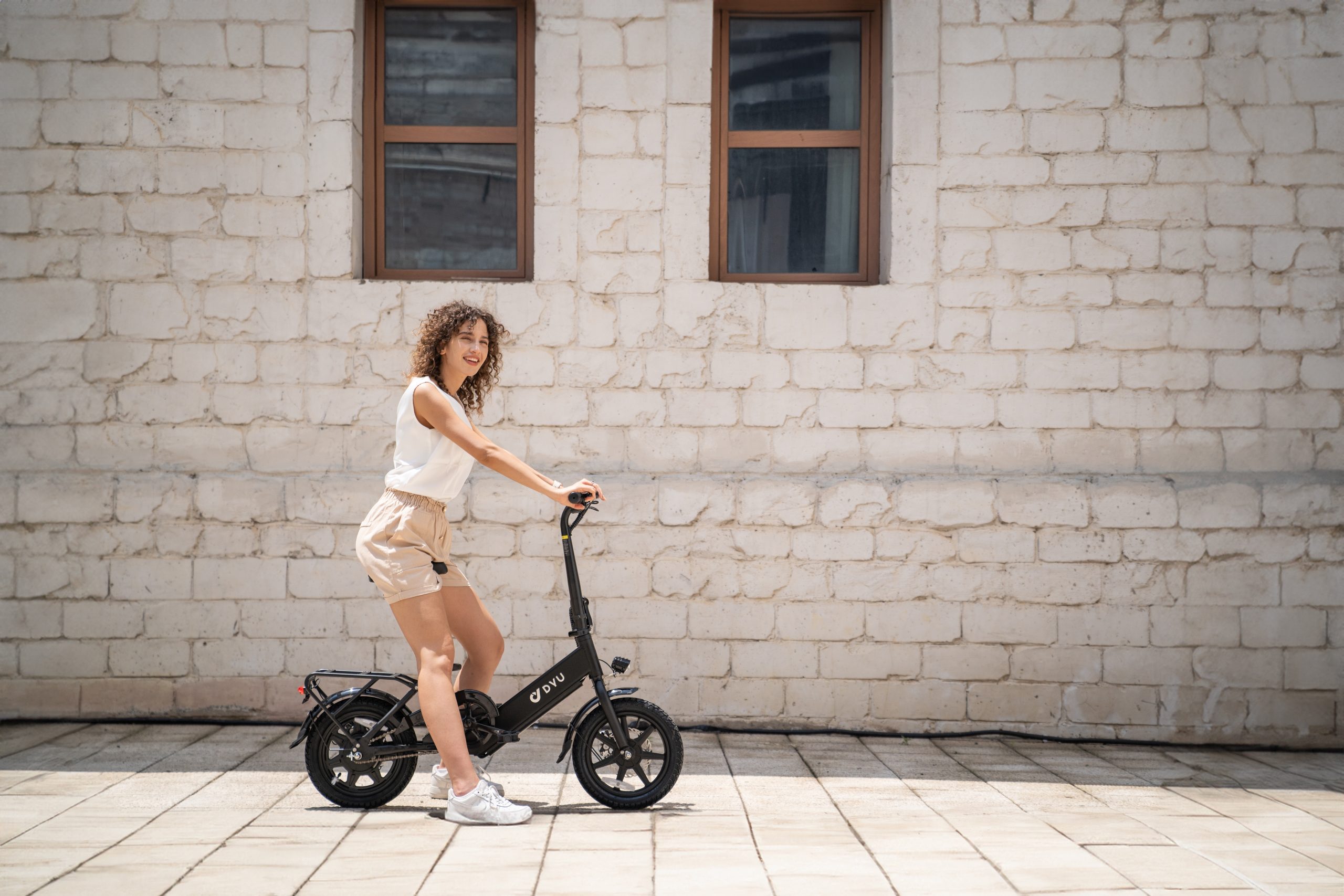



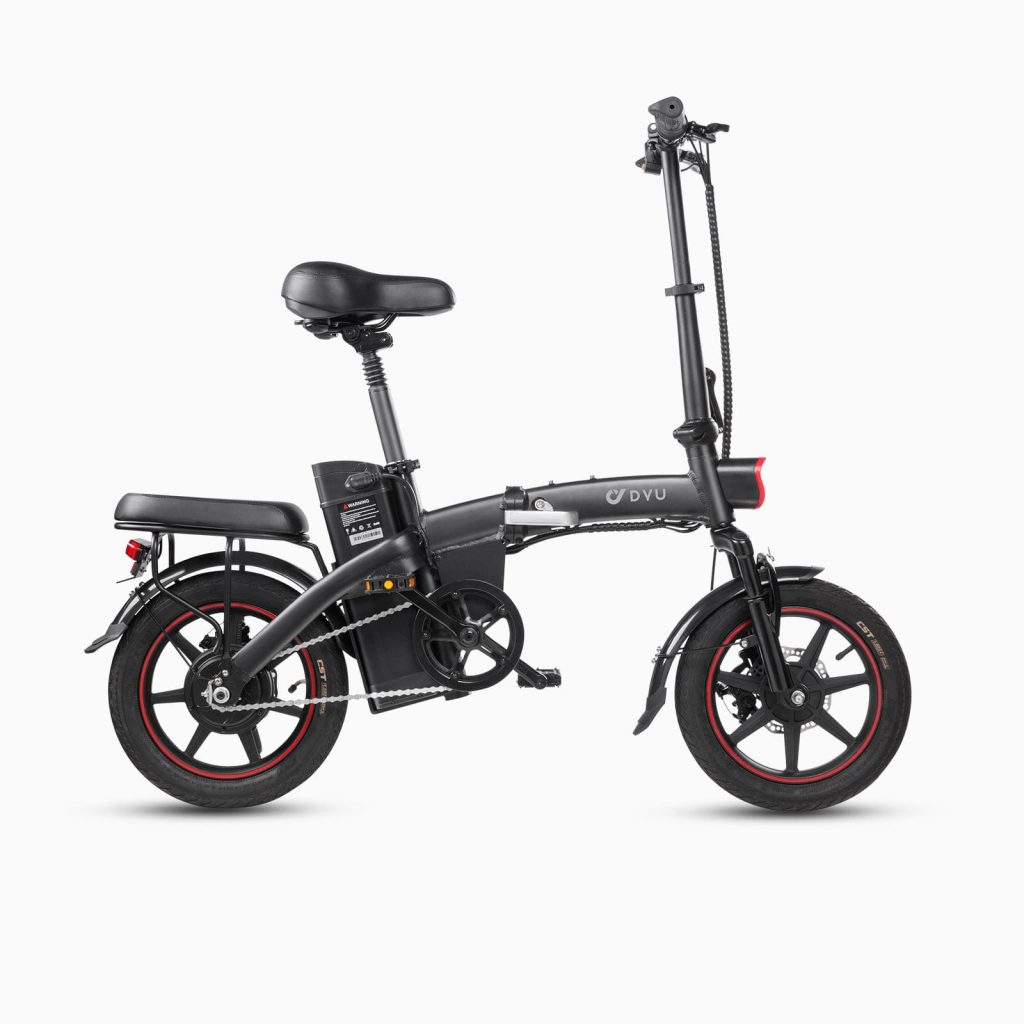
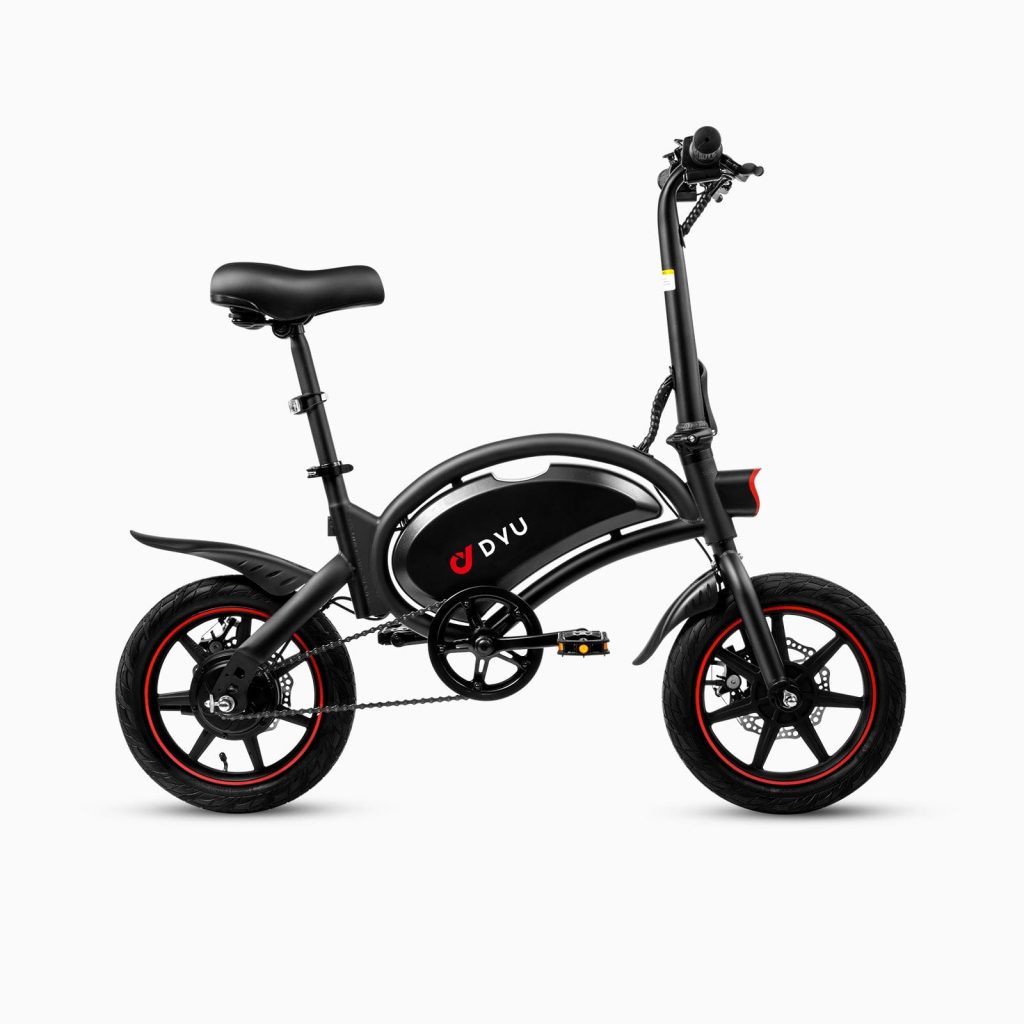
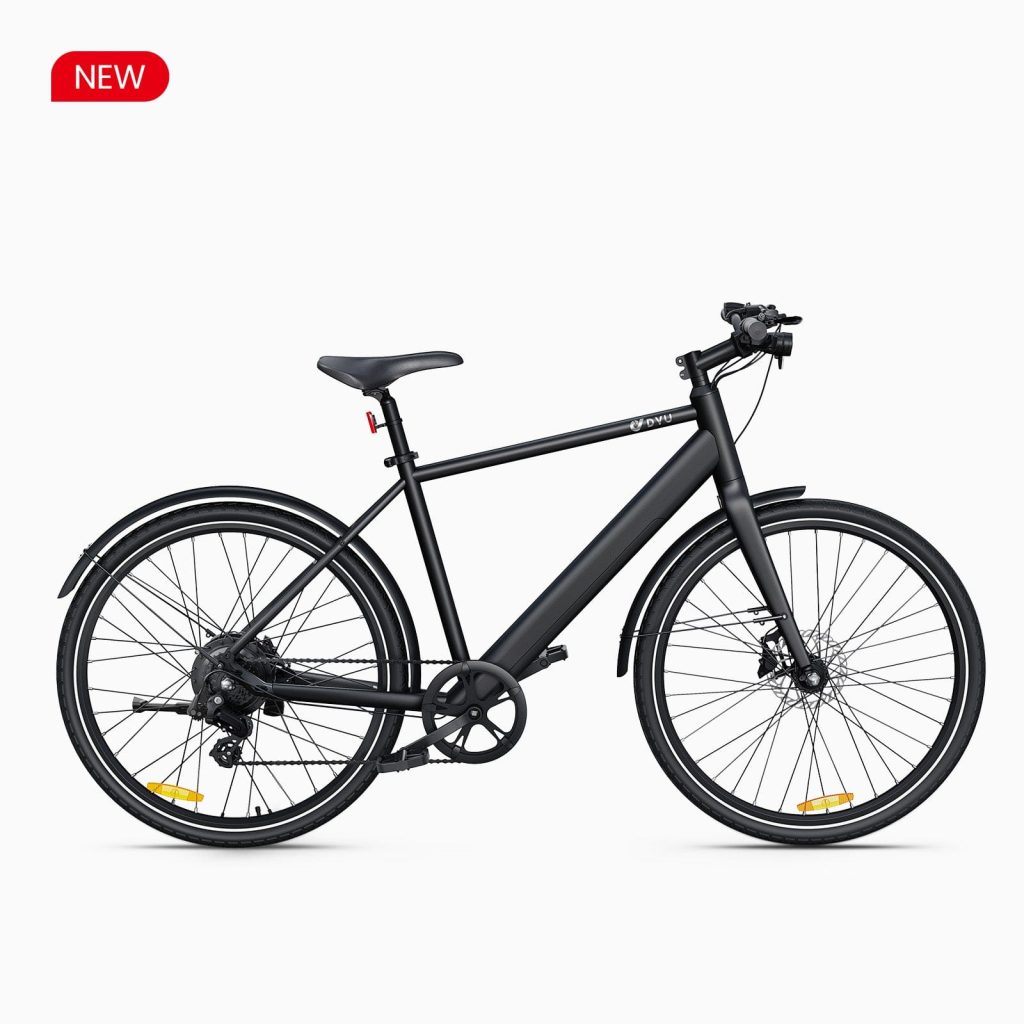
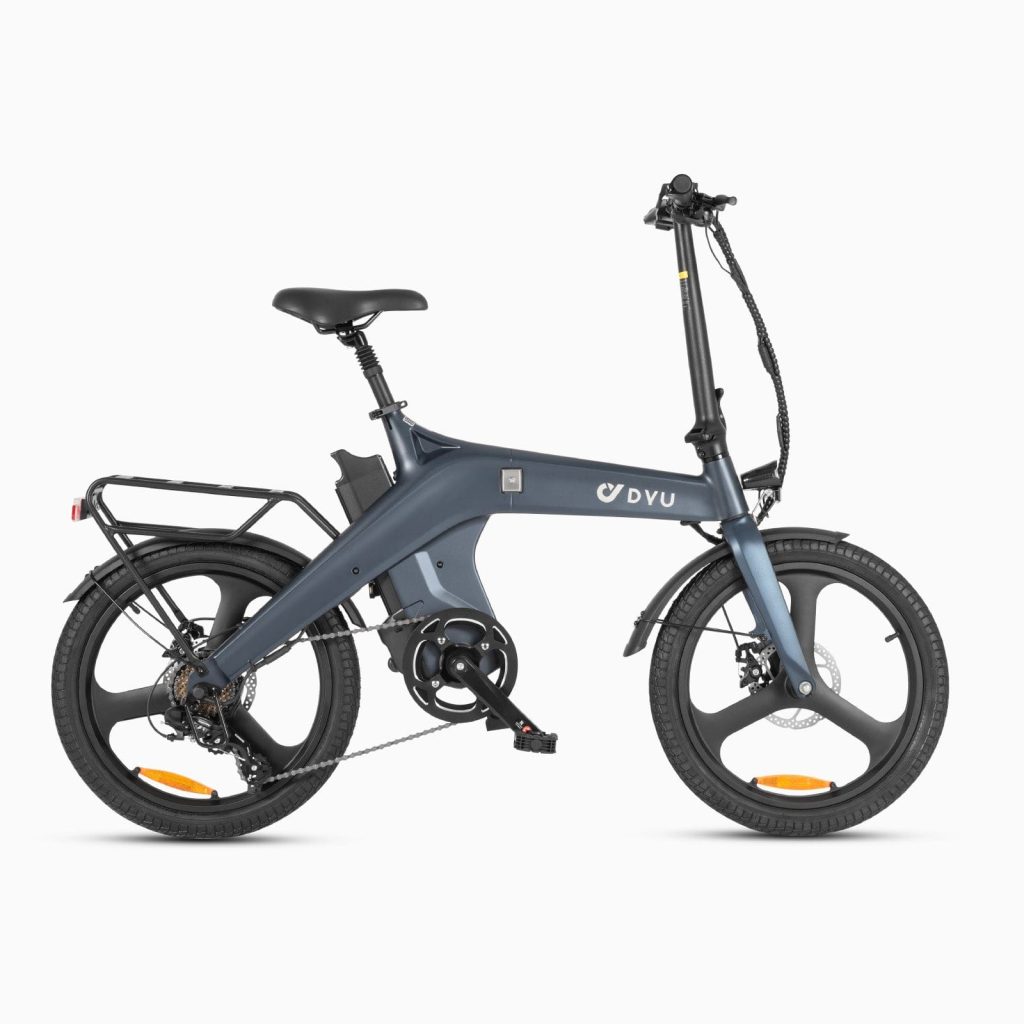


If you are comparing the DYU D3F vs Fiido D3 Pro, you are probably not looking for a huge trekking e-bike. You want something small, affordable, easy to store, and realistic for short city rides.
That makes this a surprisingly close comparison. Both bikes use a 250W motor, both sit on 14-inch wheels, both target apartment riders and short-distance commuters, and both cost far less than most full-size electric bikes.
The difference is in the details. The DYU D3F currently costs €549.00, while the Fiido D3 Pro standard version is listed at €499.00. Fiido is lighter. DYU has the larger battery. Fiido’s own pages also show two different range messages, which is exactly the kind of detail worth slowing down for.
Quick Comparison Table: DYU D3F vs Fiido D3 Pro
| Feature | DYU D3F | Fiido D3 Pro |
|---|---|---|
| Current price | €549.00 (regular €649.00) | €499.00 (regular €599.00) |
| Motor | 250W | 250W brushless, listed with 35 Nm |
| Battery | 36V 10Ah (360Wh) | 280.8Wh |
| Range claim | Up to 50 km pedal assist | Product page: 33 km; guide page: up to 79 km Eco mode |
| Weight | 19 kg | 17.3 kg |
| Payload | 120 kg | 120 kg |
| Wheel size | 14 inches | 14 inches |
| Brakes | Front and rear disc brakes | Mechanical disc brakes with power cut-off |
| Folding design | Foldable handlebar, foldable pedals, carry handle | Foldable stem |
| Best fit | Riders who want more battery capacity and simple compact transport | Riders who want the lightest and cheapest option |
On paper, the Fiido D3 Pro wins weight and price. The DYU D3F wins battery capacity. That sounds simple, but the real buying decision depends on how you ride.
Technical Specifications Breakdown
Motor And Legal City Speed
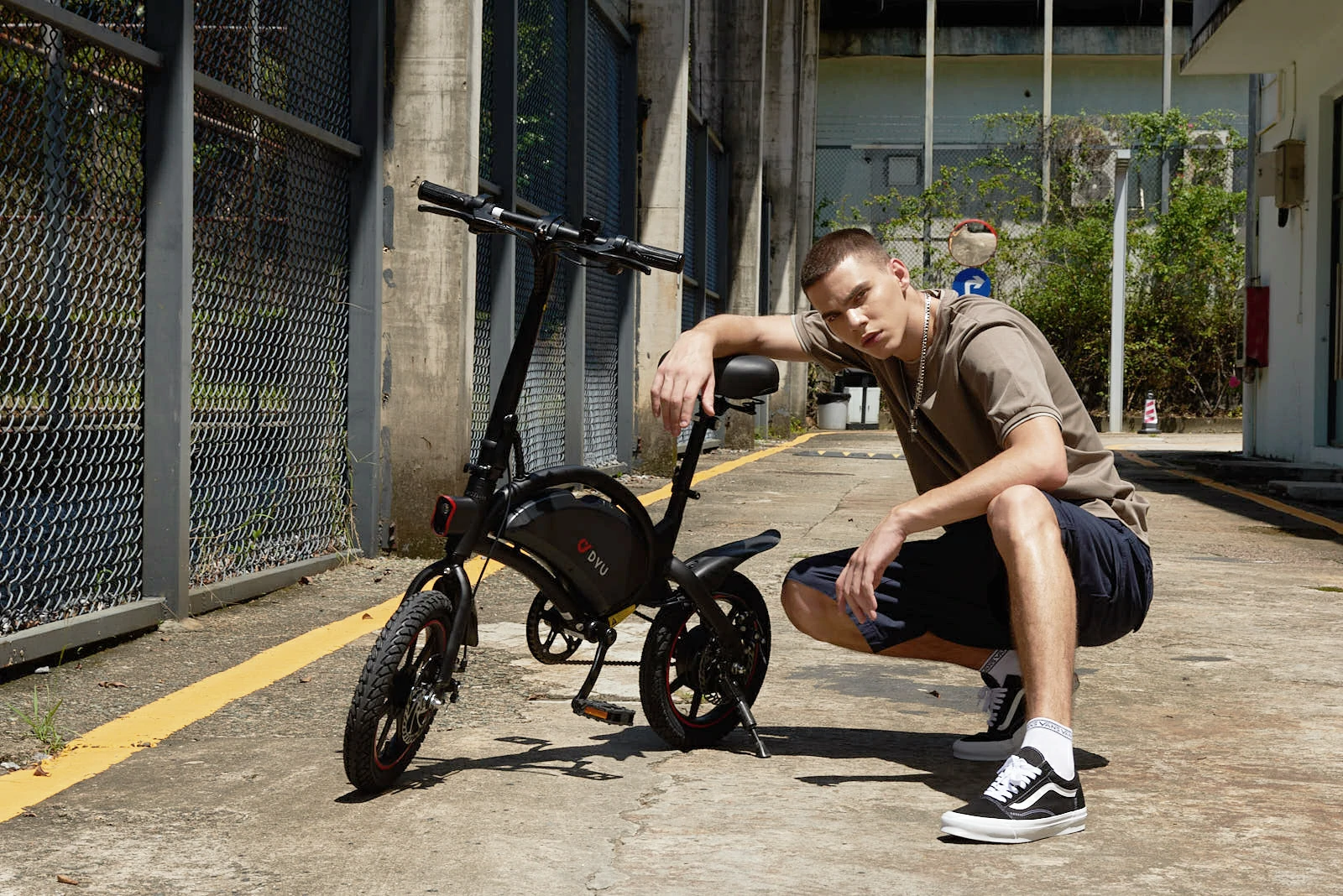
Both bikes use a 250W motor, which is exactly what many European city riders expect from a compact e-bike. In many EU-style rules, an electrically assisted bicycle stays in the normal bicycle category when assistance cuts above 25 km/h and the motor is 250W or less. The French public service page explains this 250W and 25 km/h framework clearly.
The Fiido D3 Pro page lists a 250W brushless motor with 35 Nm. DYU lists the D3F with a 250W motor and a 25 km/h maximum speed.
In plain language, neither bike is built for fast riding. They are made for short urban trips, slow traffic, mixed cycle lanes, and apartment-friendly storage.
Battery And Range
This is where the DYU D3F gets interesting. It uses a 36V 10Ah battery, which works out to roughly 360Wh. Fiido lists the D3 Pro at 280.8Wh.
That battery difference matters more than a marketing range number. A larger battery does not guarantee longer range in every situation, but it gives the D3F more stored energy to work with.
Fiido’s own EU product page currently highlights 33 km range, while its detailed D3 Pro guide page mentions up to 79 km in Eco mode and lists Eco, Normal, and Sport results separately. I prefer using the more conservative number when advising buyers, because real city riding usually includes stops, wind, rider weight, and higher assist use.
REI makes the same practical point in its e-bike charging guide: range depends on battery capacity, terrain, assist level, motor use, and total weight. That is why I would not buy either bike purely because of one headline range claim.
Weight And Portability
Fiido wins the scale test. At 17.3 kg, the D3 Pro is 1.7 kg lighter than the DYU D3F. That difference is not huge when riding, but it is noticeable when lifting the bike into a car boot or carrying it up stairs.
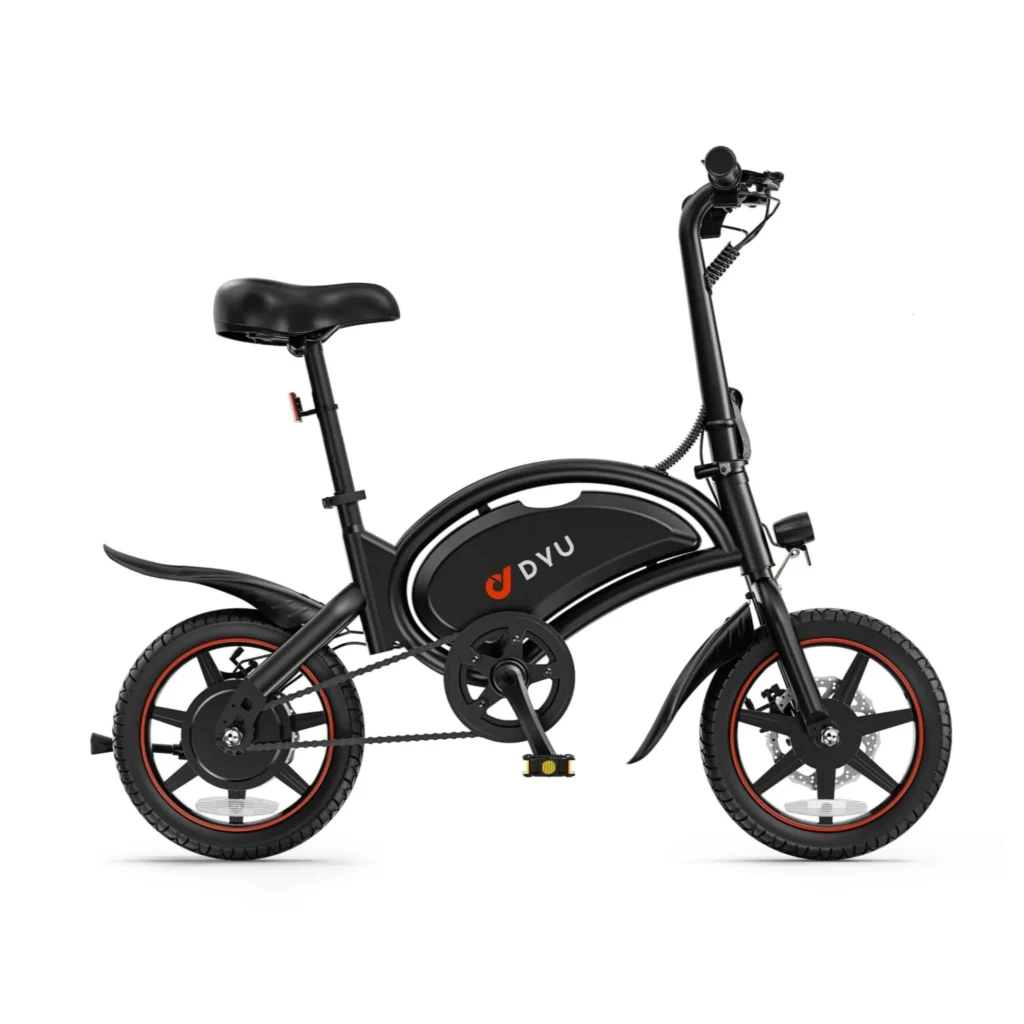
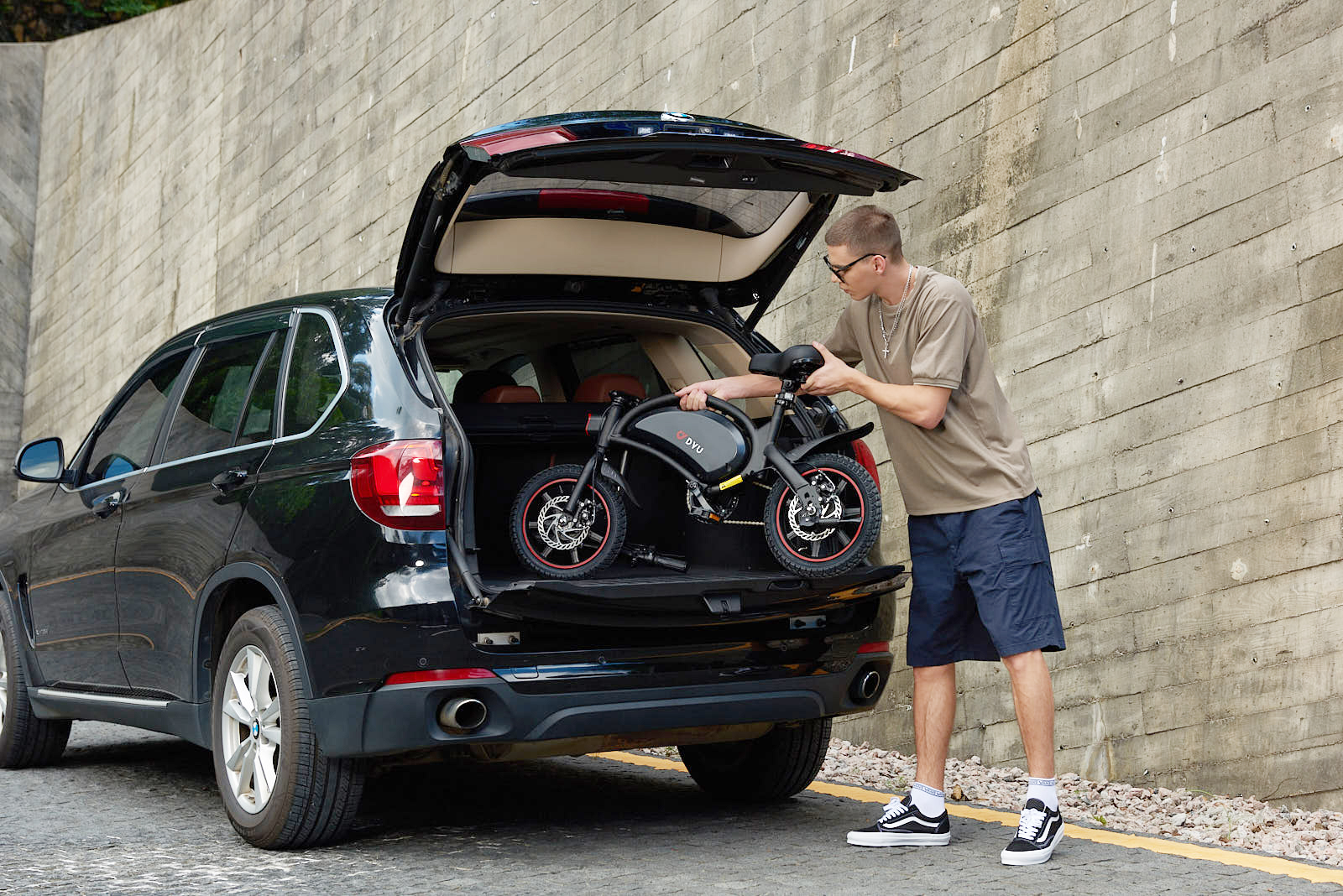
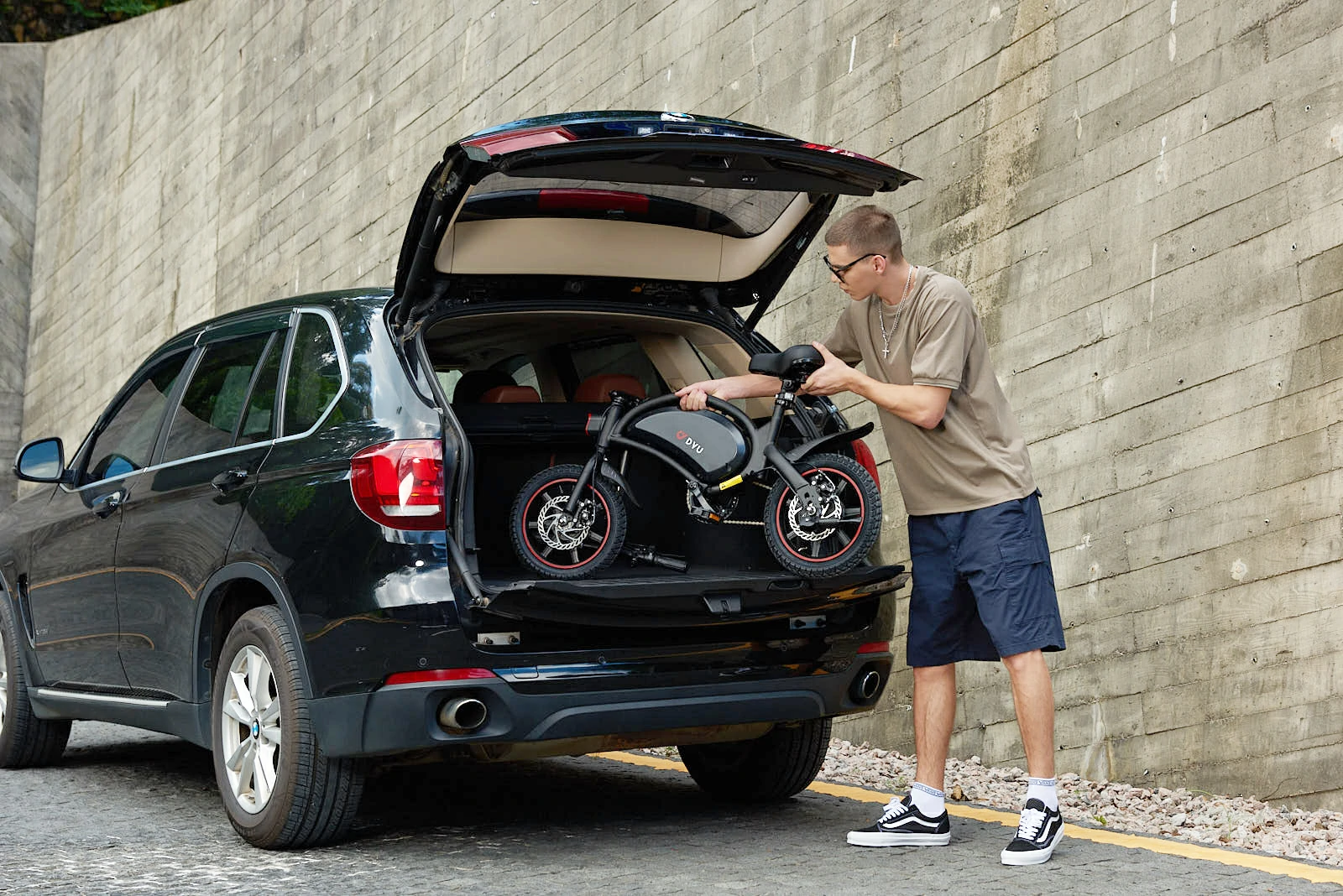
The D3F is still light for an electric bike at 19 kg. It has foldable pedals, a foldable handlebar, and a carry handle. The Fiido D3 Pro uses a foldable stem and a similarly compact 14-inch layout.
My practical view: if you lift your bike every day, Fiido’s weight advantage matters. If you lift it occasionally but care more about battery capacity, DYU starts to look stronger.
Wheels, Brakes, And Ride Feel
Both bikes use 14-inch wheels. That makes them agile and easy to store, but also less calm over rough surfaces than a 20-inch or 26-inch e-bike.
The D3F uses front and rear disc brakes. Fiido lists mechanical disc brakes with power cut-off. Both are sensible choices for stop-start city riding, where predictable braking matters more than high speed.
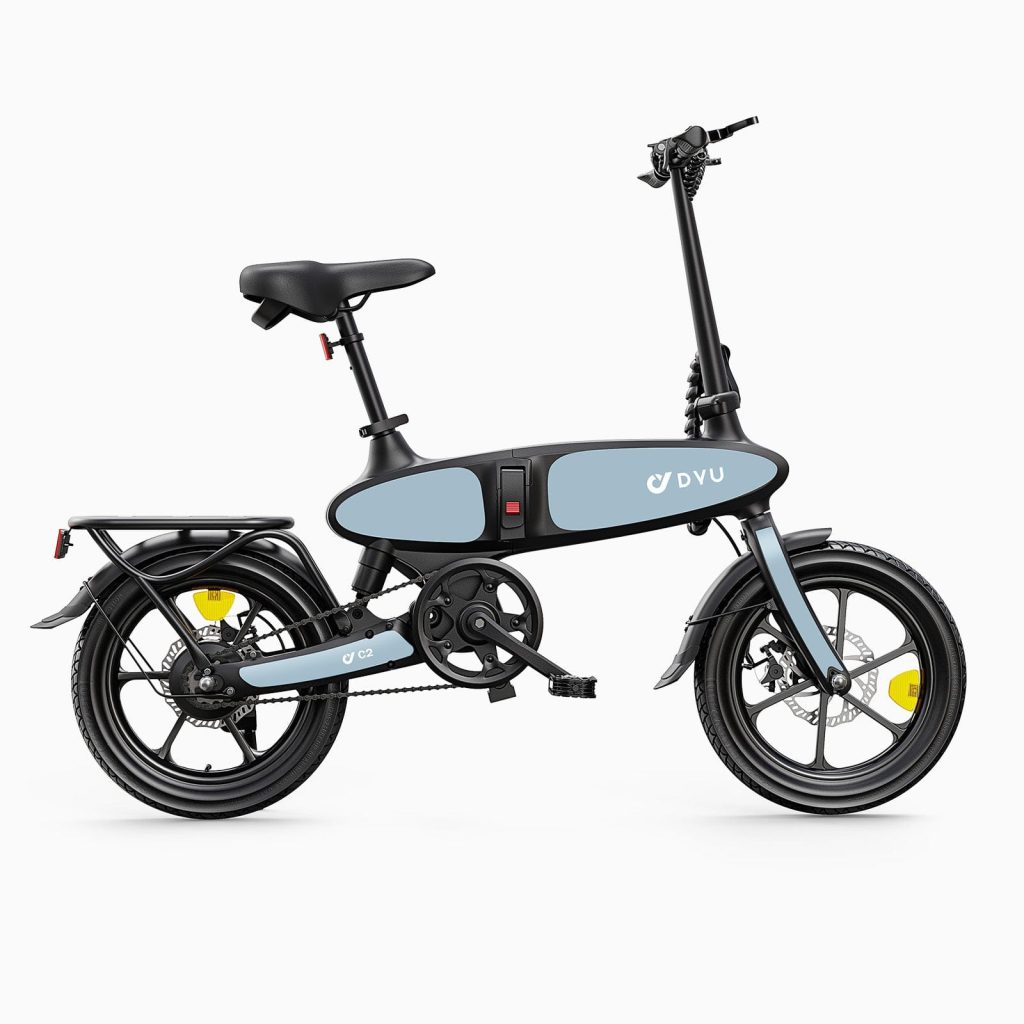
If you ride across old cobbled streets in Prague, Milan, or Paris, neither bike will feel as relaxed as a larger-wheeled model like the DYU C2 or a bigger city bike. That is not a flaw. It is the trade-off you accept for compact storage.
Feature Comparison: Where Each Bike Feels Stronger
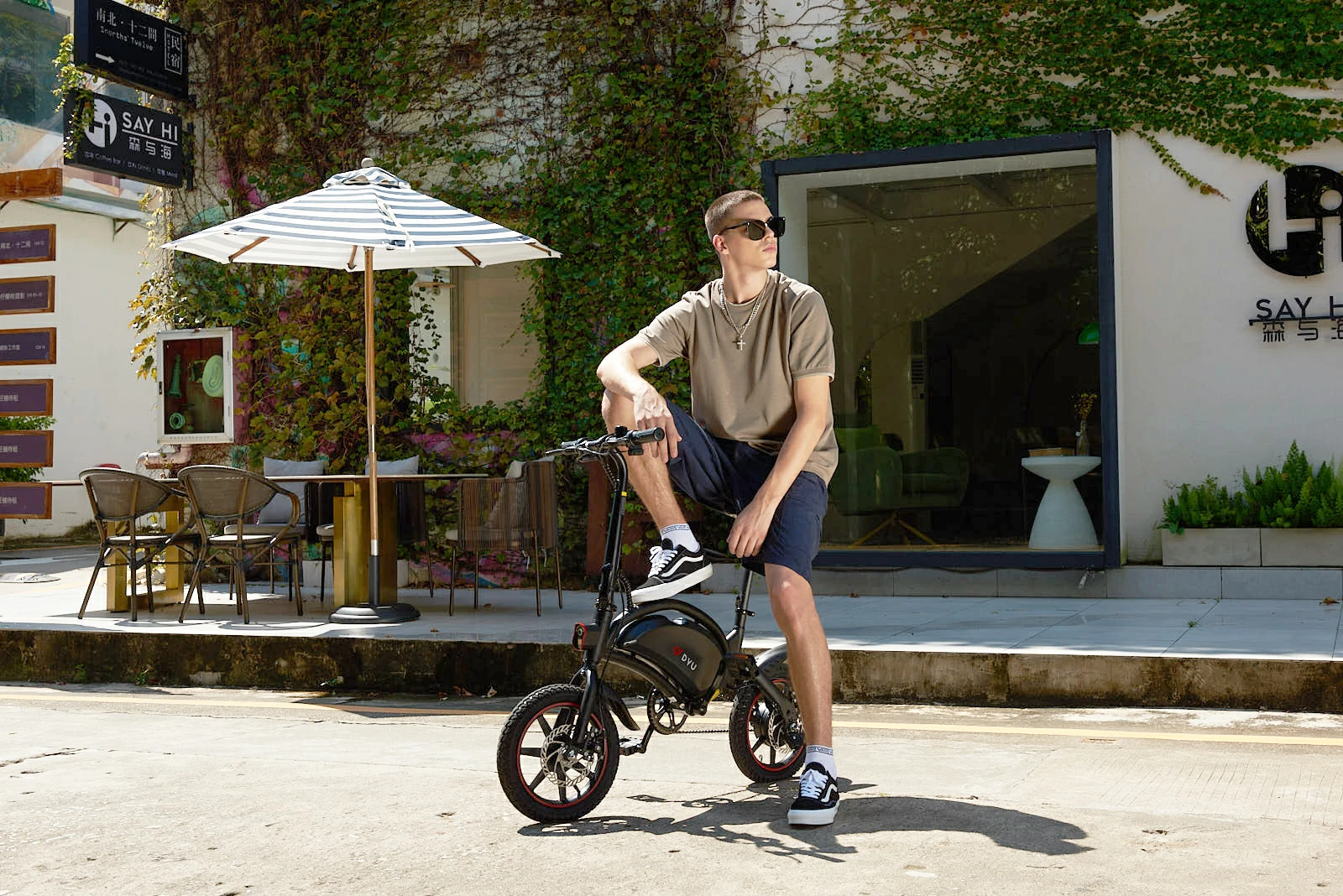
DYU D3F: More Battery, Simple Compact Use
| DYU D3F Pros | DYU D3F Cons |
|---|---|
| Larger 36V 10Ah battery than Fiido D3 Pro | Heavier at 19 kg |
| 50 km claimed pedal-assist range | Costs €50 more at current checked prices |
| Foldable handlebar and pedals help storage | Small wheels are less comfortable on rough roads |
| Cruise control is useful on quiet open paths | Not designed for heavy cargo or steep hills |
The DYU D3F feels like the better choice if your route is slightly longer or if you want more battery capacity for the money. I also like that the D3F is very clear about its role: small, simple, portable, and city-focused.
It is not the bike I would choose for a 25 km each-way commute. But for train-station connections, short office rides, and errands, it makes sense.
Fiido D3 Pro: Lighter, Cheaper, And More Minimal
| Fiido D3 Pro Pros | Fiido D3 Pro Cons |
|---|---|
| Lighter at 17.3 kg | Smaller 280.8Wh battery |
| Lower current price at €499.00 | Range messaging differs between Fiido pages |
| IP54 full-bike waterproof rating listed | Single-speed setup will not suit every rider |
| Foldable stem and compact mini-bike design | Not recommended by Fiido for child seat or trailer use |
The Fiido D3 Pro has a clean pitch: cheaper, lighter, compact, and simple. If you only ride a few kilometres at a time and want the easiest bike to lift, it is hard to ignore.
The range messaging is the only part I would treat carefully. A product page number of 33 km and a guide-page Eco number of 79 km tell different stories. That does not mean either is false, but it does mean buyers should understand the conditions behind the number.
Real-World User Experience
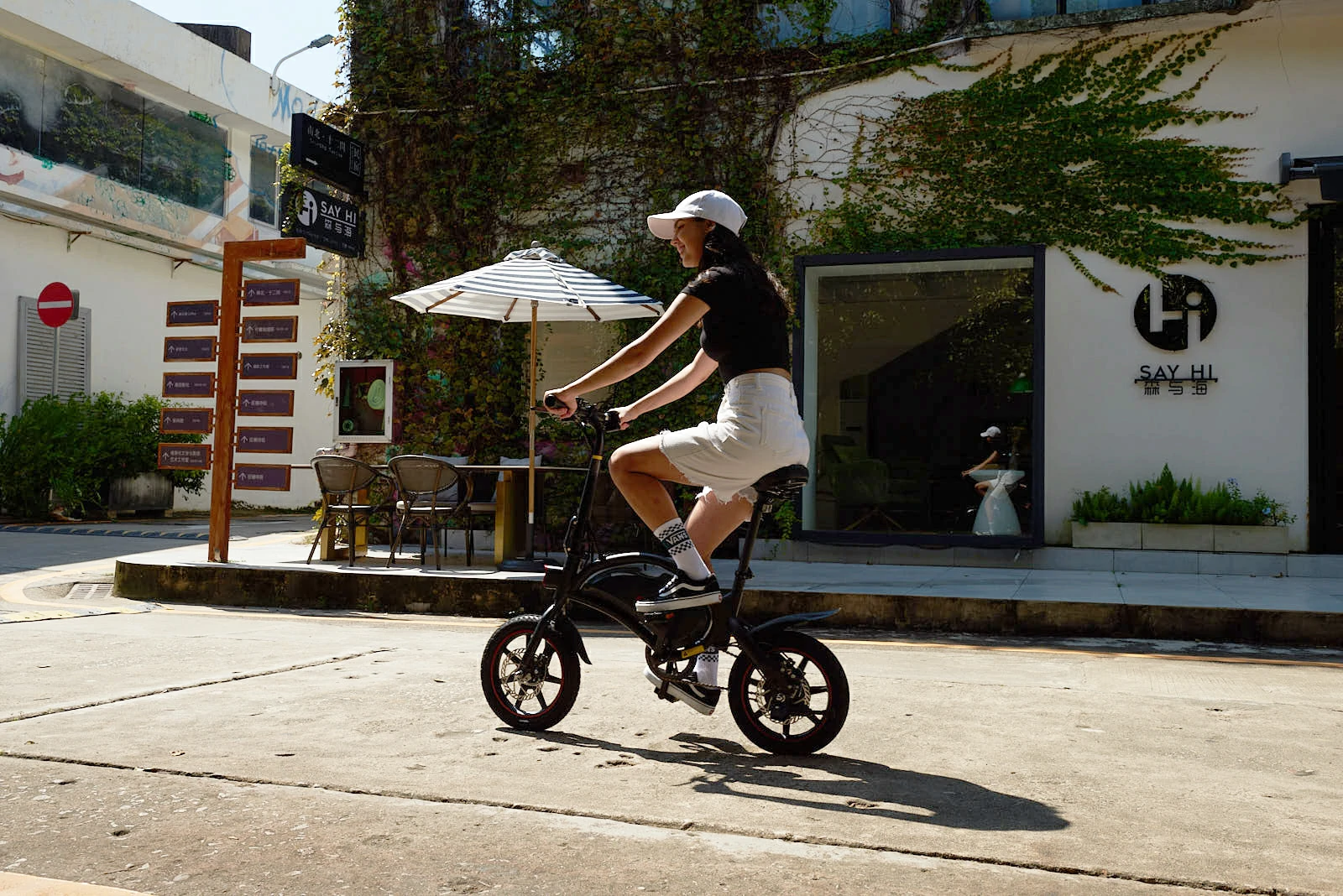
For Apartments And Offices
If you live in a small apartment, both bikes are easier to manage than a full-size e-bike. The Fiido’s lower weight gives it a small advantage for daily carrying. The DYU’s foldable pedals and carry handle make it friendly for short lifts and tight indoor corners.
Here is the honest version: neither bike becomes weightless when folded. You still have to move a battery, motor, frame, wheels, and brakes. But both are much easier to store than a 26-inch commuter bike.
For Public Transport Connections
For train and tram connections, the best mini e-bike is the one you can fold or shrink quickly without annoying everyone around you. I would give the Fiido a slight edge if your route includes stairs every morning. I would give the DYU the edge if you want more battery headroom after the train ride.
The European Commission notes that active mobility policy increasingly includes first- and last-mile connections around public transport. Small e-bikes like these fit that exact use case: they do not replace the train, but they make getting to and from it easier.
For Comfort
Small wheels always bring a comfort compromise. You feel broken pavement sooner, and you need to pay more attention to potholes.
The D3F includes seat suspension, which helps soften short impacts. Fiido’s detailed D3 Pro page lists a vacuum full-fit saddle and adjustable seatpost, but the compact wheel format still defines the ride.
If comfort is your first priority, consider stepping up to a slightly larger folding bike like the DYU C2 or even a practical city model such as the DYU C6. If storage is the priority, stay with the D3F vs D3 Pro decision.
Daily Use Cases: Which Bike Fits Which Rider?
This is the section I wish more spec comparisons included. A mini e-bike can look good in a table and still be wrong for your life.
For a rider in Barcelona who needs 3 km to the metro and 2 km from the station to work, the Fiido D3 Pro makes a lot of sense. The lower weight matters every morning, the lower price is welcome, and the smaller battery is not a serious issue if the ride is short.
For a rider in Vienna who wants one small e-bike for weekday errands, riverside paths, and the occasional longer city loop, I would lean toward the DYU D3F. The larger battery gives more breathing room, and that matters when the bike becomes a daily habit rather than a backup plan.
| Use Case | Better Choice | Reason |
|---|---|---|
| Daily stairs or lift-free apartment | Fiido D3 Pro | It is 1.7 kg lighter, which matters when carrying every day. |
| Frequent short errands | DYU D3F | The bigger battery gives more room between charges. |
| Lowest upfront cost | Fiido D3 Pro | It is €50 cheaper at current checked prices. |
| Better battery value | DYU D3F | 360Wh gives more capacity than Fiido’s 280.8Wh pack. |
| Rougher city surfaces | Neither is ideal | Consider a larger wheel model such as DYU C2, DYU C6, or DYU A5 only if compact storage still matters. |
One more thing: do not buy either bike if you secretly want a full-size commuter. That sounds obvious, but it is the mistake I see new e-bike buyers make all the time. A mini e-bike is brilliant when compactness solves your problem. It is frustrating when compactness creates a new problem.
Maintenance And Ownership Notes
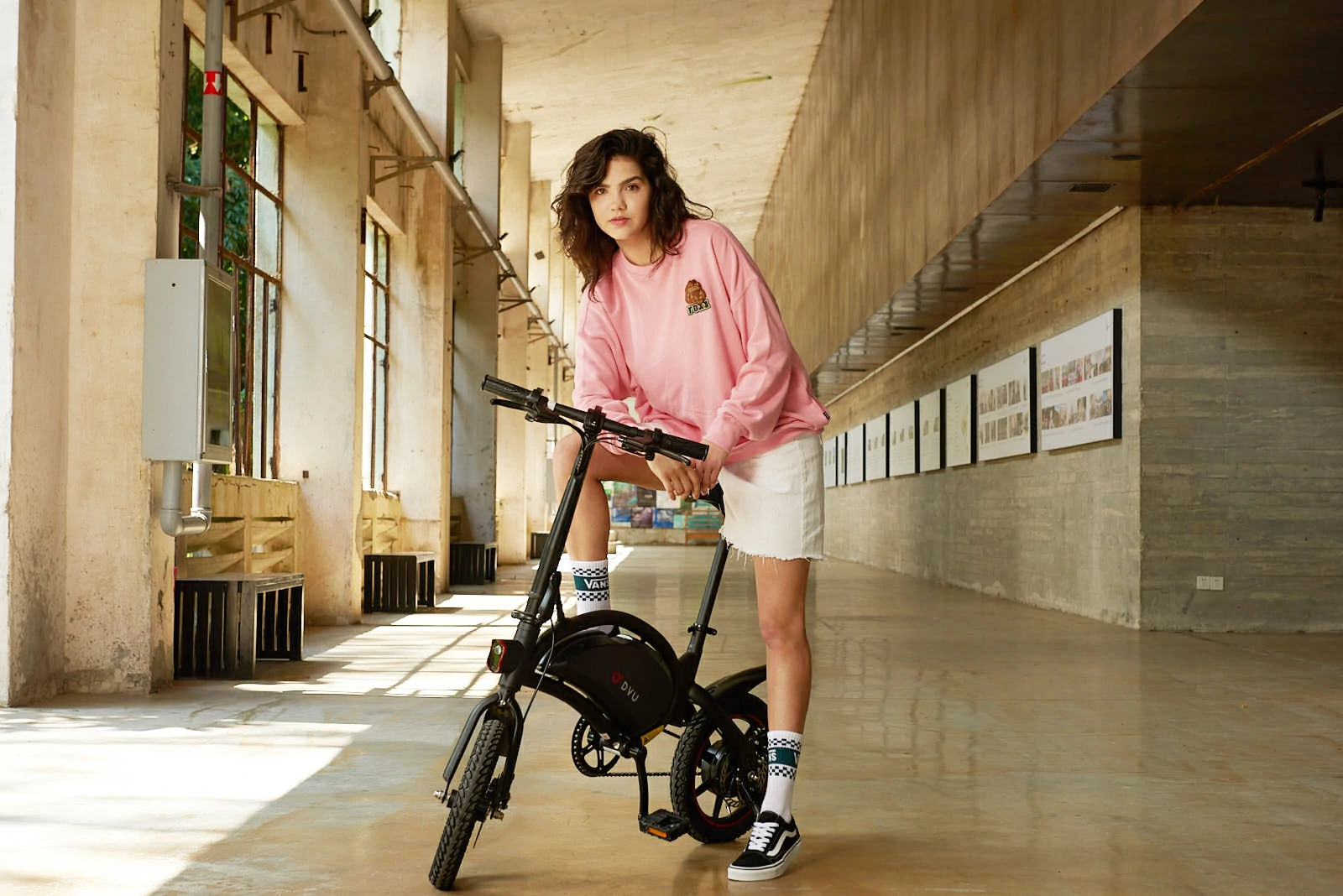
Both bikes are simple enough for beginner e-bike owners, which is part of their appeal. There are no complex suspension systems, no heavy cargo frames, and no high-speed performance parts that need specialist attention every month.
The Fiido D3 Pro has one clear simplicity advantage: Fiido lists an integrated hub and single-speed setup, which should reduce drivetrain fuss. If you dislike adjusting gears or simply want a bike that feels close to a low-maintenance city runabout, that is a genuine point in Fiido’s favour.
The DYU D3F counters with a larger battery. Battery replacement is usually one of the more expensive ownership questions on any e-bike, so starting with more capacity can be useful if you ride often. It does not mean the D3F battery will last longer in every case, but it gives you more usable capacity from day one.
My practical ownership checklist for either bike is short:
- Keep tires properly inflated, because small wheels lose comfort quickly when pressure is wrong.
- Check brake feel regularly, especially if you ride in rain or on gritty cycle paths.
- Charge indoors in a dry place and avoid storing the battery empty for long periods.
- Test the folding parts every few weeks so the handlebar or stem stays secure.
- Do not overload the bike just because both models list a 120 kg payload.
That last point matters. Payload is not the same as comfort. A bike can be rated to carry weight and still feel less pleasant if the rider is tall, the road is rough, or the route is long.
Cost Analysis: Is The Fiido €50 Saving Worth It?

At current checked prices, the Fiido D3 Pro standard version costs €499.00. The DYU D3F costs €549.00. That is a €50 difference.
| Cost Point | DYU D3F | Fiido D3 Pro |
|---|---|---|
| Current checked price | €549.00 | €499.00 |
| Regular price | €649.00 | €599.00 |
| Battery capacity | 360Wh | 280.8Wh |
| Approximate cost per Wh | About €1.53 per Wh | About €1.78 per Wh |
| Best value angle | More battery for the price | Lower upfront cost and lighter weight |
This is why the comparison is not just “Fiido is cheaper.” It is cheaper upfront, yes. But the DYU D3F gives you more battery capacity for that extra €50.
If your trips are very short, save the money and choose the lighter bike. If you ride often enough that battery headroom matters, the DYU D3F makes a strong value argument.
Which One Should You Choose?
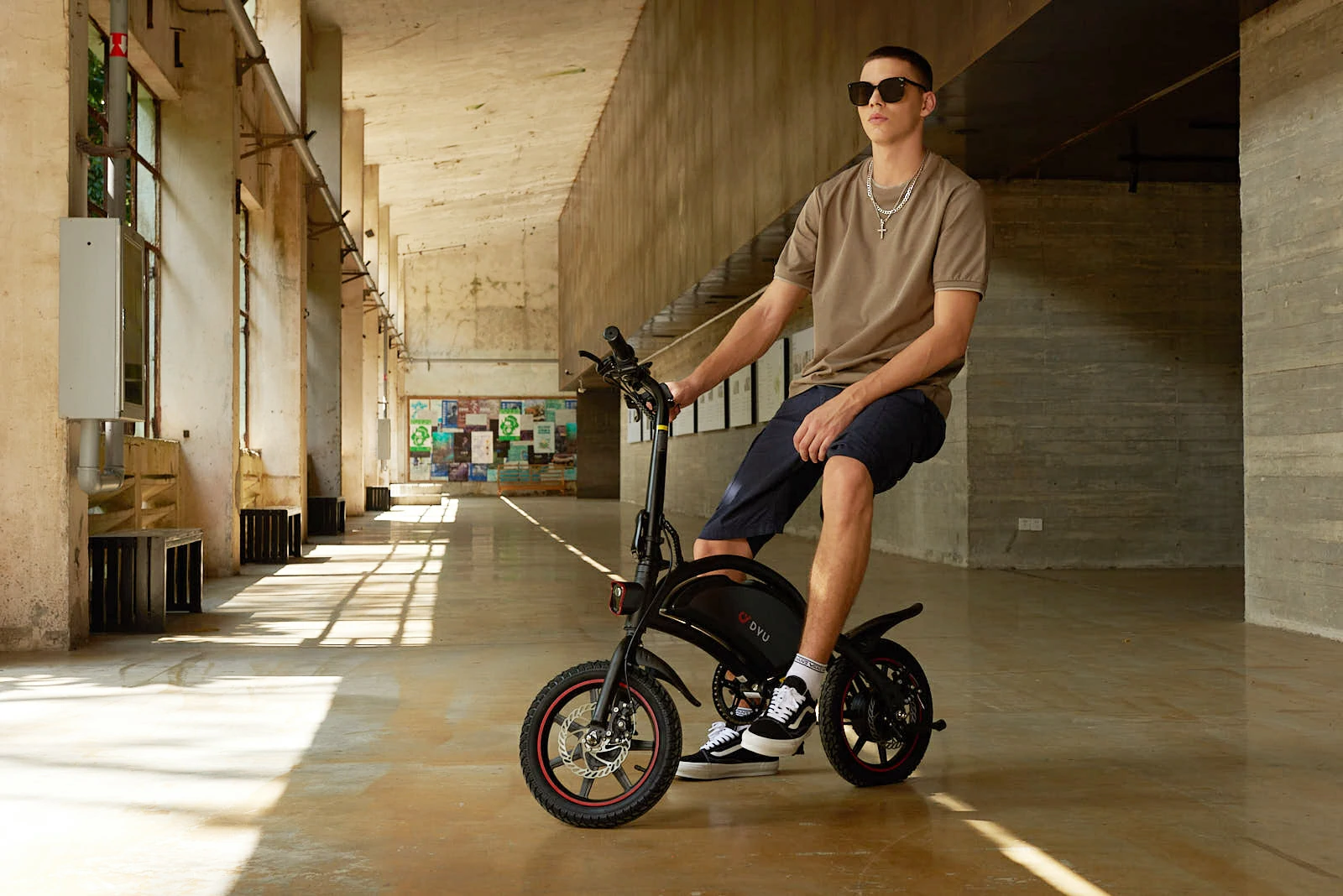
Choose the DYU D3F if you want the stronger battery value, a compact city bike with a 50 km claimed range, and a practical short-commute machine that still feels simple. It is the better pick for riders who expect to use the bike several times per week and want more stored energy than the Fiido offers.
Choose the Fiido D3 Pro if your top priorities are weight and price. At 17.3 kg and €499.00, it makes sense for riders who mostly need a short-hop city bike and do not want to spend more than necessary.
My bottom line: the Fiido D3 Pro is the easier recommendation for the most budget-focused rider. The DYU D3F is the better-balanced choice if you care about battery capacity and want a little more confidence for daily use.
That is the real difference. Fiido wins the lift. DYU wins the battery.
FAQs
Q1. DYU D3F vs Fiido D3 Pro: which is better?
The DYU D3F is better if you want more battery capacity and a 50 km claimed range. The Fiido D3 Pro is better if you want the lower price and lighter 17.3 kg weight.
Q2. Is the DYU D3F more expensive than the Fiido D3 Pro?
Yes. At current checked prices, the DYU D3F is €549.00 and the Fiido D3 Pro standard version is €499.00. The difference is €50.
Q3. Which mini e-bike has the bigger battery?
The DYU D3F has the bigger battery at 36V 10Ah, or roughly 360Wh. The Fiido D3 Pro is listed at 280.8Wh.
Q4. Which bike is lighter, DYU D3F or Fiido D3 Pro?
The Fiido D3 Pro is lighter at 17.3 kg. The DYU D3F weighs 19 kg, so Fiido has the advantage for carrying and stair use.
Q5. Are 14-inch e-bikes good for commuting?
Yes, but mainly for short city commuting and last-mile rides. If your roads are rough or your commute is long, a larger wheel size will usually feel more comfortable.