

Fat tire e-bike tire pressure is not a number you set once and forget. The right pressure changes with the surface, rider weight, cargo, weather, and how much comfort you want from the tires before the suspension even starts working.
I used to treat fat tires as a simple comfort upgrade. Wider tire, softer ride, problem solved. Then a loose gravel path taught me the more useful lesson: pressure is a control setting, not just a comfort setting.
Fat Tire E-Bike Tire Pressure Starts With Surface
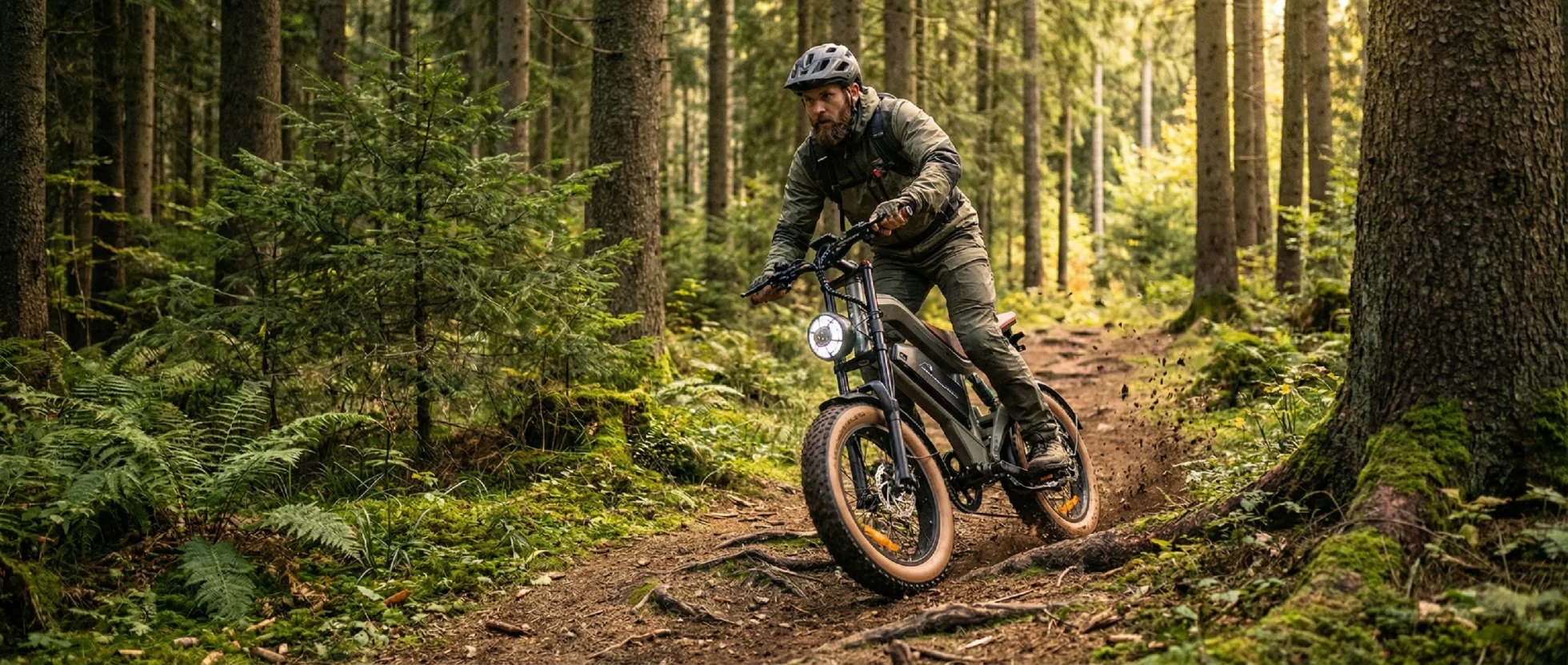
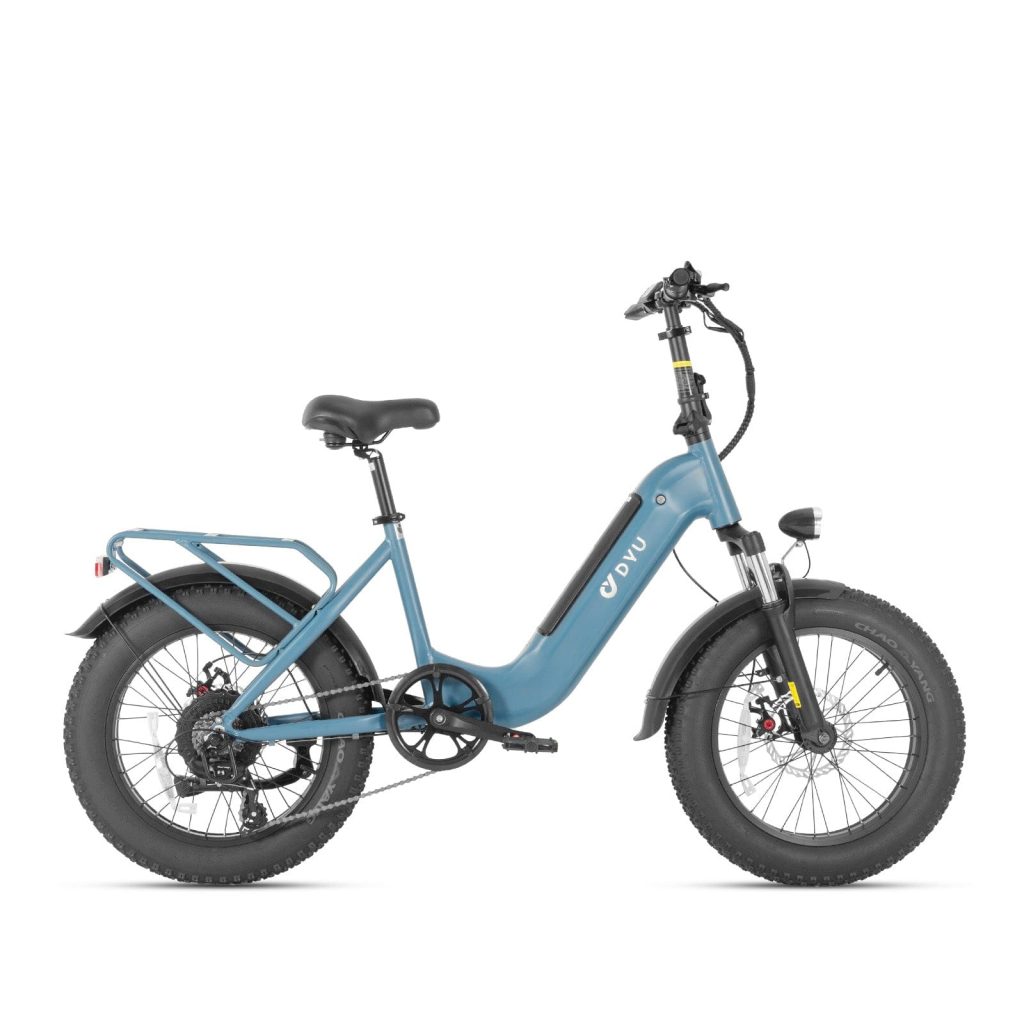
A 20 x 4.0 inch tire gives you more air volume than a narrow city tire. That volume is why the bike can feel calm on gravel, packed dirt, rough paths, and winter grit. It also means small pressure changes can feel surprisingly large.
| Surface | What the rider usually wants | Pressure habit to avoid |
|---|---|---|
| Smooth asphalt | Lower rolling resistance and predictable steering | Running too soft because it feels comfortable in the garage |
| Gravel path | Grip and comfort without rim strikes | Dropping pressure so far that the bike feels vague |
| Forest trail | Contact patch and controlled braking | Using one pressure for every rider and every route |
| Wet paths | More smoothness and earlier braking | Trusting pressure to replace careful speed choice |
| Loaded ride | Support for rider, bike, and bags | Forgetting to add margin when carrying extra weight |
BikeRadar’s e-bike explainer is a useful starting point because it treats an e-bike as a complete system. Tires are part of that system. They affect range, braking, comfort, steering, and how much effort the motor needs to hold speed.
Start With a Baseline, Not a Guess
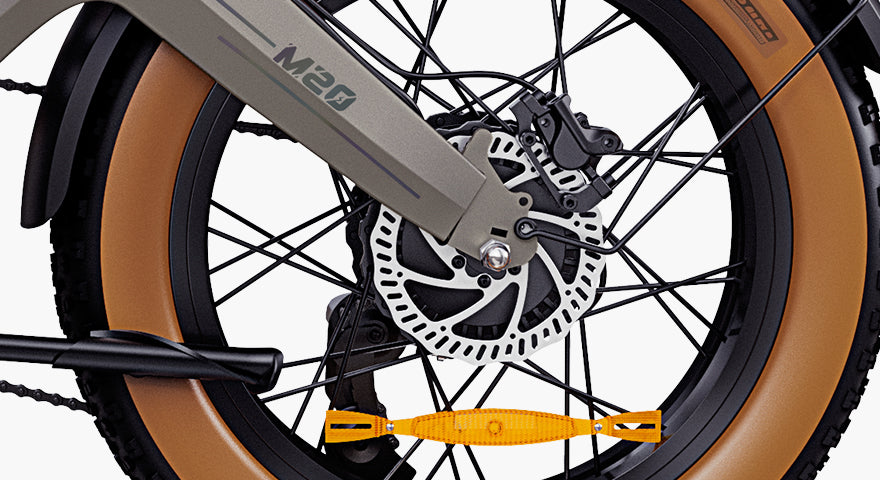
The first mistake is copying a pressure from a different rider. A light rider on a smooth path and a heavier rider carrying bags over gravel are not asking the tire to do the same job. Start from the sidewall guidance and product manual when available, then tune carefully.
I like a simple baseline ride. Choose a short loop with one smooth section, one rough section, and one slow braking area. Ride it at a calm speed, then change pressure in small steps. If the bike starts to wander or the sidewall folds in turns, you went too soft. If the ride feels harsh and skips over loose stones, you may be too firm for that surface.
Do not chase a dramatic change. Fat tires reward small adjustments. One careful adjustment and a repeated route teach more than random changes before every ride.
Read the Tire After the First Five Minutes
The tire tells you what is happening if you look. After a short test, check whether the tire squats evenly, whether the sidewalls show unusual flex, and whether the tread is making confident contact. Listen as well. A soft tire can feel comfortable but sound heavy and slow on hard ground.
That five-minute check matters more in mixed terrain than in pure city riding. A fat tire that feels perfect on asphalt can be too firm on loose gravel. A tire that feels plush on dirt can waste energy on a long paved return.
DYU’s range anxiety guide connects naturally here. Tire pressure is one of the small variables that can quietly shorten a long ride, especially when the bike already carries a large battery and invites longer routes.
Battery Range and Tire Pressure Are Connected
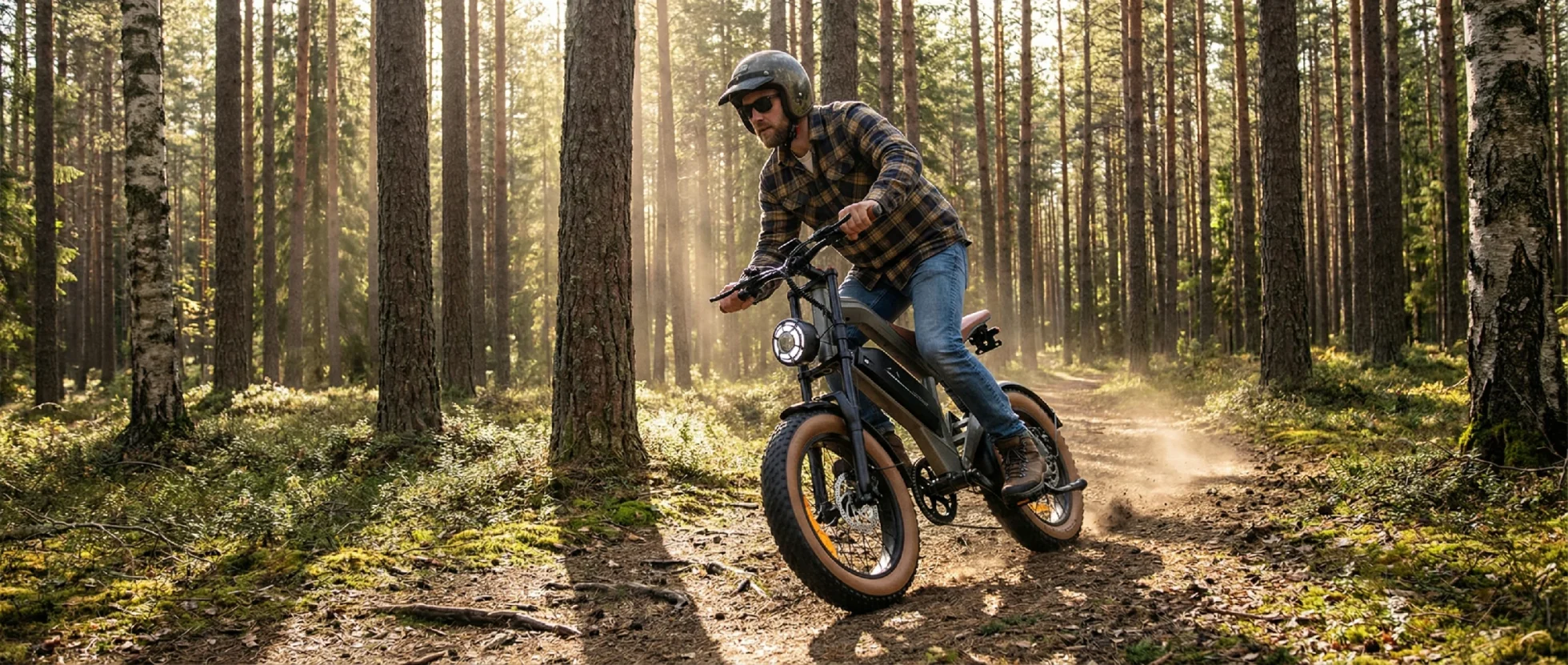
Lower pressure can add grip and comfort. It can also increase rolling resistance. That means the motor works harder, the battery drains faster, and the rider may feel the bike slow more quickly on hard surfaces.
Battery University’s lithium-ion care guide is about battery habits, not tire setup, but it reinforces the same ownership idea: small routines protect real-world performance. For tire pressure, the battery-friendly routine is simple:
- Use enough pressure for paved sections and rider weight.
- Lower only when the surface genuinely needs more grip or comfort.
- Recheck after temperature swings, because air pressure changes with weather.
- Carry a compact pump if the ride mixes road and trail.
- Do not ignore a slow leak just because the tire still looks wide.
Long range is useful only when the bike stays efficient. A fat tire bike can be comfortable and capable, but it still needs pressure discipline.
Do Not Use Soft Tires as a Braking Shortcut
A softer tire can add grip, but it does not replace braking technique. On a heavy e-bike, the rider still needs to brake early, look ahead, and avoid sudden panic inputs on loose ground.
Electric Bike Report’s brake guide explains why braking control matters on e-bikes. With fat tires, I would add this rule: if you need a very soft tire to feel safe on a descent, the descent may be too fast for the current conditions.
DYU’s disc brake guide is worth reading with tire pressure in mind. Brakes, tires, rider weight, and surface all decide stopping distance together. No single part does the whole job.
Adjust Again When Cargo or Weather Changes
The pressure that feels right on a warm empty ride may feel wrong with a backpack, groceries, camera bag, or lock kit on the bike. Extra load asks the sidewall to work harder, especially during turns and slow braking. I would rather add a little support before the ride than discover the tire feels vague halfway through a loose path.
Temperature matters too. A cold morning can make the same setup feel different from a warm afternoon. If the bike is stored in a cold shed or garage, check pressure before the first long ride of the day. Do not assume yesterday’s feel will be today’s feel.
The practical habit is simple: change only one thing at a time. If you add cargo and also change pressure, route, assist level, and speed, you will not know which change made the bike feel better or worse. Keep notes for a few rides. After that, your normal pressure range becomes much easier to trust.
Where the DYU M20 Fits Mixed-Terrain Tire Pressure
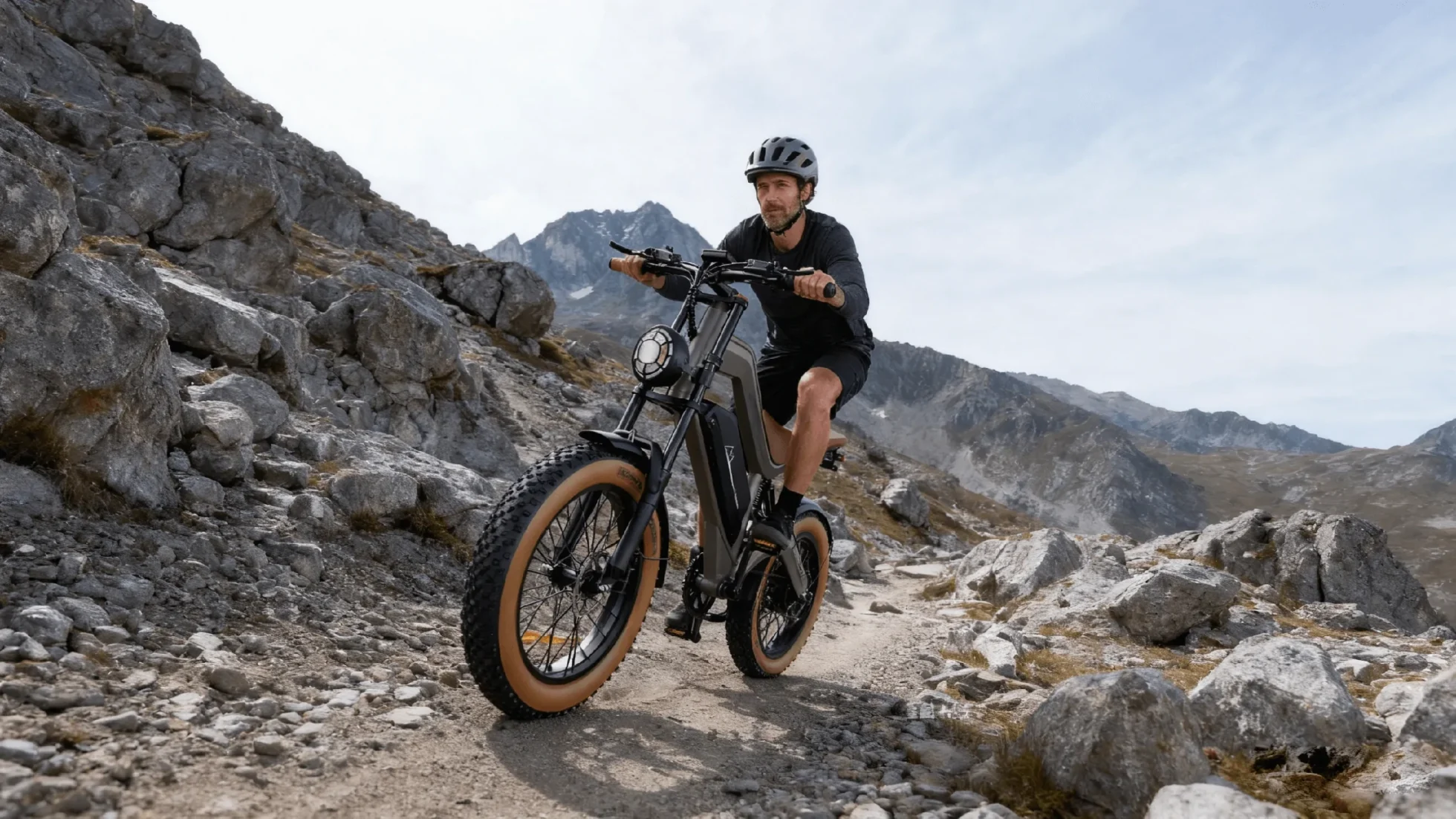
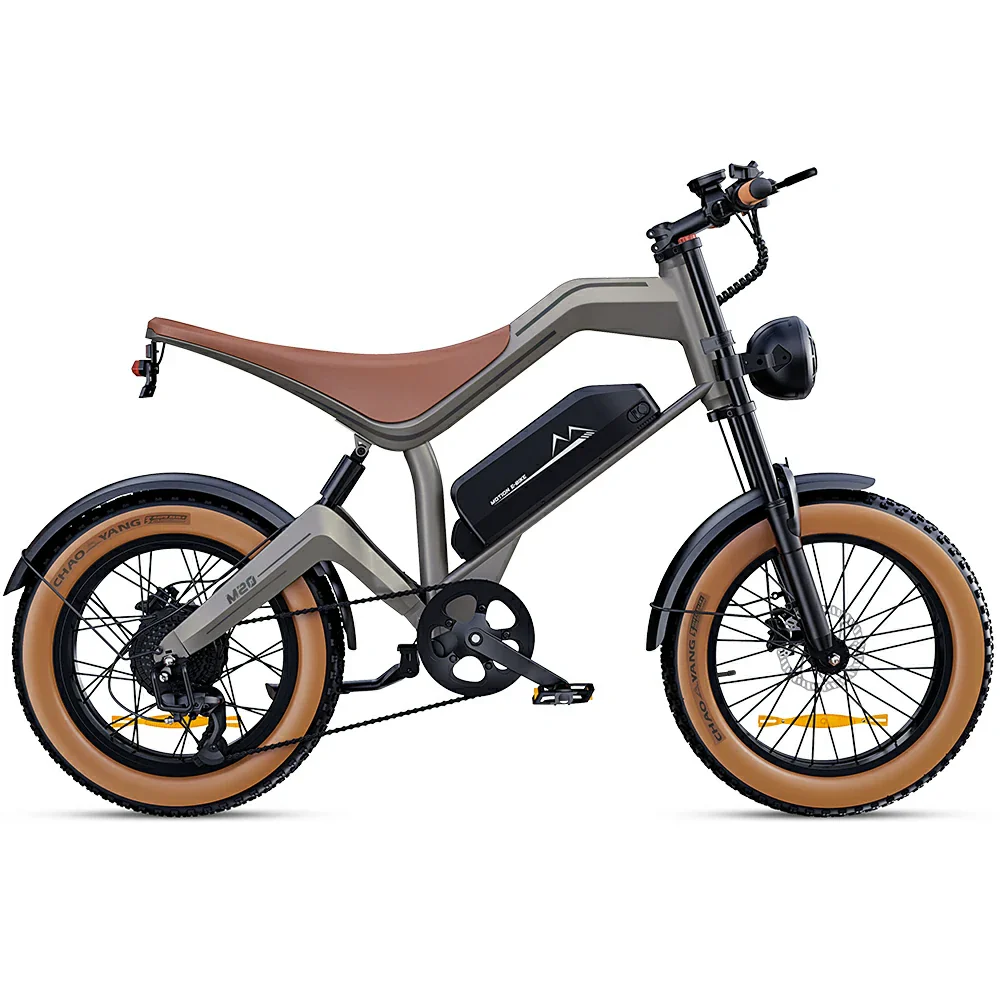
The DYU M20 All-Terrain Long-Range Electric Bike is the model I would use for this lesson because the tire and battery numbers make pressure choices obvious. The key specs are a 750W motor with 1500W peak output, 48V 18.2Ah battery, listed 160 km pedal-assist range, 45 km/h top speed, 39 kg weight, 120 kg load capacity, 20 x 4.0 inch fat tires, front fork and seat suspension, and hydraulic disc brakes.
At the time of writing, the DYU M20 is listed at €999, down from the regular €1399. The M20 is marked for off-road use, so route choice matters. Think private land, permitted paths, gravel routes, and local rules before treating it like an ordinary city pedelec.
The honest limitation is mass. A 39 kg fat tire e-bike carries momentum, and soft tires do not make that momentum disappear. The M20 feels best when the rider uses the fat tires for grip and comfort while still leaving space for braking, turning, and battery planning.
A Simple Pre-Ride Pressure Routine
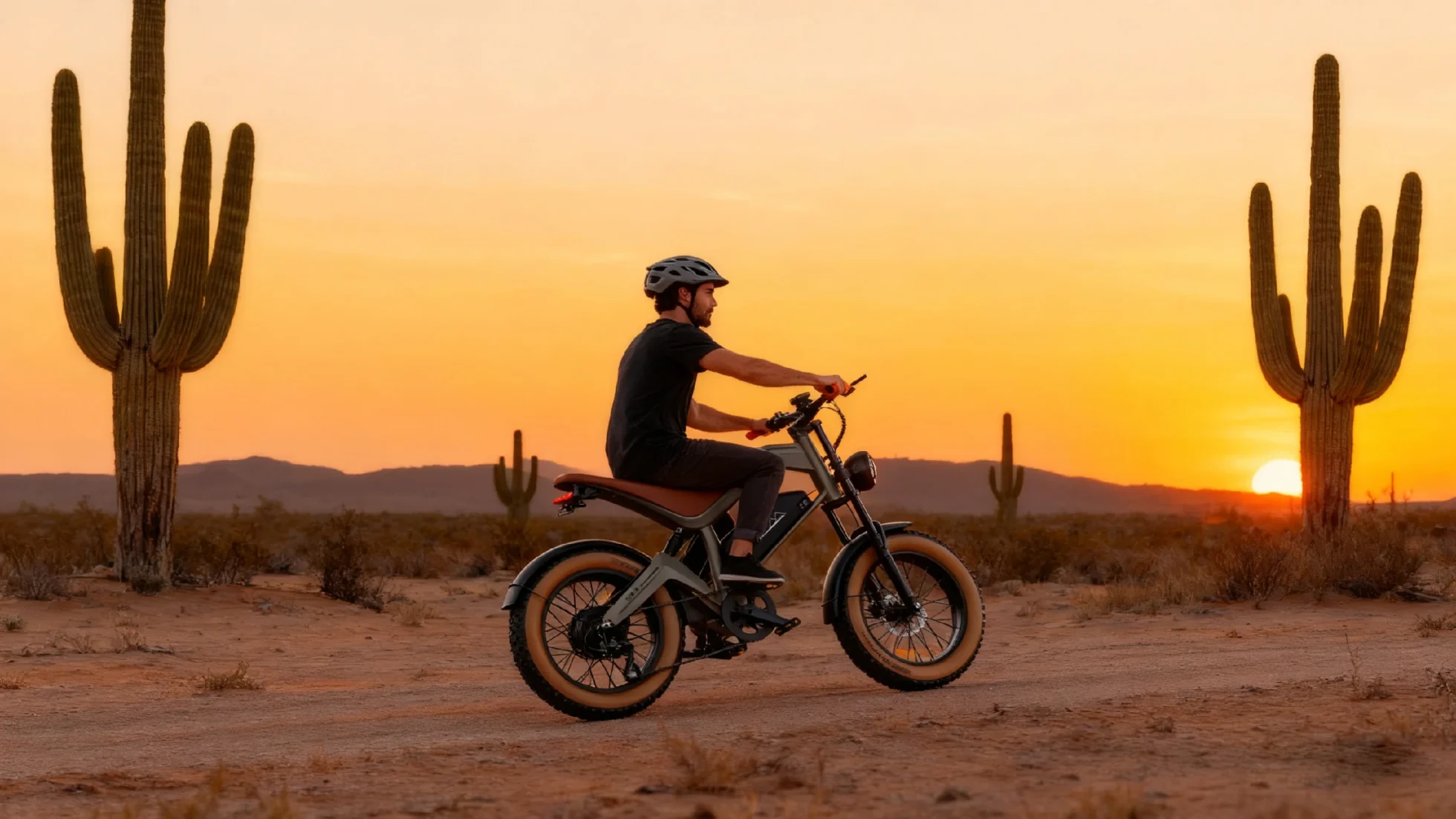
BikeRadar’s e-bike maintenance guide keeps the bigger maintenance picture simple. My fat tire version takes less than two minutes:
- Squeeze both tires before the bike leaves storage.
- Use a gauge before longer rides, not only your thumb.
- Check sidewalls for cuts after rocky or gritty rides.
- Look for embedded glass, thorns, or sharp stones.
- Adjust pressure before the ride, not halfway through a bad section.
For wet days, connect pressure with speed. DYU’s rain riding guide covers painted lines and slick surfaces. Fat tires can help with confidence, but the better habit is still slower entries, smoother braking, and more space.
Conclusion: Pressure Is Part of the Ride Plan
Fat tire e-bike tire pressure should match the surface, rider weight, cargo, weather, and route. Too firm and the bike skips over rough ground. Too soft and it wastes battery, steers poorly, and risks damage.
The DYU M20 has the tire volume, battery capacity, motor output, and braking hardware for serious mixed-terrain rides. It rewards riders who treat tire pressure as a real setup choice. Start with a sensible baseline, test one change at a time, and let the surface tell you what the bike needs.
FAQs
Q1. What tire pressure should I use on a fat tire e-bike?
Start with the manufacturer’s guidance and adjust for rider weight, cargo, and surface. Use small changes and repeat the same test route before deciding what feels right.
Q2. Do lower tire pressures increase e-bike range?
Usually no. Lower pressure can add grip and comfort, but it often increases rolling resistance on hard surfaces, which can reduce real-world range.
Q3. What tire size does the DYU M20 use?
The DYU M20 uses 20 x 4.0 inch fat tires. That large air volume is useful for mixed terrain, but it still needs regular pressure checks.
Q4. Is the DYU M20 suitable for public roads?
The M20 is listed as an off-road-use model, so riders should check local rules and use permitted areas. Do not assume it follows ordinary city pedelec rules.
Q5. How much does the DYU M20 cost?
At the time of writing, the DYU M20 is listed at €999, down from the regular €1399. Check the product page for current availability and final checkout details.